








I spent two years picking haircuts I loved on someone else’s face and then standing in front of the mirror wondering what went wrong. Not catastrophically wrong. Just slightly off in a way I couldn’t name. The answer, it turned out, had nothing to do with the cut itself — it had everything to do with whether I’d actually looked at my own face before I walked into the salon. This guide isn’t here to hand you a list of styles and tell you to pick one. It works the opposite way: you measure, you eliminate, and by the end of step seven you’ll have one clear direction left. That’s enough.
Your Elimination Roadmap — Square Face Edition
- Why Measuring Beats Guessing
- Step 1: Map the Width First
- Step 2: Find Your Jawline Angle
- Step 3: Measure the Vertical Drop
- Step 4: Measuring Rather Than Guessing What Length Rules Out
- Step 5: The Feature Worth Cutting Around
- Step 6: Adjusting the Shape
- Step 7: Eliminate the Last Option and Commit
- Real Questions About Square Face Haircuts
Why Measuring Beats Guessing
The problem with face shape advice online is that it assumes you know which category you’re in. Most people don’t — or they’re half right, which is worse than being completely wrong. I used to think I had a round face because my cheeks are full. Turns out I have a square one, and the round-face advice I’d been following was actively widening my jaw visually. The square face hairstyles that finally worked for me weren’t the ones I intuitively reached for — they were the ones I landed on after I stopped guessing and started looking at actual numbers.
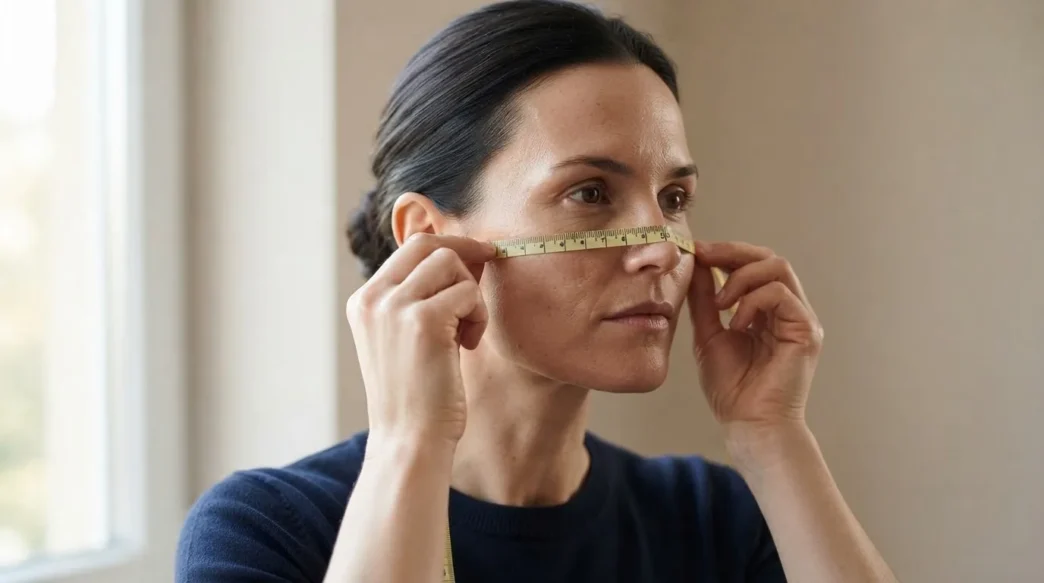
Grab a flexible tape measure (the kind used for sewing, not DIY). You’ll need it at every step. If you don’t have one, a piece of string and a ruler work fine. Pull your hair back. Good lighting. Let’s get specific.
Step 1: Map the Width First
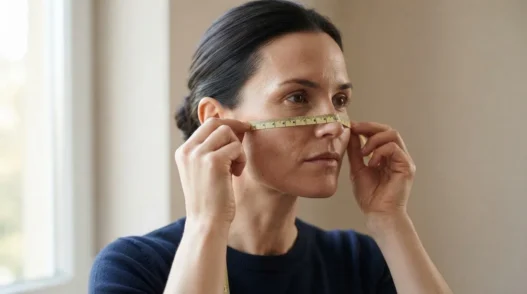
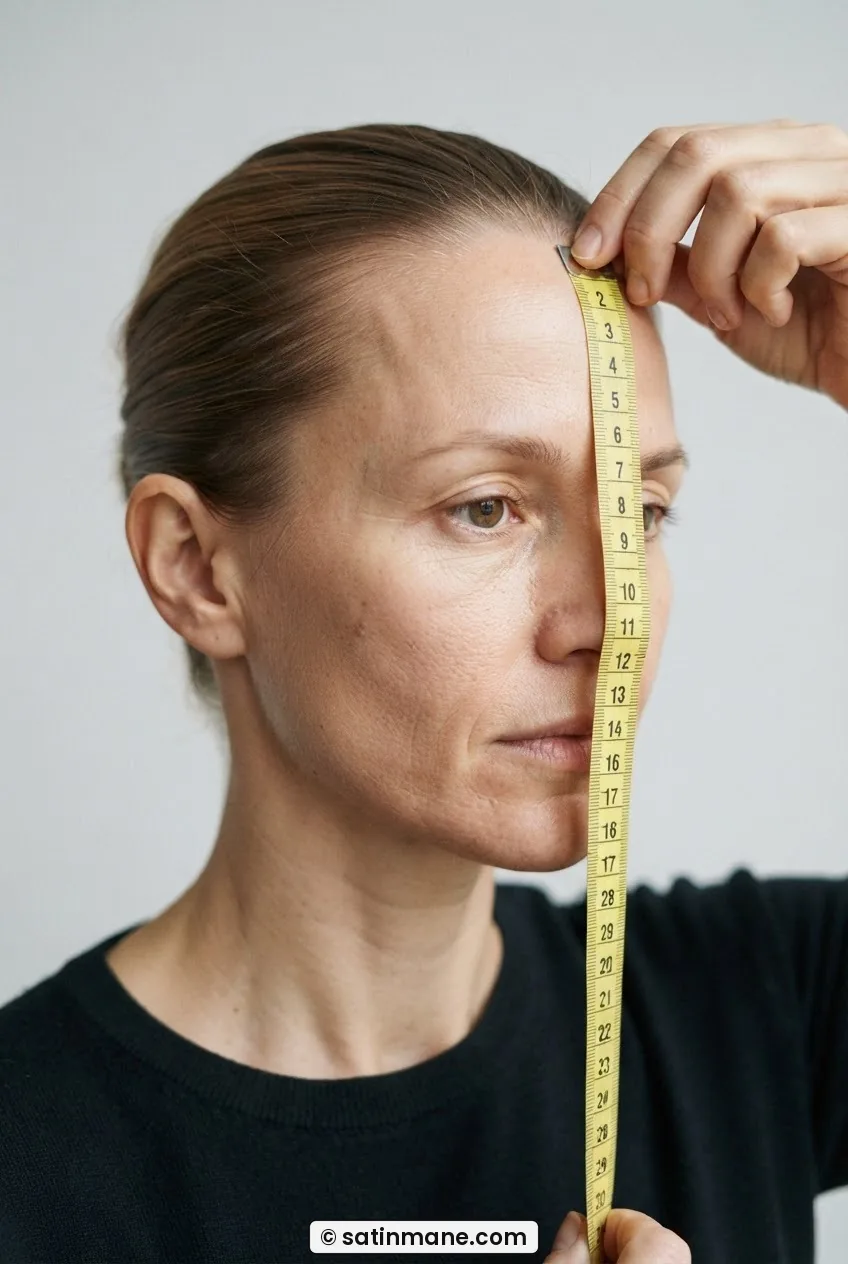
Measure across the widest point of your face. For most people that’s the cheekbones — place the tape from one outer cheekbone to the other. Write that number down. Then measure across your forehead at its widest point, which is usually about one finger-width above your eyebrows. Write that one down too.
If those two numbers are within about half a centimetre of each other, that’s your first signal. A square face tends to have a forehead and cheekbone width that are nearly equal. A heart-shaped face will have the forehead noticeably wider than the cheeks. An oval face usually shows the cheekbones as the clear winner. Equal or near-equal across all three horizontal points is the square face’s signature. If yours matches that, keep going — you’re in the right place.
Step 2: Find Your Jawline Angle
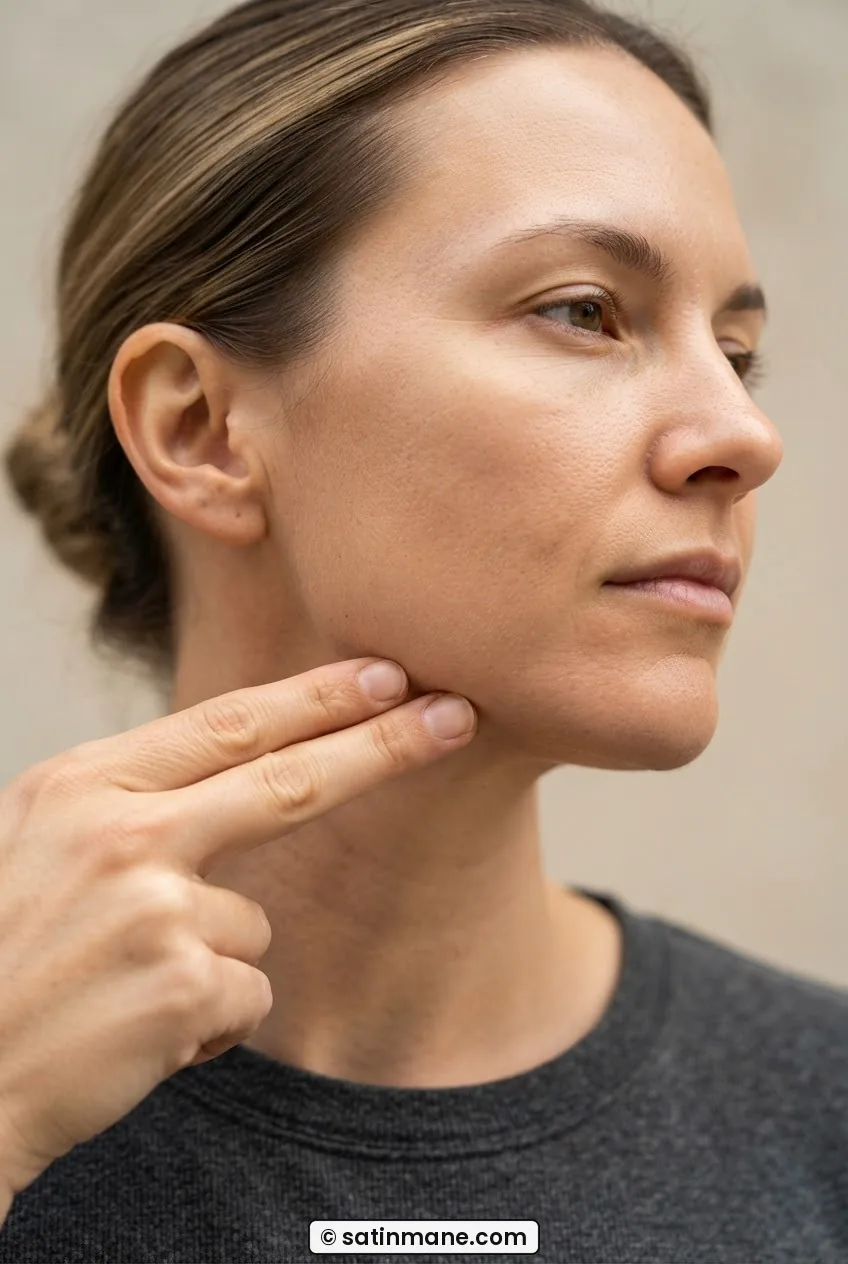
This is the measurement people skip, and it’s actually the one that matters most for choosing between cuts that technically suit square faces. Run your finger along your jawline from the ear to the chin. Feel for the angle where the jaw turns — the point where it shifts from going downward to going inward toward your chin.
A sharp, close-to-90-degree angle there is the defining feature of a square jaw. A gentle curve means you may be closer to an oval or round face even if your measurements suggest square. You’re not measuring with a protractor here — just press two fingers against that corner. If the angle feels abrupt and your fingers sit flush against a flat turn, it’s square. If they rock slightly on a curve, it’s softer. This distinction alone will change which cuts you can rule out in step four.
The mistake I made: I skipped this step entirely and went straight to Pinterest. I booked a blunt chin-length bob because I’d seen it on someone described as having a square face. What I didn’t know is that she had a soft jaw angle and I have a hard one — same face shape category, completely different result. The bob sat right at my corner and made it look wider. Don’t skip the jaw angle.
Step 3: Measure the Vertical Drop
Measure from your hairline at the centre of your forehead down to the bottom of your chin. This is your face length. Compare it to your cheekbone width from step one.
If your face length is roughly the same as or only slightly longer than your cheekbone width, you’re looking at a classic square. If your length is noticeably longer — say, two or more centimetres — the shape shifts toward what some stylists call a rectangular or oblong face. Both sit under the square family, but they respond very differently to cut length. A longer square face has more room at the chin, which means certain cuts that add height can work beautifully. A shorter square face needs that height even more urgently because the horizontal width reads stronger.
Write down your ratio. This is what you’ll use in step four to rule out whole categories of length.
Step 4: Measuring Rather Than Guessing What Length Rules Out
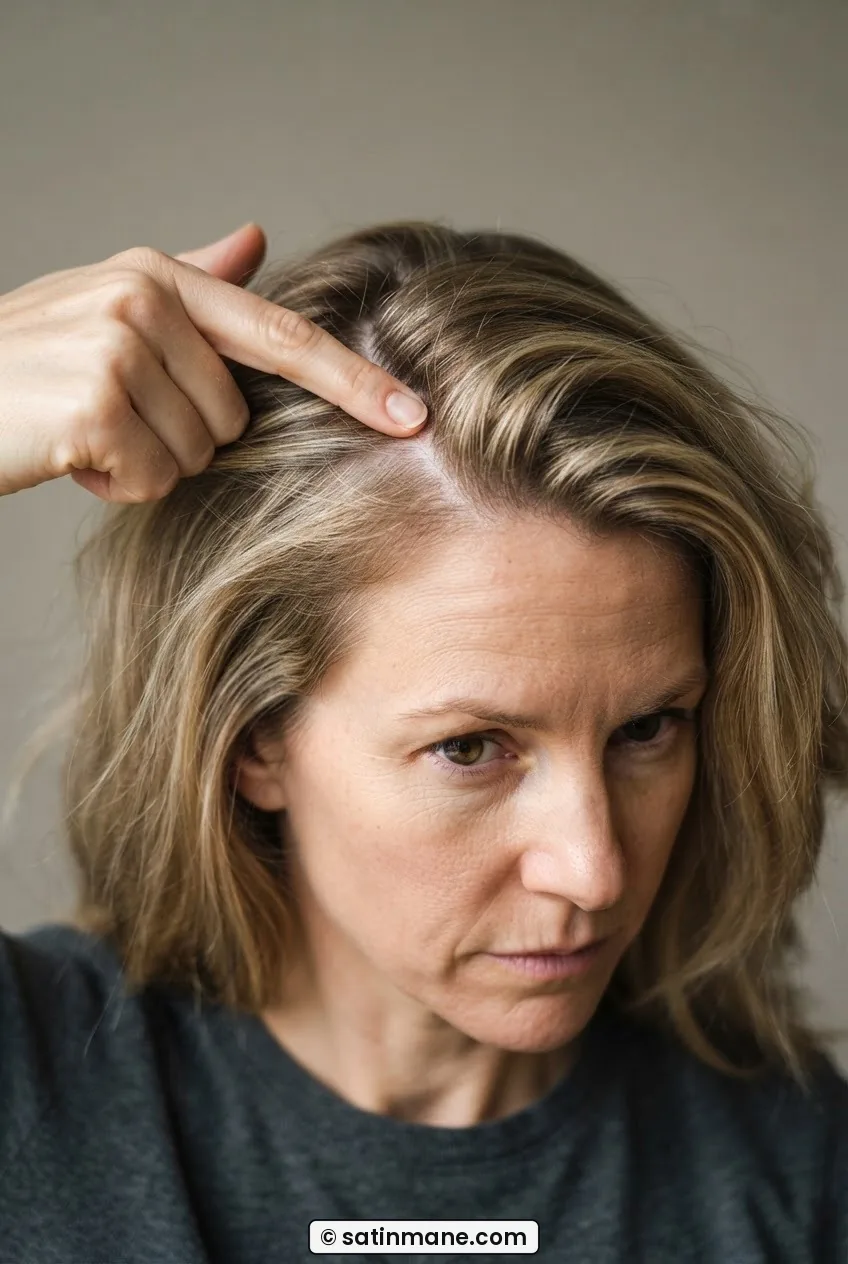
Here’s where the elimination actually starts. Take your two key numbers — the cheekbone width and the vertical face length — and hold them against these four length zones.
Jaw-length cuts (chin to just below the ear): If your jaw angle from step two is sharp and close to 90 degrees, rule these out. A cut that ends exactly at your jaw corner draws the eye to the corner. That’s the opposite of what you want. This removes blunt chin-length bobs, classic lobs that hit the jaw, and anything that terminates at that angle.
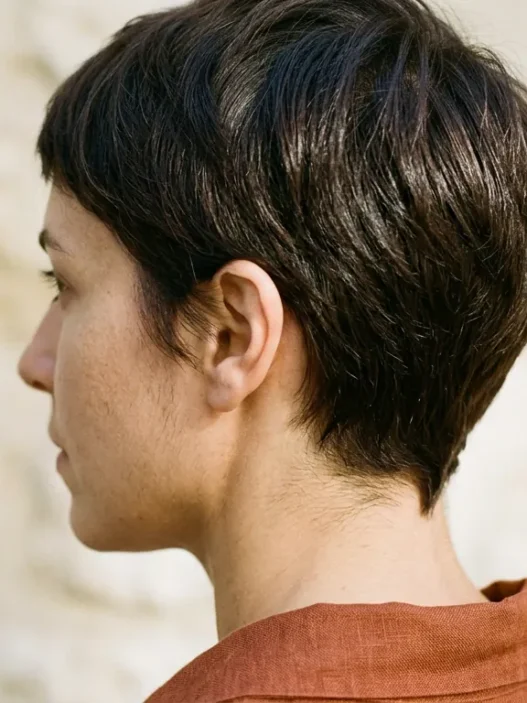
Very short cuts (above the ear): These work — but only if your face length is longer than your width. If your measurements from step three showed your face as nearly square in proportion (length roughly equal to width), a very short crop will read as rounder and wider than it is. If you measured a longer-than-wide ratio, short cuts including pixies can add great height. Speaking of which, the post on short haircuts for round faces explains this proportion logic in more detail — even if your face isn’t round, the structural reasoning transfers.
Collarbone and shoulder-length cuts: Almost universally flattering for square faces, for a reason we’ll get into in step five. Don’t rule these out yet. Keep them.
Long cuts (well past the shoulders): These work but require something specific from the cut itself — layers or movement. A long cut that hangs completely straight and flat creates a curtain effect that, on a square face, reads as a rectangular box. Long with texture stays in the running. Long and blunt-straight gets ruled out now.

Step 5: The Feature Worth Cutting Around
Every face shape has one feature that the haircut should either frame or redirect attention from. For a square face, that feature is the jaw corner — specifically, the relationship between where the jaw turns and where the eye lands when someone looks at you.
The jaw corner on a square face is genuinely strong. That’s not a flaw. But it becomes the visual anchor of the whole face, and a cut that ends right at it, frames it with curtain-straight pieces, or sits level with it will push all the attention there. The goal of the cut isn’t to hide the jaw. It’s to give the eye somewhere else to travel — upward toward the cheekbones, or downward past the jaw — so the overall impression is movement rather than a strong horizontal line.
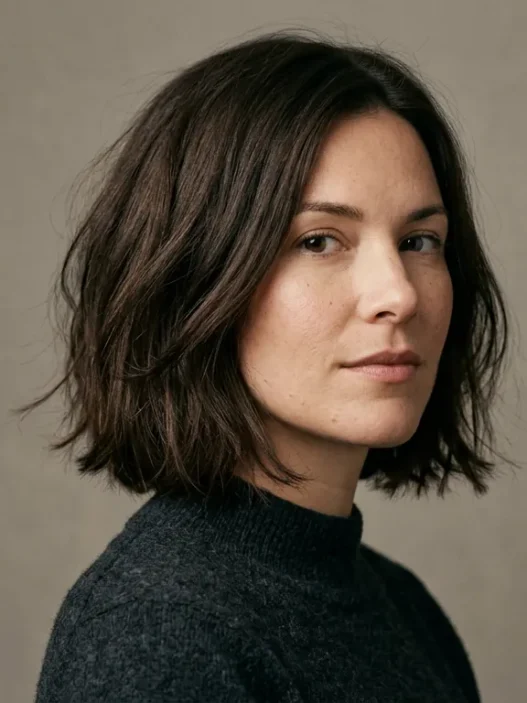
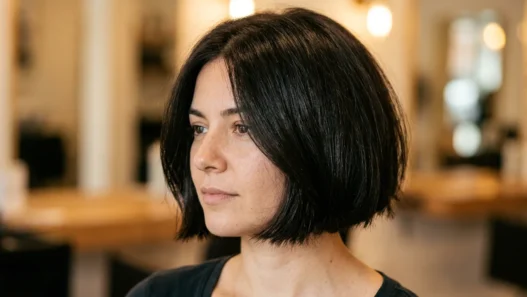
Look at how she’s wearing hers in the image above — the way the cut falls just past her jaw corner means the eye slides right past it. That’s exactly what I mean. The jaw is still there. It’s just not the endpoint anymore.
This is also why face-framing layers do so much work on this face shape. They create a diagonal from the chin outward, which is the exact opposite of the jaw’s horizontal line. If you’ve been avoiding layers because you thought your hair was too fine or too thick to manage them, it’s worth revisiting — the post on haircuts for double chin and jaw-heavy face shapes covers exactly how different cut structures interact with the lower face, and a lot of it applies here. You can also look at how stylists handle the bob cut for round face shapes — the lengthening logic they use at the sides maps almost directly onto what works for square faces at the jaw.
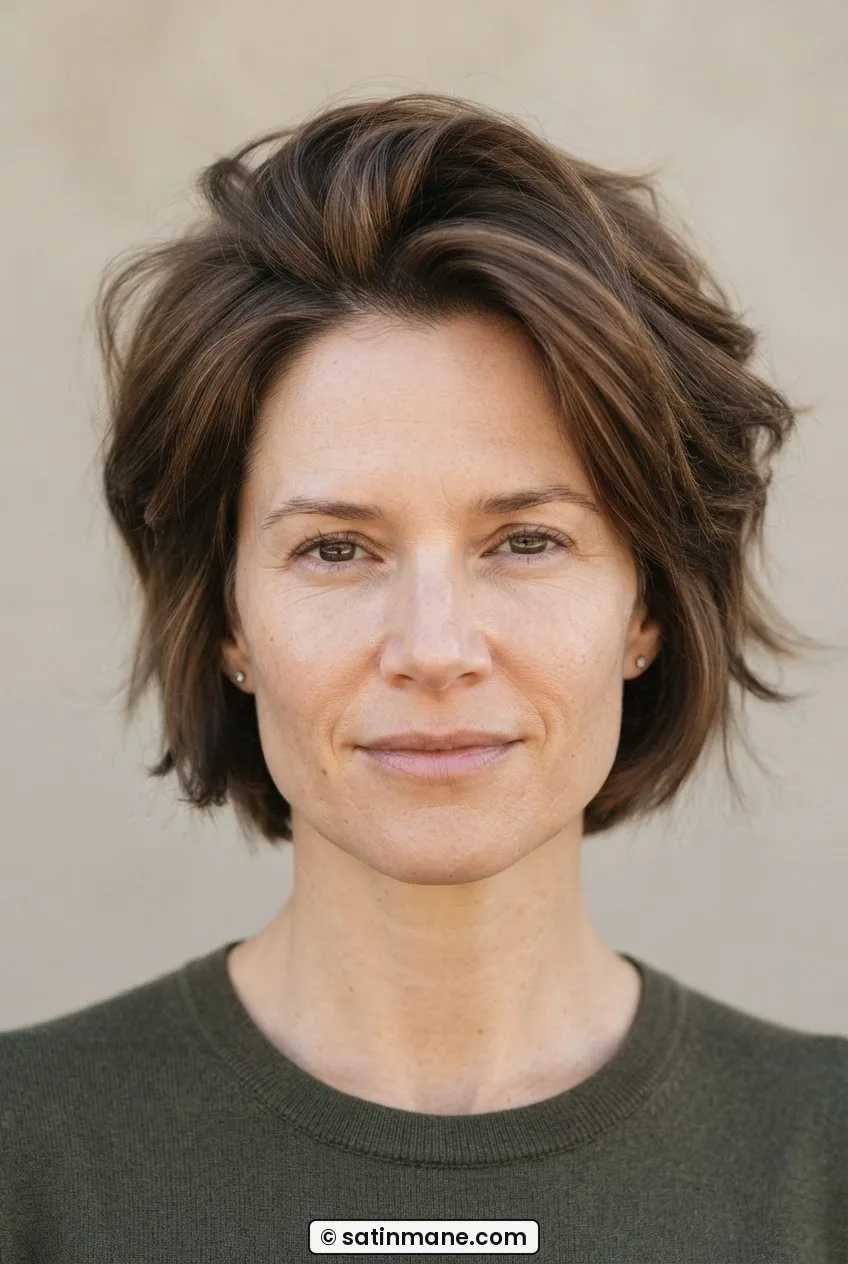
A Stylist Demonstrates the Jaw Frame Difference
Step 6: Adjusting the Shape
By now you’ve ruled out jaw-length blunt cuts, possibly very short cuts, and long blunt-straight cuts. What remains is a range — and within that range, there’s still one more filter to apply before you can commit to a specific cut.
That filter is volume placement. Where a cut adds volume changes everything for a square face. Volume at the sides, at jaw level, widens the lower face — it exaggerates what’s already strong. Volume at the crown or at the temples adds height, which visually lengthens the face. Volume in the mid-lengths or at the ends past the jaw creates movement that pulls the eye downward and away from the corner.
Run through what’s left in your mental shortlist. For each option, ask yourself where the cut’s natural volume sits when your hair air-dries or is styled minimally. This matters because high-maintenance volume placement requires you to actively create it every morning — and a lot of us aren’t going to do that consistently. Low-maintenance cuts that already place volume away from the jaw are a better long-term investment than a cut that technically works but only when you blow-dry it into the right shape.
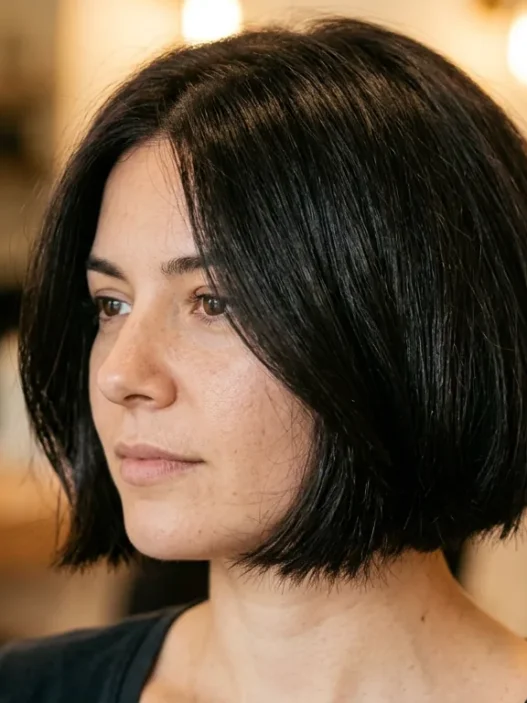
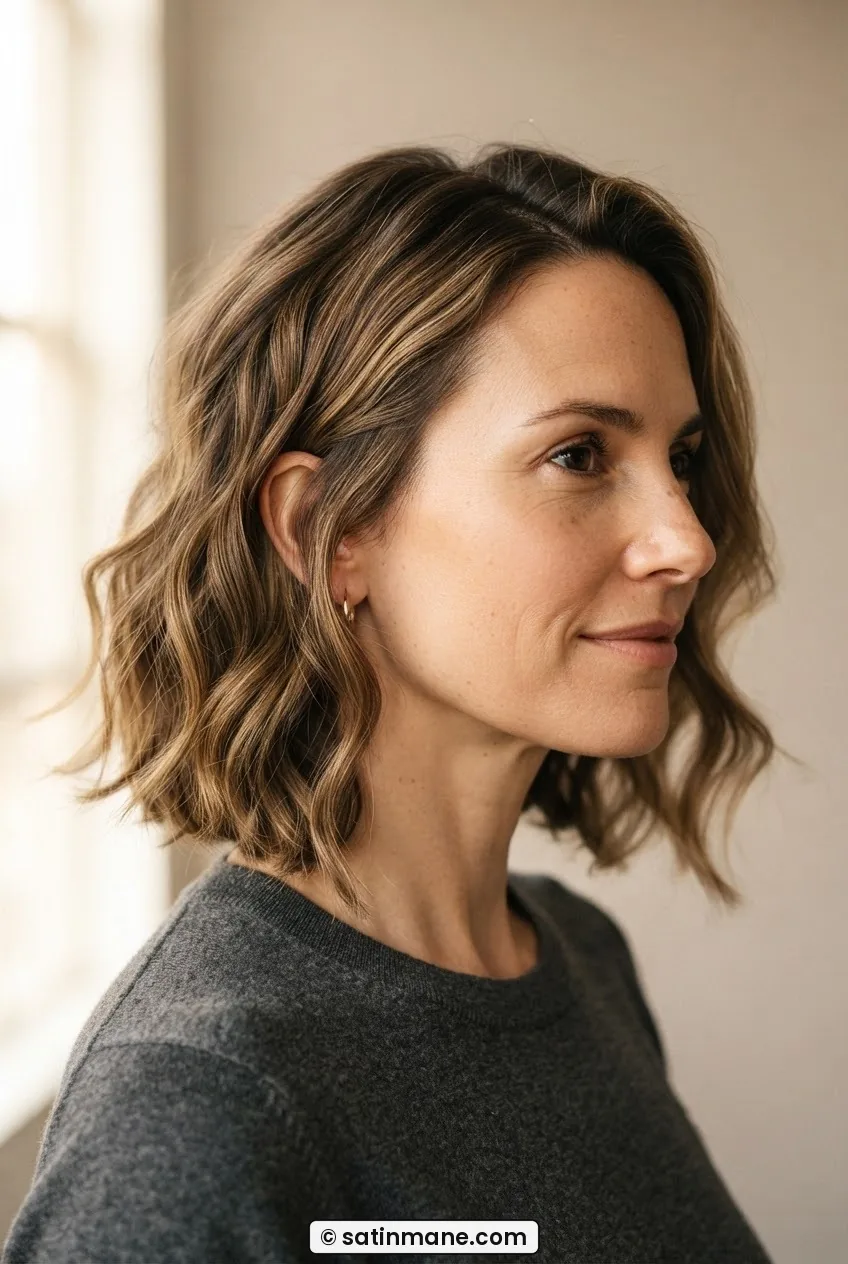
She’s got a very similar face shape to mine in this image — look at how the volume sits entirely above the jaw and then tapers away at the corners. That’s not an accident. Her stylist placed the weight deliberately. This is what I mean by adjusting the shape before you commit.
Step 7: Eliminate the Last Option and Commit
You’ve measured. You’ve ruled out jaw-length blunt cuts. You’ve filtered by volume placement. What’s left should be a small, specific range — probably one or two cut directions, not twelve.
The final elimination comes from your hair’s natural texture. This is the one you’re not guessing about anymore — you’ve lived with it long enough to know. Fine hair without layers will go flat at the mid-lengths and sit heavy at the ends, which on a square face means more weight at the jaw. Thick hair without internal layering will expand sideways, again at the jaw. Wavy or curly hair changes the whole equation because the curl itself breaks up the straight horizontal line you’re trying to avoid — which means wavy and curly hair actually has more flexibility in length than straight hair does.
Take your remaining option — or your top two — and run the texture filter. If one of them requires your hair to behave in a way it doesn’t naturally, rule it out. What you have left is your cut. It won’t be the cut from the saved Pinterest image. It probably won’t be what you walked in expecting. But it will actually work, because it came from your specific face, your specific jaw angle, your specific proportions — not from someone else’s approximation of what a square face looks like.
There’s more on how the square face category behaves across different cut lengths in this piece on face shape as a filter for square face hairstyles — I keep going back to it whenever a client asks me to justify a recommendation I’ve made using this method. You can also look at how haircuts by face shape and hair type interact for a more complete picture if your texture is on the fine side.
Real Questions About Square Face Haircuts
Can I wear a fringe if I have a square face?
Yes — but the fringe shape matters as much as the fringe itself. A blunt, straight-across fringe adds another horizontal line at the forehead, which can double down on the squareness. A curtain fringe, a side-swept fringe, or a wispy fringe that parts naturally tends to add softness and break up that strong horizontal. It’s one of those cases where the detail within the fringe shape does more work than simply having one or not.
Do curtain bangs actually work on a square jaw, or is that just a trend thing?
They genuinely work — and not because they’re trending. The curtain shape creates two diagonal lines framing the face from the forehead, which draws the eye inward and upward rather than across. That diagonal is doing the same structural job as face-framing layers at the chin, just higher up. The caveat is maintenance: curtain bangs grow out quickly and need regular trimming to hold their shape. If you’re not going to do that, a longer side-swept fringe that blends into the lengths requires fewer touch-ups.
What about updos — do square faces need to avoid them?
Not at all. The concern with updos on a square face is usually that pulling all the hair back exposes the jaw corner with nothing to soften it. The fix is leaving a few face-framing pieces out — even just two or three strands at the temples or in front of the ears. A completely smooth, pulled-back updo with no pieces left down can read very sharp, but that’s fixable with styling rather than cut choice.
Is a pixie cut off the table for a square face?
Not if your face length is longer than your width. A pixie with volume at the crown actually adds height in exactly the right place. The cuts that struggle on square faces are the very close-cropped pixies with no height at the top — those sit the visual weight right across the horizontal face width and make the jaw read wider. A pixie with texture or a slight quiff at the crown does the opposite. The face length ratio from step three is your real answer here, not the face shape category alone.
When I finally ran my own measurements through this process, I landed on a collarbone-length cut with face-framing layers and a side part. Not the most exciting answer. But it was the first haircut in years that looked intentional rather than aspirational — like it had been chosen for me specifically, because it had. That’s the whole point. You don’t need more options. You need fewer, better ones.