








I have a square jaw. Not subtle — properly square, the kind where a blunt bob photograph can look incredible or completely flat depending on about four variables I’ve spent years learning to spot. The first time a stylist told me to “soften the jawline” I nodded like I understood. I didn’t. I went home and got a cut that made me look like I was wearing a helmet. That was the beginning of actually figuring this out myself.
The thing about square face shape advice online is that it’s almost always backwards. People start with rules — “avoid blunt cuts,” “add layers,” “try an asymmetric part” — when rules are the last thing you should be reaching for. Face shape is a filter. It helps you narrow things down. It doesn’t hand you a prescription.
Here’s the order I actually use when I’m looking at a haircut and deciding whether it’ll work.
How I Think Through Square Face Hairstyles
The First Thing I Look At
Where does the weight of the cut land? Not the length — the weight. This is a completely different question and most people skip it entirely.
Weight in a haircut is the visual mass. A blunt one-length bob has enormous weight at the perimeter. A heavily layered shag disperses that weight all over. A lob with face-framing pieces has a hybrid — heavy at the back, lighter around the face. When I look at a photo of a cut I’m considering, I mentally ask: where would this sit on my face? Because on a square face shape, weight that lands directly at the jaw is the variable to watch.
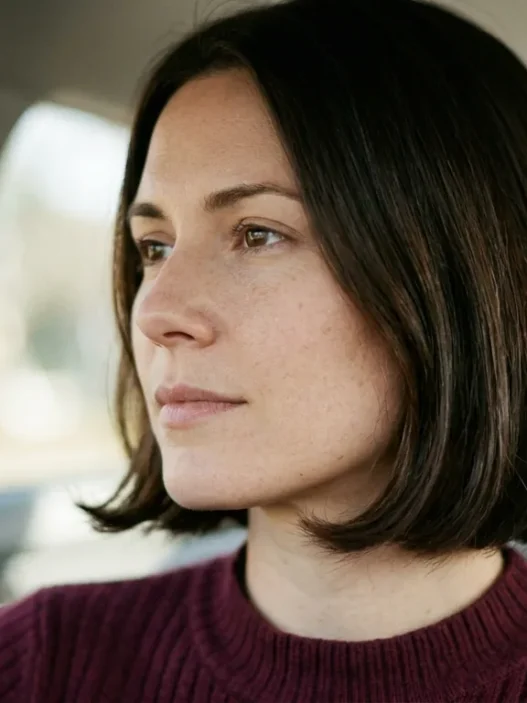
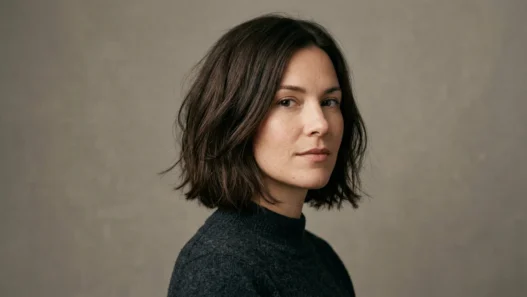
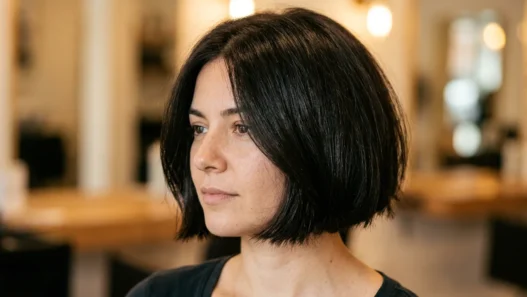
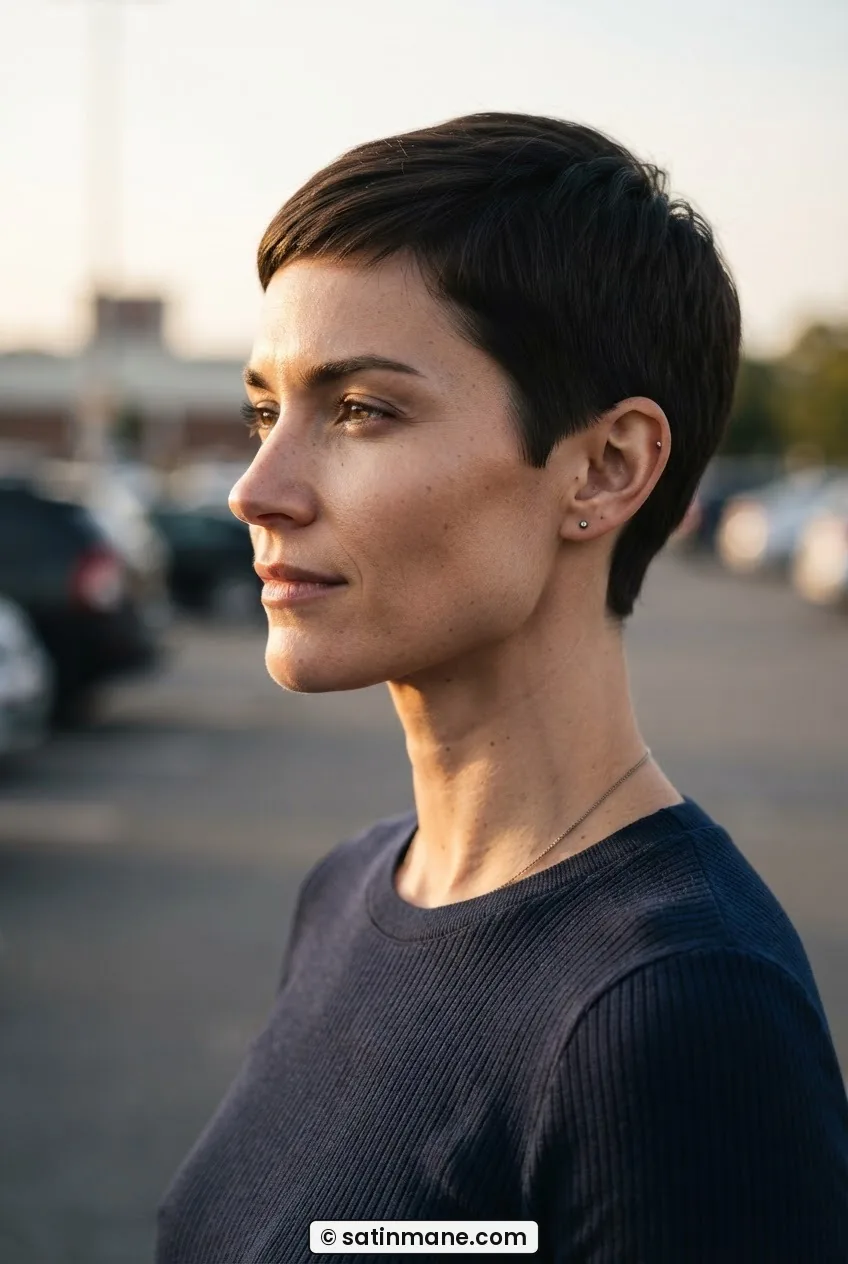
It’s not automatically bad. That’s the nuance nobody explains. A strong perimeter that hits at chin level can actually look extraordinary on a defined jawline — it creates a frame-within-a-frame effect. Look at how she’s wearing hers in the photo above. The ends land just at jaw level, and rather than competing with her bone structure, they echo it. The whole thing looks deliberate and graphic.

The problem only happens when the cut’s weight lands against the jaw in an awkward way — a cut that flips outward at exactly the widest point, or a blunt fringe that sits too flat and shortens the face vertically. Those are the combinations to avoid. Not the blunt bob itself.
So the first question is always: where’s the weight, and what does it do at my jaw? Once I’ve answered that, I’m already most of the way there.
The Second Thing I Look At
Vertical movement. Does the cut create any sense of length, or does everything read as horizontal?
A square or rectangular face shape already has strong horizontal lines — that’s the jaw, and sometimes the forehead too. A cut that adds more horizontal emphasis (think a perfectly straight fringe paired with a perfectly straight one-length bob, both hitting at right angles) can start to feel very rigid. Not because rules forbid it, but because there’s simply no visual relief — no diagonal, no soft point, nothing to guide the eye up or down.
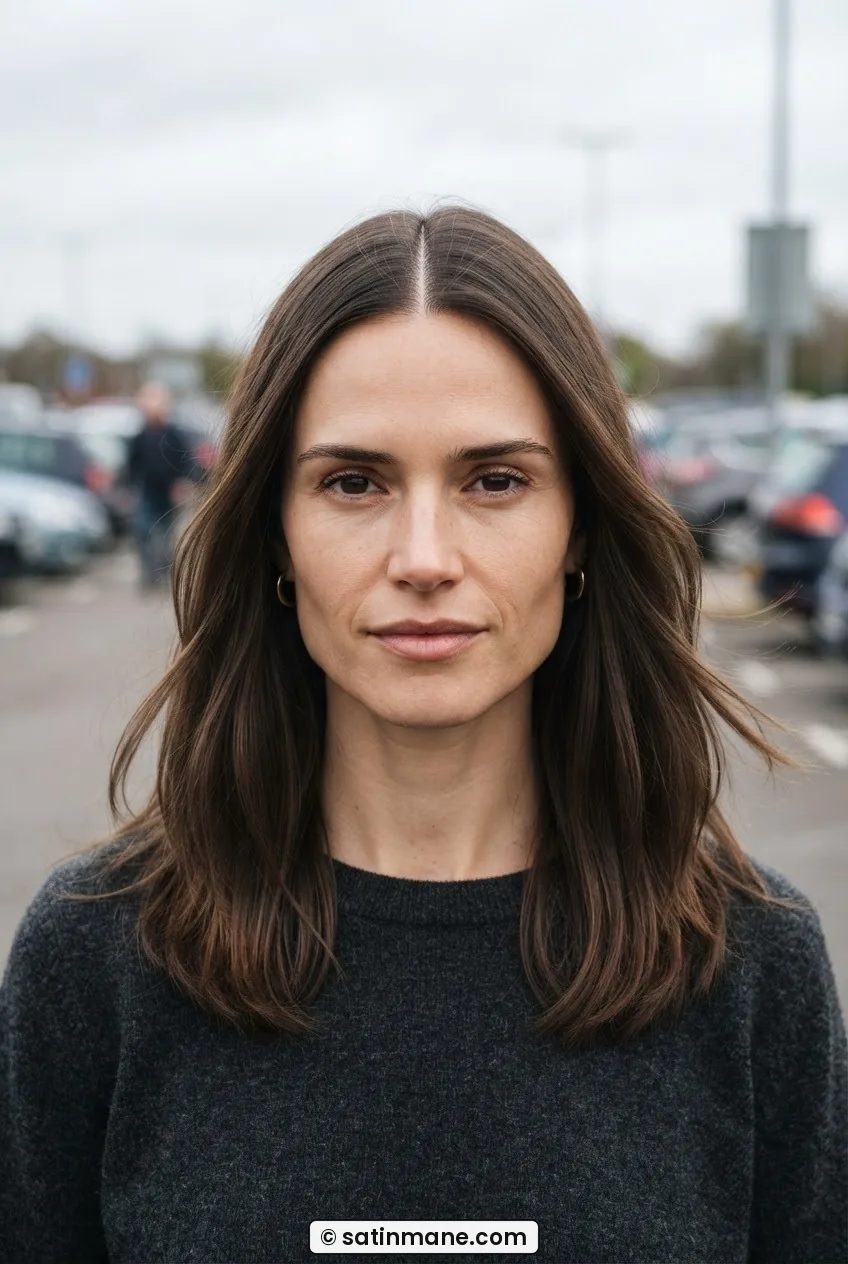
What I look for is any element that introduces a diagonal or a vertical. It could be side-swept fringe. It could be a slightly longer front piece that angles toward the chin. It could be face-framing layers that pull the eye downward past the jaw. It could even be a center part on a long cut — that strong vertical line down the middle is extremely flattering on square jaw hairstyles because it bisects all that horizontal width.
This is also why I love a soft shag or a lightly layered medium cut on square face shapes so much. The layers create natural movement, and movement reads as vertical energy. It’s less about hiding the jaw and more about giving the eye somewhere interesting to travel. You can read more about what this actually looks like in practice in my thoughts on hairstyles for short hair — because a lot of the same movement principles apply even when you’re going shorter.
Medium lengths are honestly a sweet spot for a square face shape. Collarbone-grazing cuts in particular give you enough length to play with vertical movement while still feeling manageable. Think about the proportion: hair that ends between the jaw and the shoulder has the most flexibility. It can go lots of directions — wavy, straight, tucked, half-up — and most of them work.
The Third Thing I Look At
Texture. Specifically — does this cut rely on being perfectly smooth to look good, or does it work with texture and movement?
This matters so much more than people realize, and it’s where the low-maintenance angle becomes really important. A precision cut with a sharp perimeter looks amazing in a salon photo taken immediately after a blowout. But if your hair has any natural wave, if humidity is a factor, if you’re not planning to heat-style daily — that same cut can look like something entirely different two days in.
For square face shapes specifically, a cut that works with natural texture tends to be more flattering day-to-day anyway. Slight wave or movement in the ends softens the overall silhouette without requiring you to actively style it. You get the softness as a side effect of just… letting your hair dry naturally. I’ll take that deal every time.

The cuts I keep coming back to for square face shapes fall into a few categories:
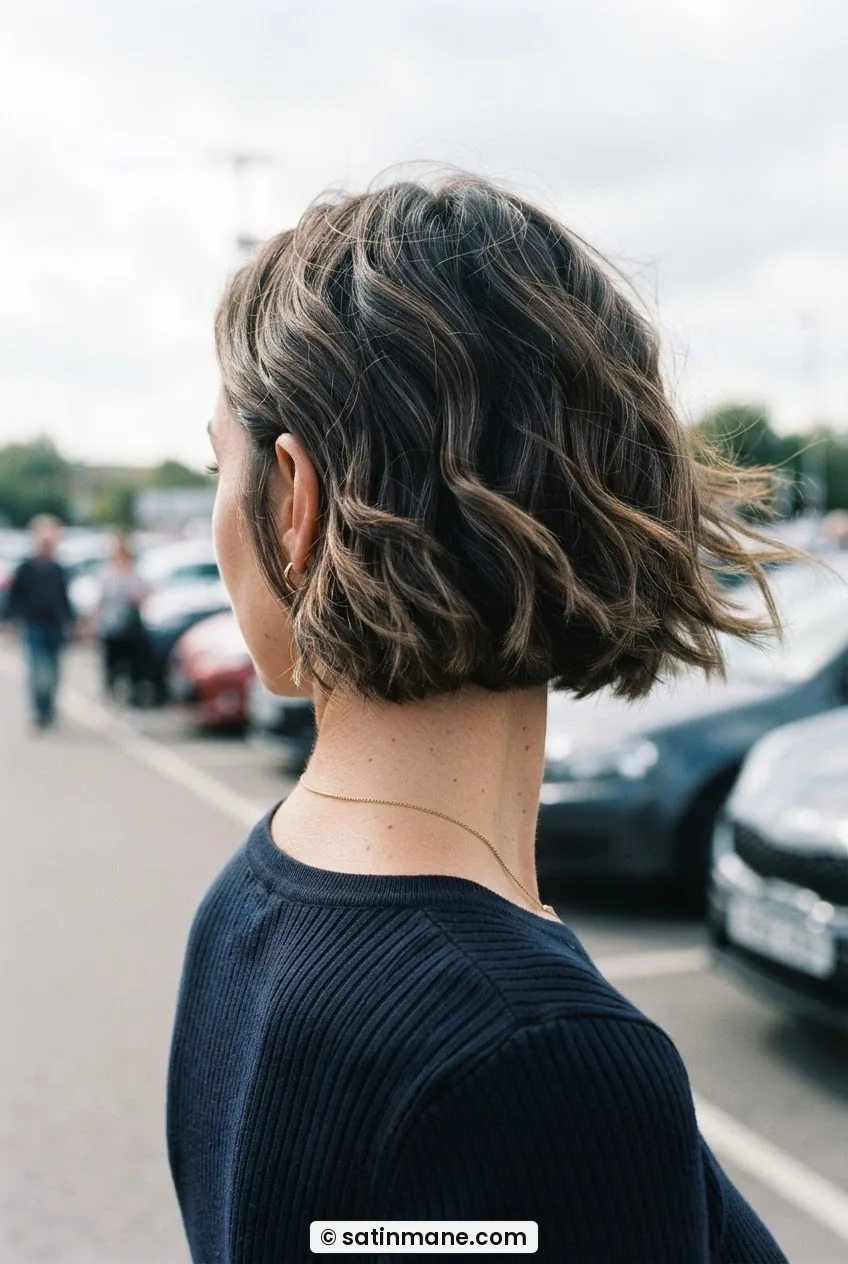
- Textured bobs — the ends are point-cut or razored so they move slightly rather than sitting in one heavy line
- Soft shags — curtain bangs and face-framing layers, grown-out and undone, nothing rigid
- Long layers on medium or long hair — especially with a face-framing layer cut around the front, which creates softness exactly where you want it
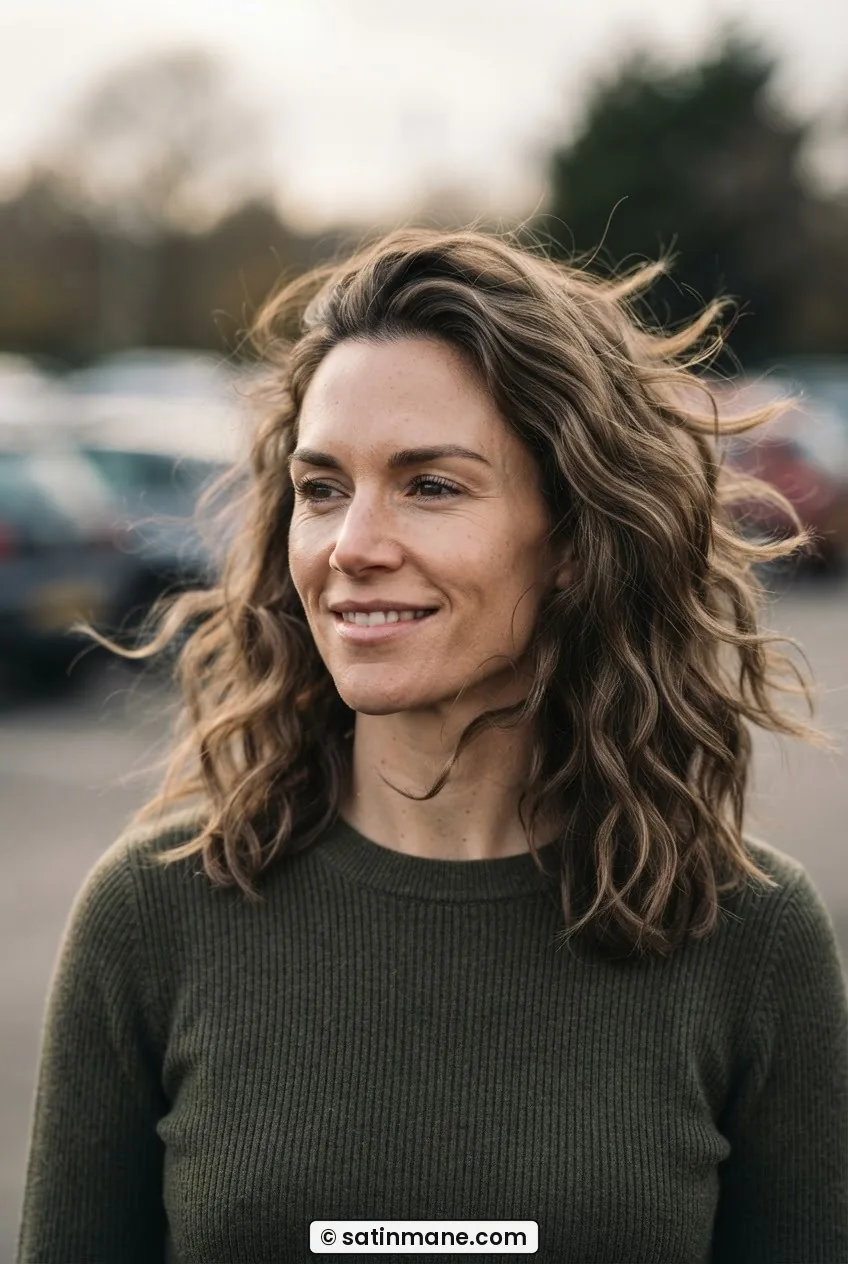
- Wavy lobs — collarbone length, barely styled, incredibly flattering
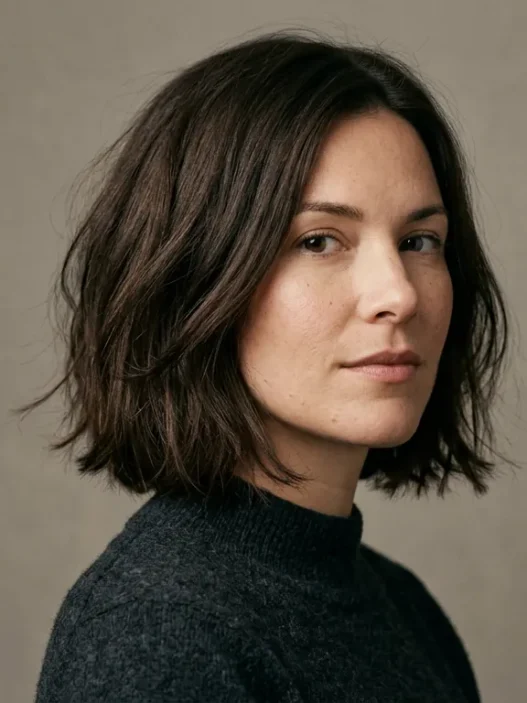
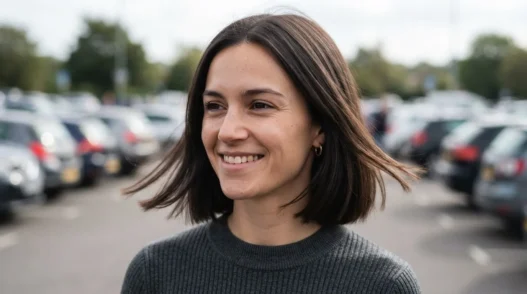
She’s got a similar jaw shape to mine, and look at how the textured ends in that photo sit — there’s a slight bend in them, not a perfect curl, just a lived-in movement. That’s the texture I mean. It’s the difference between a cut that looks good once and a cut that looks good every day.
If you’re working with a round face rather than a square one, the texture question reads a little differently — I wrote about this directly in my guide to bob cuts for round faces, because the perimeter weight logic flips almost entirely.
A Stylist Who Gets the Texture Argument
What I Never Look At — And Why That’s Controversial
I never look at whether a cut is “recommended for square faces.”
I know. That sounds like I’m dismissing the whole framework. I’m not. I’m saying the framework is the wrong place to start — and also the wrong place to end up. When I search “square face hairstyles” (and I have, many times), what I mostly get is a list of approved options that were agreed upon somewhere in the early 2000s and have been recycled ever since. Soft layers. Side parts. Oval-ifying the face.
Here’s my actual controversial opinion: the goal of a haircut is not to make a square face look oval. I am not trying to trick anyone into thinking my jaw is a different shape. I like my jaw. It’s strong and it’s mine and some of the most striking haircuts I’ve ever seen on people with square face shapes lean into that geometry rather than fighting it.
A graphic blunt bob. A sleek center-parted long cut. A cropped pixie with a strong architectural edge. These are cuts that say: yes, she has bone structure, and we’re celebrating it. The traditional square face advice essentially treats the jaw as a problem to solve. I don’t see it that way, and I think a lot of women are getting talked out of cuts they’d love because of rules that were designed for someone else’s aesthetic goals.
The approach I take — weight, vertical movement, texture — is about understanding your face shape as a starting condition, not a constraint. Once you know how those three variables interact with your specific structure, you can make a genuinely informed choice. That’s a completely different thing from scanning a list of “approved” haircuts and picking from column A.
And honestly? The women I know who are happiest with their hair are the ones who stopped consulting the approved list and started consulting their actual mirror. It helps to know the principles — you can check what face shape guides actually measure to understand what stylists are looking at — but principles and rules are not the same thing.
If you’re considering going shorter and want to think through what actually holds up over time, my piece on short haircuts for women over 50 covers a lot of the same logic about structure vs. softness — and it applies well below 50 too, for what it’s worth. And for anyone sitting at the opposite end of the spectrum wondering about rounder features, the thinking over at short haircuts for round faces shows how radically different the weight conversation becomes when you change face shape.
The thing I’d want anyone reading this to take away: your face shape is useful information. It’s a filter that helps you notice which variables matter most for your specific structure. It is not a sentence. It does not determine what you’re allowed to wear. Use it like a tool, and then put it down and look at yourself.
That said — and I want to be clear here — understanding what your stylist considers can genuinely help you have better conversations in the salon. You stop just nodding. You start asking the right questions.
Quick Answers Before You Book
Is a bob a good idea for a square face shape?
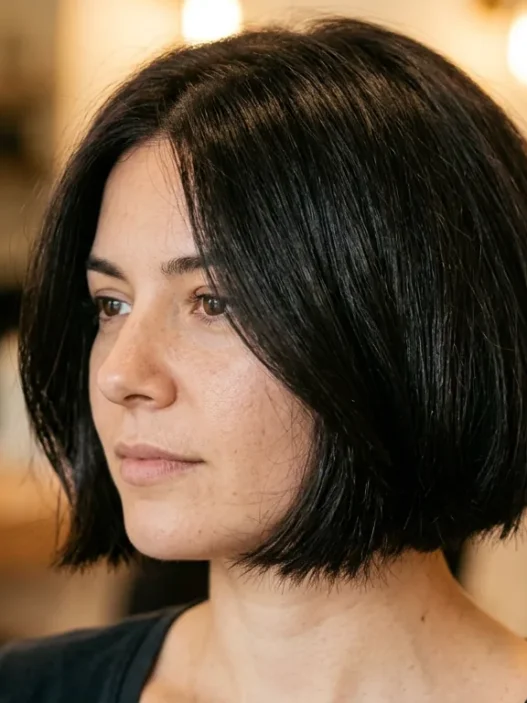
Yes — with one caveat. The perimeter placement matters more than the bob itself. A bob that ends right at your widest jaw point and flips outward will add horizontal emphasis you probably don’t want. A bob that hits just below the jaw, or sits slightly above it with a bit of texture in the ends, can be genuinely stunning. The cut in the photo above is a great example — she’s got a defined jaw and the bob is working with it, not against it.
What about medium length cuts — do they suit a square face?
Medium length is honestly one of the most versatile ranges for a square or rectangular face shape. Collarbone to shoulder length gives you enough hair to create vertical movement naturally, especially if there’s any wave in your texture. A layered lob or a soft shag at medium length is my go-to recommendation for anyone who wants something that actually dries well and doesn’t need daily styling.
Should I avoid a blunt fringe if I have a square jawline?
Not categorically. A heavy straight fringe can create a very short forehead-to-chin visual if it’s paired with a cut that also ends at the jaw — that’s the double horizontal problem. But a blunt fringe on a longer cut, or a slightly side-swept fringe, often works fine. The key is making sure at least one element in the cut introduces a diagonal or vertical to offset the horizontal lines.
What’s the lowest-maintenance option for a square face shape?
A textured lob with face-framing pieces. It air-dries well, grows out gracefully, doesn’t require a precise trim every six weeks to look intentional, and the natural movement in the ends does the flattering work for you. Second place: a longer soft shag. Both cuts essentially improve with a little roughing up rather than needing to be perfect — which is the whole game in low-maintenance hair.
If you’re exploring the round face side of things for a friend or just out of curiosity, my roundup at round face haircut ideas uses the same filter-not-rules thinking and might be useful as a contrast.
Book the cut because you love it, not because someone approved it for your face shape. That’s the whole thing, really.