








I’ve been paying close attention to short haircuts for women over 50 for years now — partly out of personal interest, partly because it’s genuinely one of the most misrepresented topics in hair content. So much of what gets labelled “low maintenance” isn’t. And so much of what gets dismissed as “too old” or “too short” is actually quietly flattering in a way longer hair on the same face just isn’t. Softness at the face and movement at the ends do most of the heavy lifting in every single cut on this list. The shape does the work — not the product, not the styling time. Here are twelve cuts I’d genuinely recommend, explained the way I wish someone had explained them to me.
Cuts at a Glance — Jump to Yours
- 1. The One That Air Dries Itself
- 2. The One With Weight at the Jaw
- 3. The One That Suits Almost Every Face
- 4. The One for Fine Hair That Wants to Look Thicker
- 5. The One You Trim Twice a Year
- 6. The One That Works on Natural Silver
- 7. The One for Round Faces
- 8. The One That Needs a Good Product
- 9. The One That Grows Out Gracefully
- 10. The One for Thick Hair
- 11. The One That Earns Its Appointment
- 12. The One That Suits Glasses
1. The One That Air Dries Itself
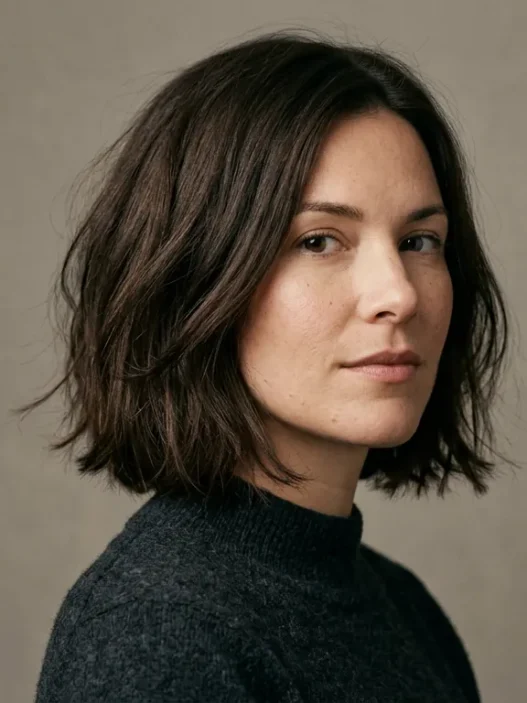
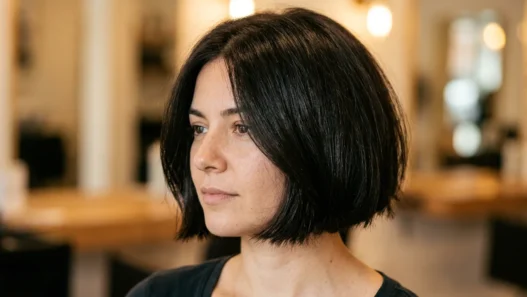
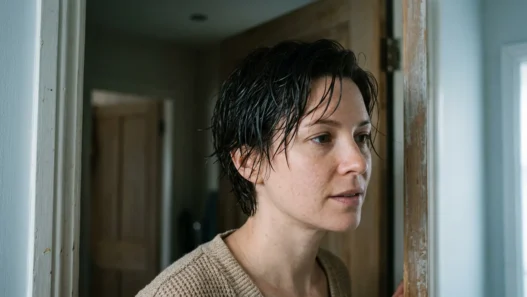
This is the chin-length bob with a slight outward bend at the ends — no blunt perimeter, no sharp line. The weight sits at the jaw, and the cut relies on a very soft graduation underneath so the hair dries in a natural C-curve rather than collapsing flat. The stylist leaves the very outer layer fractionally longer and texturises the ends (point cutting, not thinning shears — ask specifically for that). Look at her in the photo above: the hair is falling with a slight outward movement at the ends without a curl, without a round brush. That’s all the cut, not the styling.

Who it suits: wavy-to-straight hair, oval and oblong faces. What it asks: dry shampoo every two or three days, a trim every nine to ten weeks to keep the graduation working. At the chair: say “chin-length bob with soft graduation underneath and point-cut ends — I want it to air dry with movement.”
Seeing the Air-Dry Result in Real Time
2. The One With Weight at the Jaw
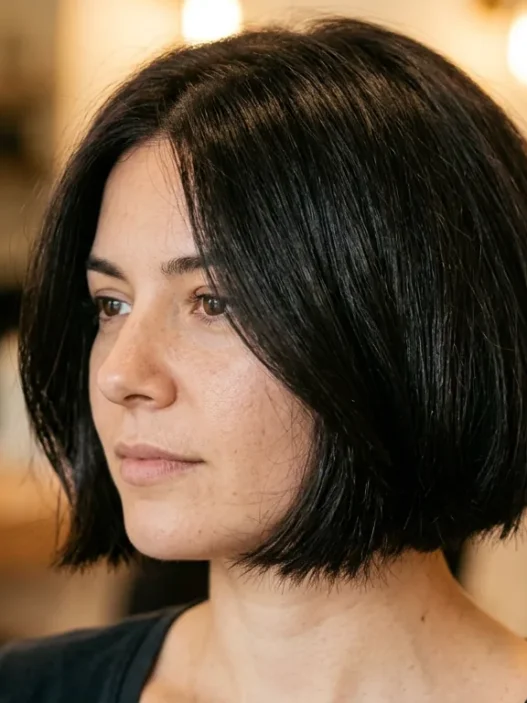
The blunt-perimeter bob. Weight is kept deliberately solid at the jaw — no graduation, no layers, no internal texture. The heaviness is the point. It creates a clean horizontal line that reads as intentional and modern, and the density of that line is exactly what lifts the perception of sagging skin along the jawline. On fine or medium hair, this is one of the better structural choices available. On thick hair, the bulk can be overwhelming, and you’ll need a stylist who knows how to channel thickness without removing weight from the perimeter.
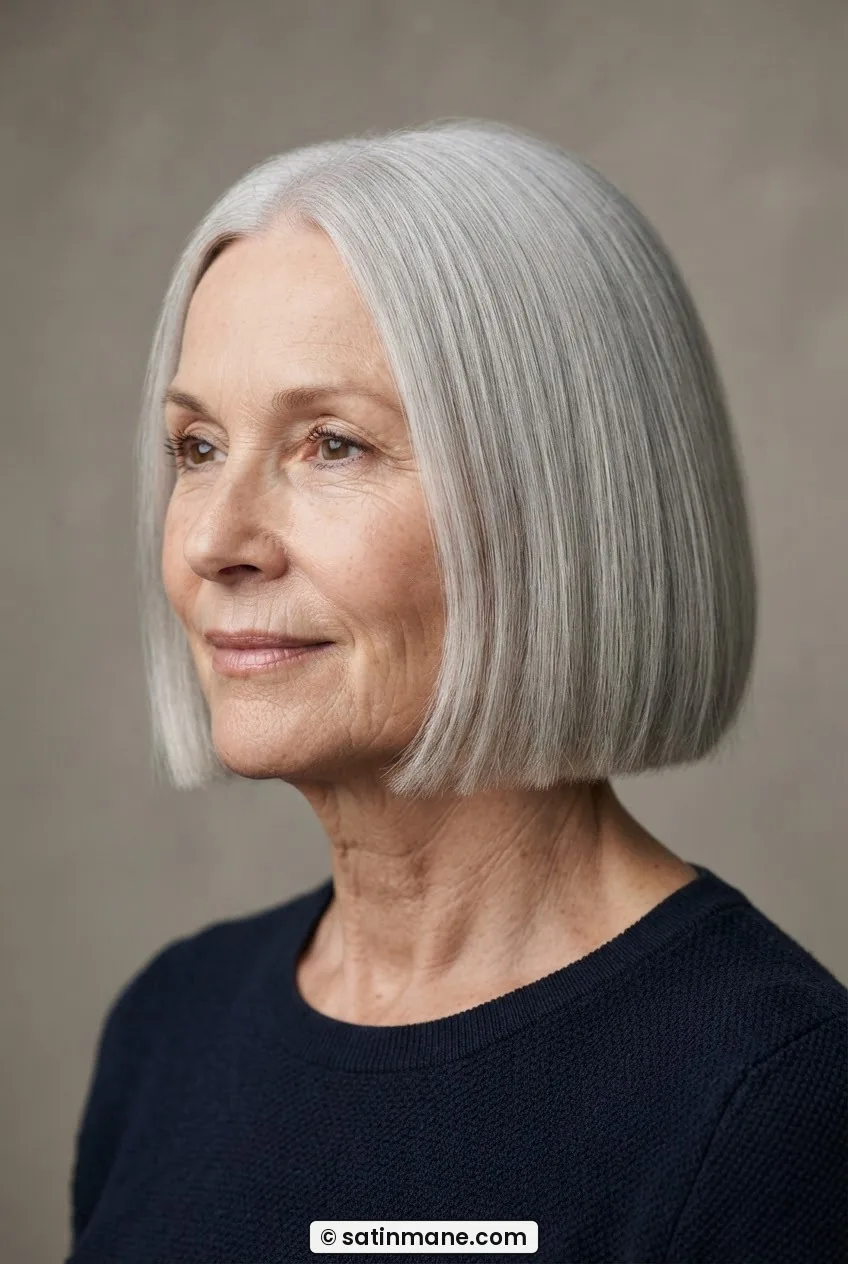
It does require more frequent trims than you might expect — every six to eight weeks to keep the line clean. A grown-out blunt bob doesn’t age gracefully; it just looks untidy. That’s the honest trade. At the chair: “One-length bob at the jaw, no layers, perimeter kept blunt.”
3. The One That Suits Almost Every Face
The textured lob — sitting between the collarbone and the jaw, not quite touching either. The graduation is internal rather than perimeter-based, meaning the outer shape stays soft and rounded but there’s movement built through the mid-lengths. Face-framing pieces are left slightly longer and usually cut on an angle — these do a remarkable job of directing attention toward the eyes and cheekbones without fuss. I’d argue this is the most universally workable short-to-medium cut for women in their fifties and beyond. Oval, square, heart — it adjusts.
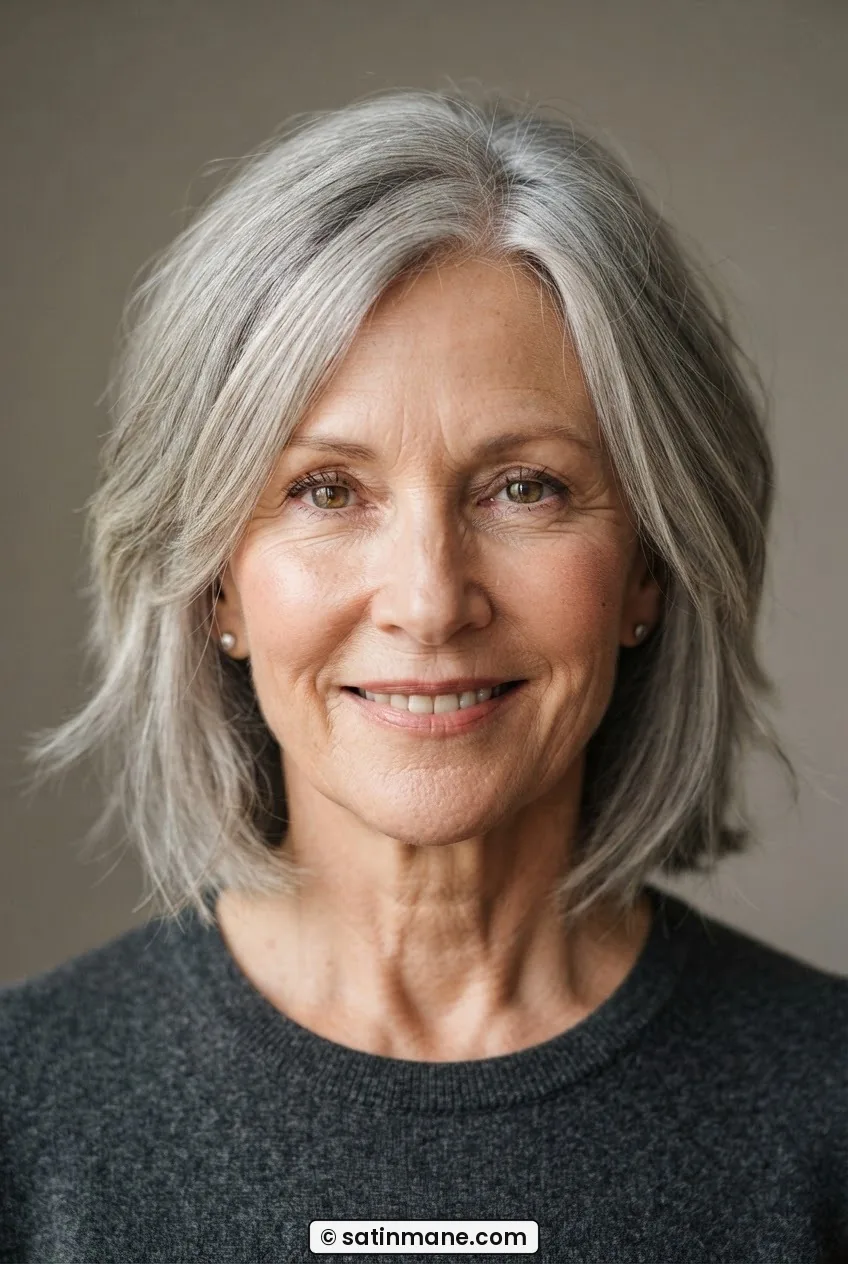
Morning commitment: minimal. Scrunch in a texture cream while damp, let it dry. Done. At the chair: “Textured lob to the collarbone, internal graduation only, face-framing pieces angled to the cheekbone.”
4. The One for Fine Hair That Wants to Look Thicker
Short layers through the crown — the kind where the top section is cut shorter than the perimeter, creating a cushion of volume that sits on top of the head. This is a fundamentally different approach to fine hair than most stylists take on clients over fifty. Instead of adding length to compensate, you remove it where it matters most: on top. The result is height at the crown, which counteracts the flattening that fine hair does with age. The back can still be graduated slightly, but the crown layers are the whole point.
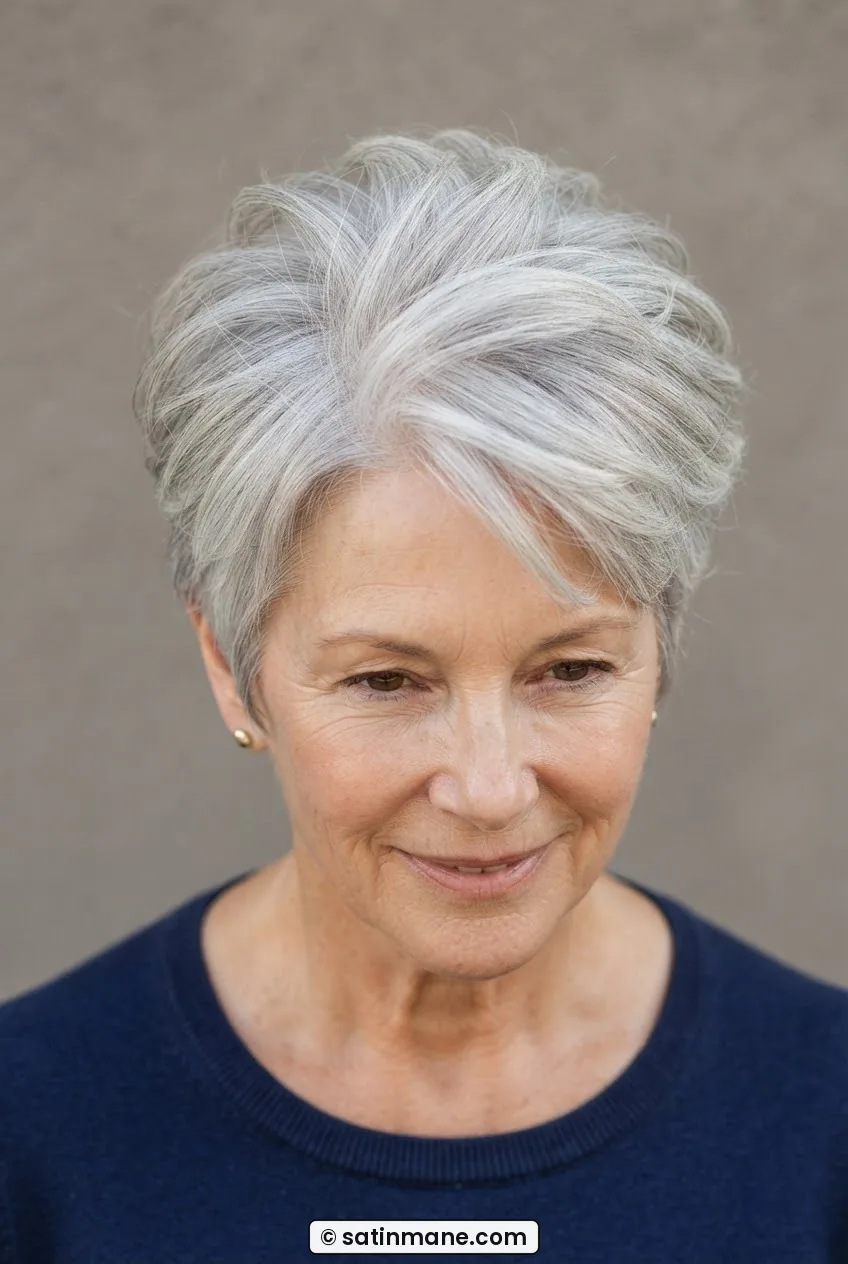
You’ll still want a round brush and a quick blow-dry at the roots for best results — this isn’t fully wash-and-go, and I won’t pretend it is. But it’s five minutes of drying, not twenty-five. At the chair: “Short crown layers to build volume at the top, soft graduation at the back — I want height, not width.” If fine hair is your main concern, also look into what the best cuts for thinning hair can realistically deliver — some promise more than they can structurally achieve.
5. The One You Trim Twice a Year
The grown-out pixie, sometimes called a pixie-lob or a “pob” — though I dislike that word. This is what happens when a well-shaped pixie is allowed to grow for several months without intervention. The top stays longer, the sides and back are tidied occasionally but not taken short again. What results is a cut that doesn’t need precision maintenance because the shape is intentionally soft and transitional. It’s one of the better options if you hate sitting in salon chairs but still want a haircut that reads as deliberate. Browse through the short cuts archive on this site — you’ll see how different the grown-out version can look from the original.
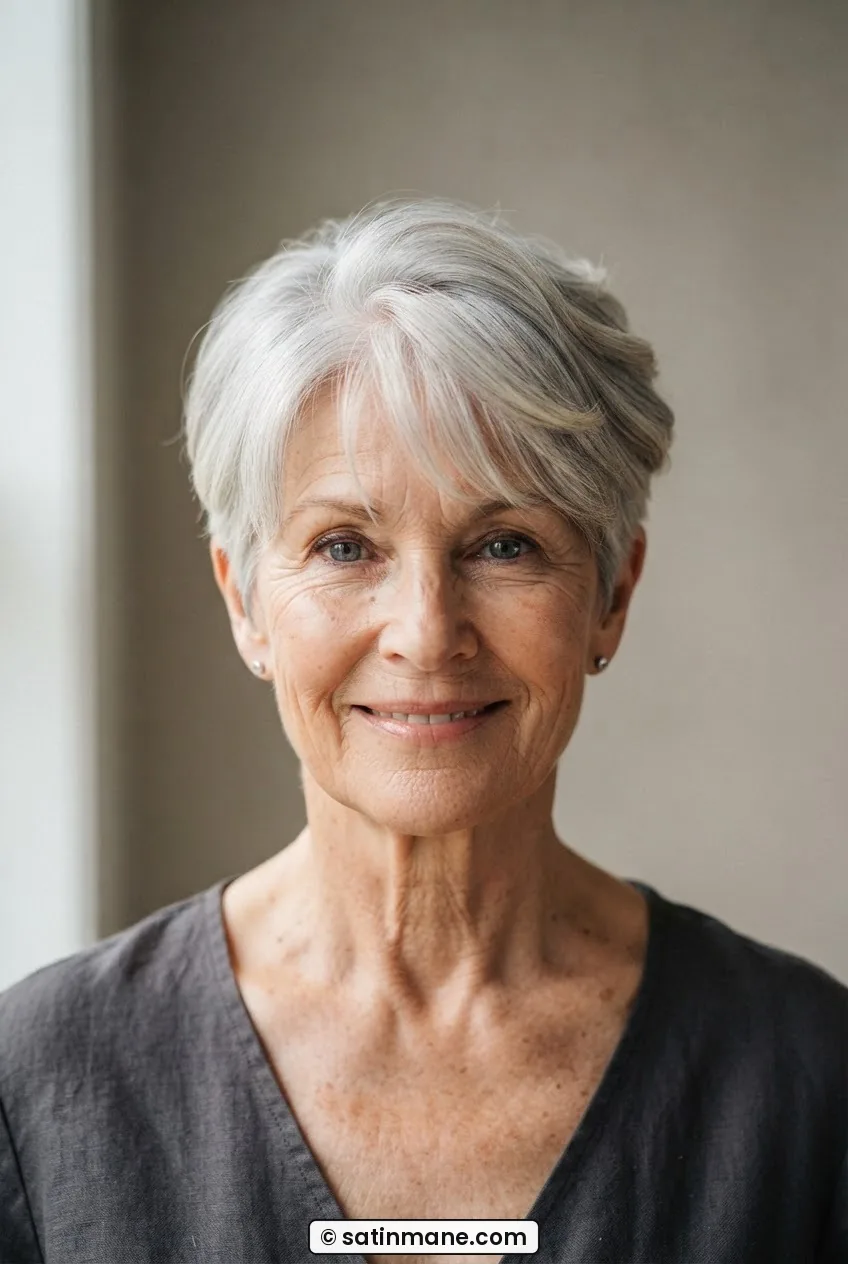
The one thing it asks: patience with the in-between stages. There are about three weeks per cycle where it looks less intentional. At the chair: “I want the grown-out pixie shape — keep the back and sides soft, don’t take the top short again.”
My personal pick is this one, honestly. I watched a client’s silver pixie-lob grow through four seasons and it only looked better every month. The silver really does something to the texture that makes it feel considered rather than chaotic. If you’re on the fence about going short but don’t want the pressure of precise upkeep, this is the one to start with.
6. The One That Works on Natural Silver
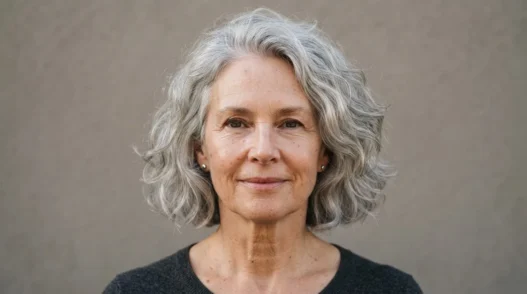
Silver and white hair has a different texture profile than pigmented hair — it tends to be coarser, slightly wiry, and prone to a rougher surface that scatters light rather than reflecting it smoothly. This is actually useful. A shaggy, layered cut at ear-to-chin length takes that textural quality and turns it into movement. The layers are cut so they fall at different levels through the mid-length and ends, creating separation without product. The coarseness keeps them from going limp.

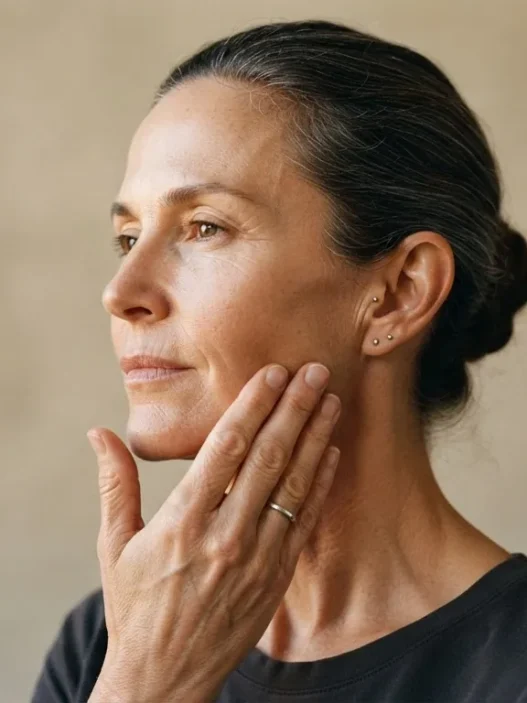
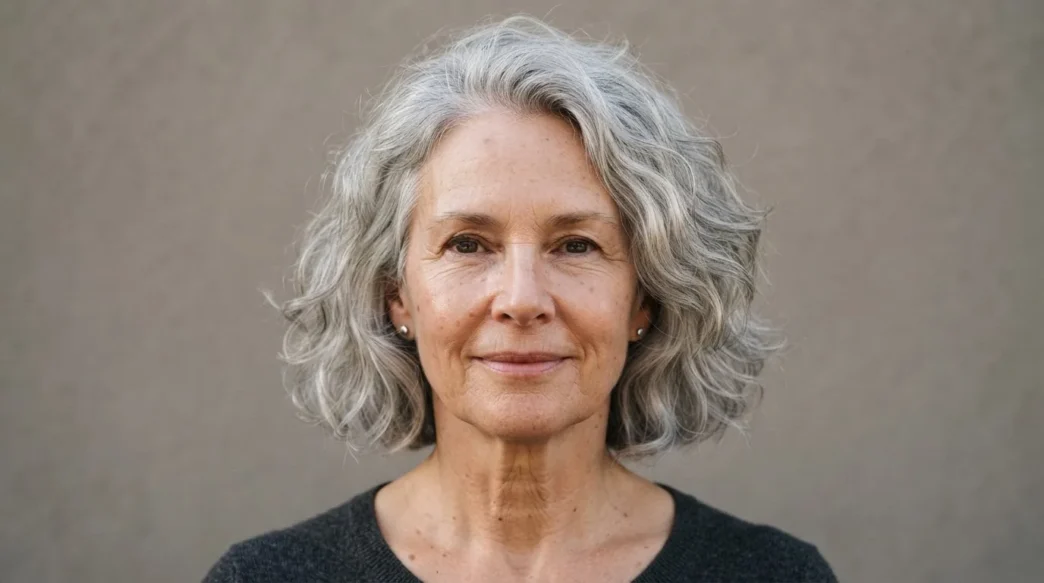
This is the kind of cut where the silver does the work. Look at how her ends separate in the image without any product — that’s the texture of the hair interacting with the layering. If you’re newly transitioning and wondering how to make the most of your silver, read up on caring for natural grey hair so the texture stays in good condition while the cut takes shape. At the chair: “Shaggy layers from the ear down, lots of internal movement — cut to work with the texture of the silver, not against it.”
7. The One for Round Faces
A lot of the advice on short cuts and round faces is overcautious to the point of being unhelpful — it essentially tells women to avoid anything short at all. I disagree. The right short cut on a round face works partly because the cut ends before it adds horizontal weight. The key is where the volume falls. You want it at the crown (height creates length optically) and you want the sides relatively flat — no flipped-out ends, no width at the cheekbone. A chin-length cut with face-framing that angles from shorter behind the ear to longer at the front does this consistently.

I’ve written much more about this specific topic, including some cuts that are counterintuitive but genuinely work — see my post on short haircuts for round faces for the full breakdown. If round face is your primary concern, that’s where to go next. And if you want to keep browsing by face shape, the round face category has everything sorted for you. At the chair: “Keep volume at the crown, flat through the sides — face-framing from short behind the ear to longer at the front jaw.”
8. The One That Needs a Good Product
The piece-y, textured crop. This is around ear length on the sides and slightly longer on top, with the top section cut in short, choppy layers that point upward and separate naturally. It’s a brilliant structural cut — genuinely modern, endlessly flattering when the pieces frame correctly — but I’d be misleading you if I called it low-maintenance. The shape only works when the ends are defined. Without a small amount of product (a paste or light pomade, worked through the ends while damp), it looks flat and undefined by hour two.
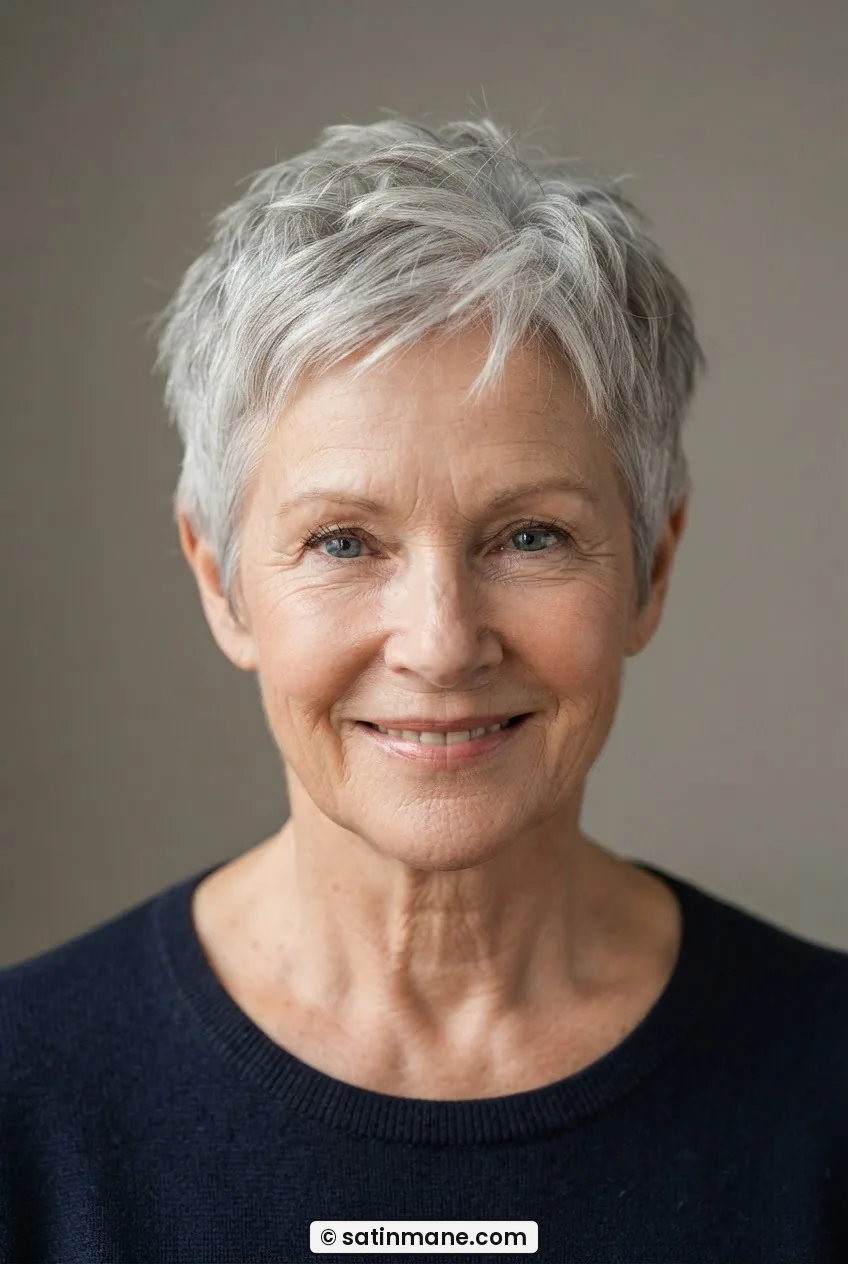
That’s sixty seconds of product application. Not a full styling routine. But it’s a daily non-negotiable for this cut, so go in knowing that. It also needs a trim every six weeks because the choppy layers lose their precision quickly. At the chair: “Short textured crop, choppy layers on top to create separation — I want piece-y ends, not smooth.”
9. The One That Grows Out Gracefully
The soft shag. It’s cut with lots of layers through the interior and a strongly textured perimeter — the ends are never blunt, always feathered. Because the shape has movement built into every section, the in-between stages (four, six, eight weeks post-trim) don’t produce that horrible limbo-length problem you get with more structured cuts. The shag just… grows. It shifts shape, but it keeps looking intentional. For women over fifty who don’t want to be tied to a salon schedule, this is genuinely worth considering.
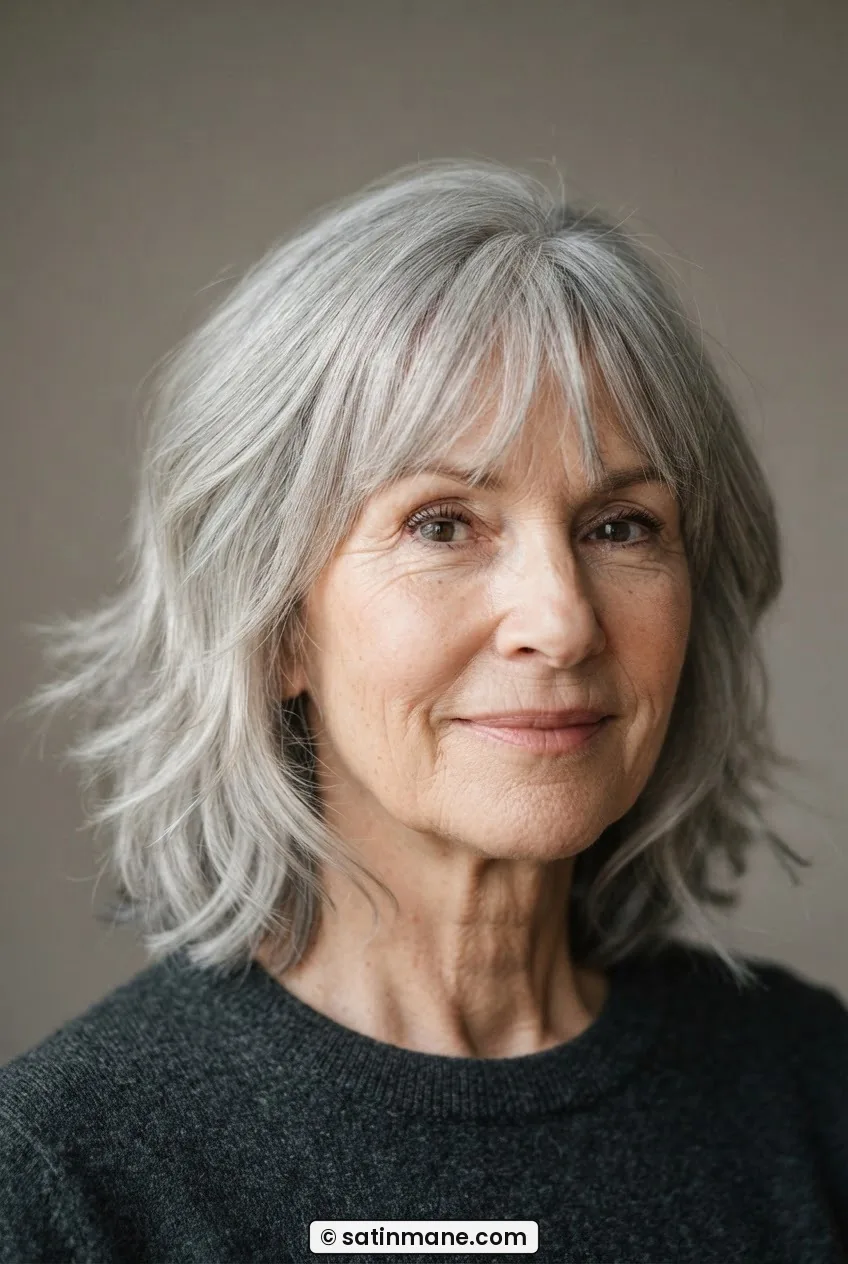
At chin-to-collarbone length, it also works across almost every hair type — fine, wavy, naturally textured. Not ideal for poker-straight hair that resists any natural movement, because the shag relies on some bend in the ends to look right. At the chair: “Soft shag with lots of interior layers and heavily textured ends — I want it to grow out without looking unkempt.”
10. The One for Thick Hair
Thick hair over fifty can be a structural challenge because the weight of the hair pulls its own shape down. The answer isn’t removing weight aggressively with thinning shears — that creates a bottom-heavy triangle. The answer is keeping the cut at a length where the bulk works for you rather than against you. A neck-length bob (sitting right at or just below the nape at the back, chin-length or slightly shorter at the front) channels thickness into a solid, clean shape. The interior is graduated so the back sits flat; the front has enough length to stay in line.
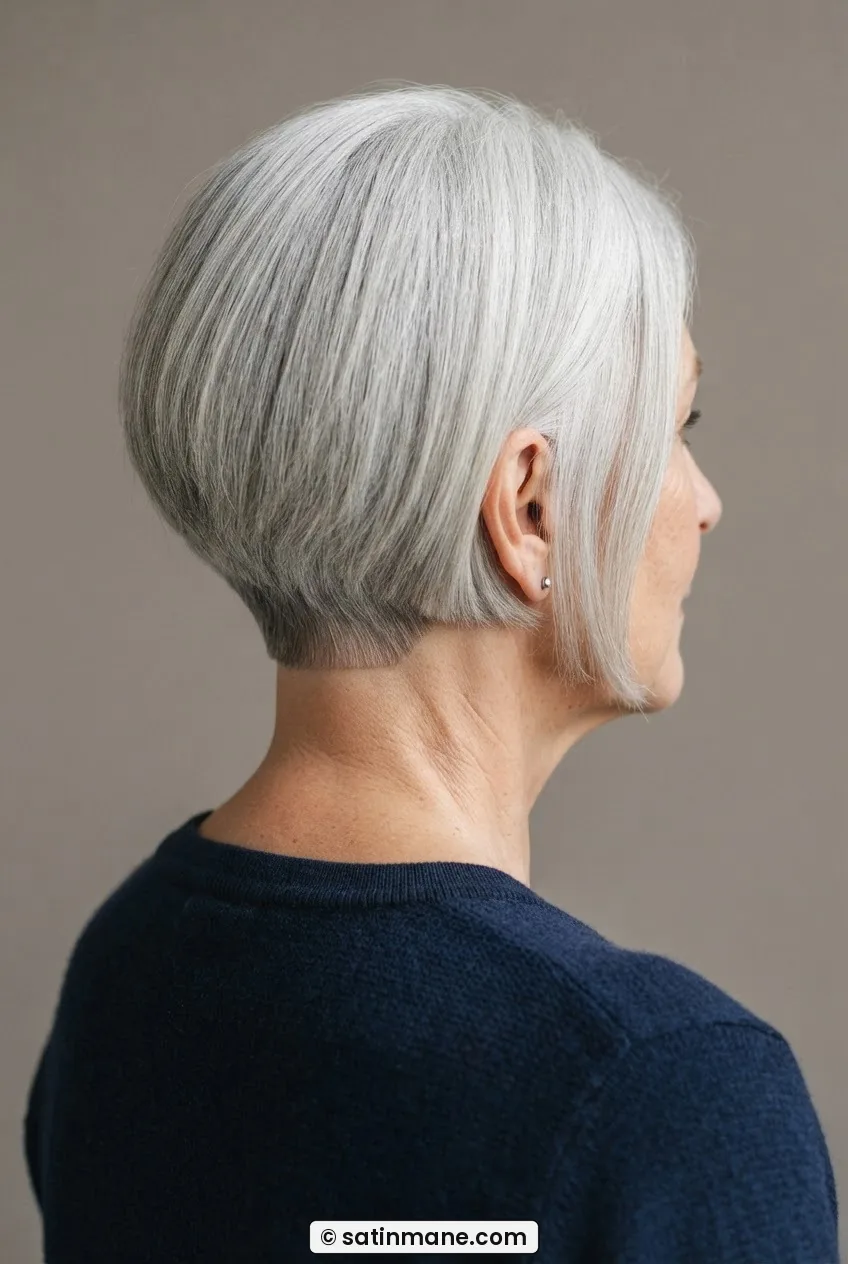
Thick hair dries faster at this length too — genuinely faster, not theoretically. At the chair: “Neck-length graduated bob, perimeter kept solid — I don’t want thinning shears through the length, just graduation in the back section to keep it flat.”
11. The One That Earns Its Appointment
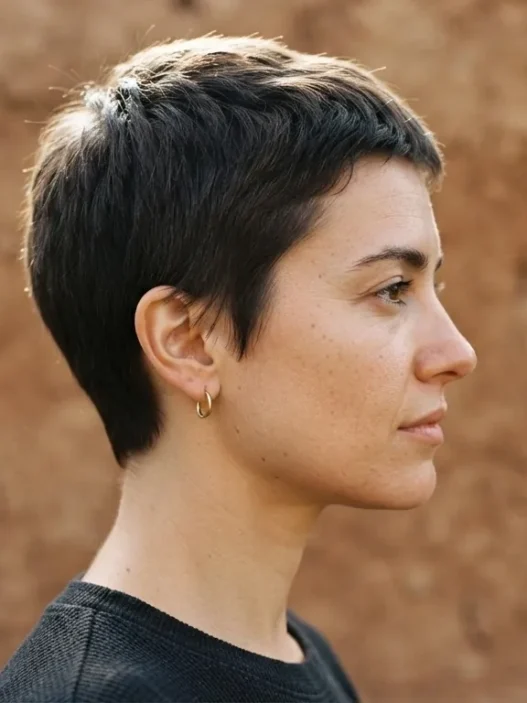
The precision pixie. Short at the back and sides — sometimes tapered, sometimes scissor-cut close — with more length kept on top for styling flexibility. This is the cut that photographs best, reads most sharply on camera, and does the most dramatic work on facial structure. The weight being removed from below the jaw means every feature from the ears up becomes more prominent: the eyes, the cheekbones, the shape of the head itself. That’s either exactly what you want or exactly what you don’t, and it’s worth sitting with that question honestly.
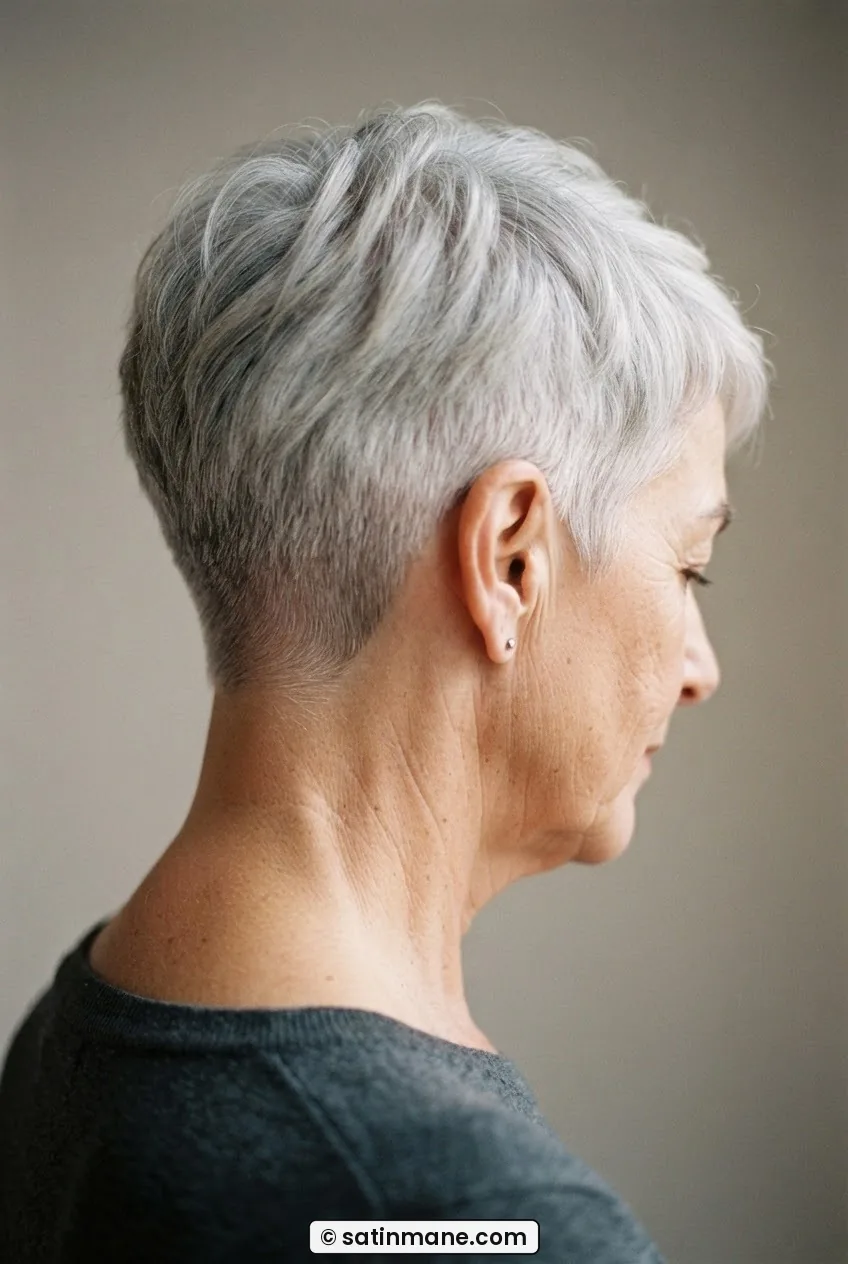
What it costs: every four to six weeks at minimum. The line where the precision cut ends and the neck begins grows visibly in a matter of weeks, and when it does, the whole cut suffers. There’s no growing this one out gently — you’re either maintaining it or you’re pivoting. I have enormous respect for women who commit to a pixie cut and I won’t minimise how transformative it can be. But go in clear-eyed about the upkeep. The pixie cut styling techniques are genuinely straightforward once you have the right shape — it’s the appointment frequency, not the daily styling, that’s the real ask. At the chair: “Precision pixie, tapered at the nape, longer through the top for soft styling — I want it clean, not shaggy.”
12. The One That Suits Glasses
Glasses frames create their own horizontal and vertical lines on the face, and the haircut needs to work with those lines rather than compete. The worst outcome is a cut that ends at exactly the same height as the top of the frame — your eye has nowhere to rest, and both the glasses and the hair feel muddled. The best outcome is a cut where the hair has movement above the frame or falls cleanly below it, with clear space in between. A layered cut that sits just below the earlobe — with face-framing pieces that reach the jaw — does this consistently. The layers above the ear keep things light; the jaw-length front pieces anchor the look.

No particular hair type is excluded from this one. It works on straight, wavy, and lightly curly hair because the shape is soft enough to adapt. At the chair: “Layered cut to the earlobe, face-framing pieces to the jaw — I wear glasses and I want clear separation between the frame line and where the hair falls.”
Questions I Get About This
Should women over 50 avoid very short haircuts?
No — but the decision should be about your specific face shape, hair texture, and lifestyle, not your age. A precision pixie can be extraordinary at 52. A long, heavy cut can be draining at 35. Age is almost never the right filter; structure is. Ask yourself what you want the cut to do for your face, then find the shape that does it.
What’s the lowest-maintenance short cut on this list?
Genuinely, the soft shag or the grown-out pixie — because both are built to look intentional as they grow. The chin-length air-dry bob is close, but it needs trimming more regularly to keep the graduation working. If salon appointments are the main thing you want to reduce, start with the shag.
Do short haircuts make women over 50 look older?
The wrong short cut can — specifically anything that adds width at the temples or removes softness from around the face entirely. But a well-placed short cut that keeps softness at the jawline and movement at the ends often does the opposite. It’s about the architecture of the specific cut, not the category of “short.”
How do I ask my stylist for a specific cut from this list?
Use the “At the chair” line from whichever entry resonated with you — I wrote them specifically to give your stylist the structural information they need, not just a mood. If you can add one or two reference images from this post or similar, even better. The more specific your brief, the less room for a well-meaning misinterpretation.
Can any of these cuts work without heat tools?
Several of them, yes. The air-dry bob, the soft shag, the natural silver shaggy cut, and the grown-out pixie are all designed to work without a blow-dryer or irons. The textured crop and the crown-layer cut for fine hair are the two where some heat at the root makes a meaningful difference. Everything else is pretty forgiving if you’re a wash-and-go person. If air-drying is your priority, tell your stylist that at the start of the appointment — a good one will adjust the cutting technique accordingly.
If you’re still figuring out which of these fits your actual face and hair type, the best starting point is being honest with your stylist about how many minutes you’re genuinely willing to spend on hair each morning — not the optimistic number, the real one. That single piece of information will narrow the list faster than anything else. And if you want to keep exploring, the short cuts section has plenty more to look through. Got a question about a specific cut or face shape? The contact page is always open.