








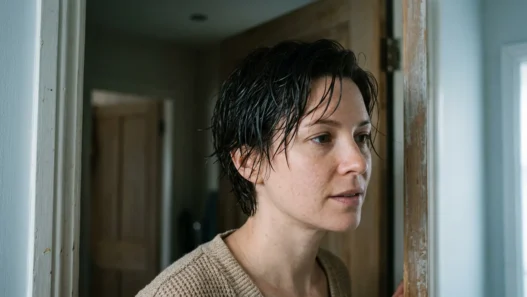
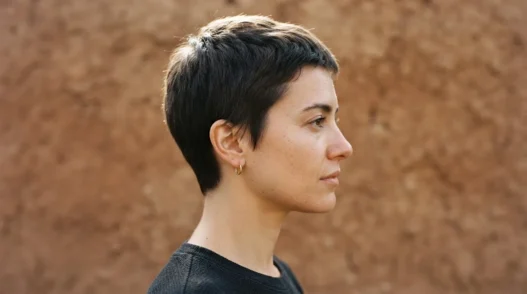
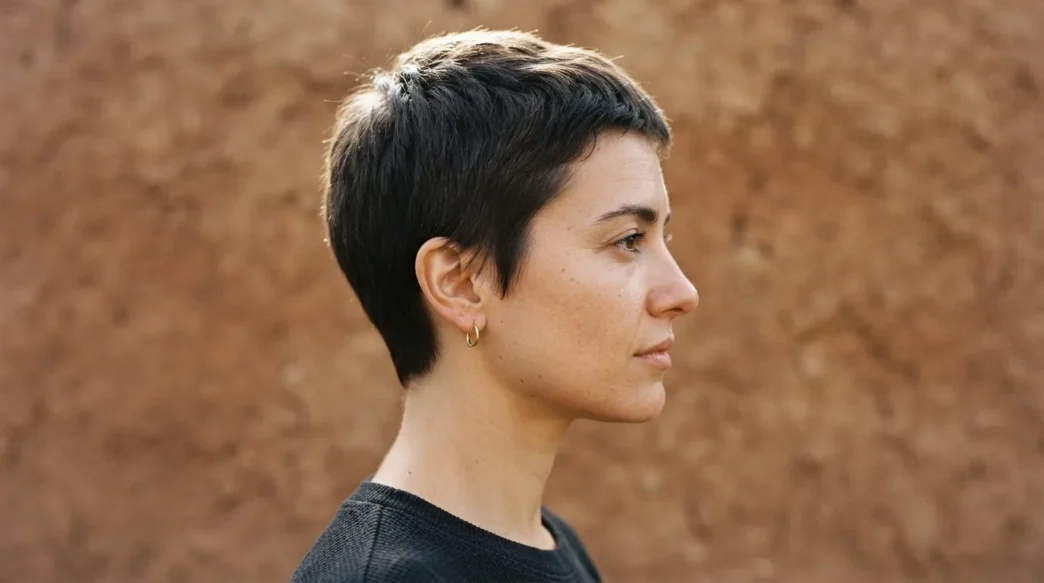
I once watched a client cry in my chair — not because the cut was bad, but because it was exactly what she asked for. She’d wanted short hair for two years, finally did it, loved it for six days, and then realized she had no idea what to do with it on day seven. That moment stuck with me. And honestly, it’s the reason I want to talk about what short cuts actually involve before you walk into a salon armed with a Pinterest board and a lot of optimism.
The Appointment That Changed How I Think About Short Hair
I spent about eleven years behind a chair before I stopped assuming I knew what a client wanted when she said “low maintenance.” That phrase means wildly different things depending on who says it. To some women it means wash-and-go. To others it means no heat. And to a surprising number, it means something like “I want to look polished in under four minutes, spend nothing at the drugstore, and only see you every four months.” That last combination is almost never compatible with very short hairstyles for short hair — and that gap between expectation and reality is what most stylists don’t articulate clearly enough before the scissors come out.
Short cuts — proper short cuts, not a bob that grazes the collarbone — require more frequent salon visits than almost any other length. A cropped cut that looked intentional on day one starts looking neglected by week six or seven, especially around the nape and ears. So the question isn’t just “will I like this?” It’s “will I like this enough to be back in a salon chair every five to eight weeks for the foreseeable future?” That’s the honest framing, and most clients never hear it upfront.
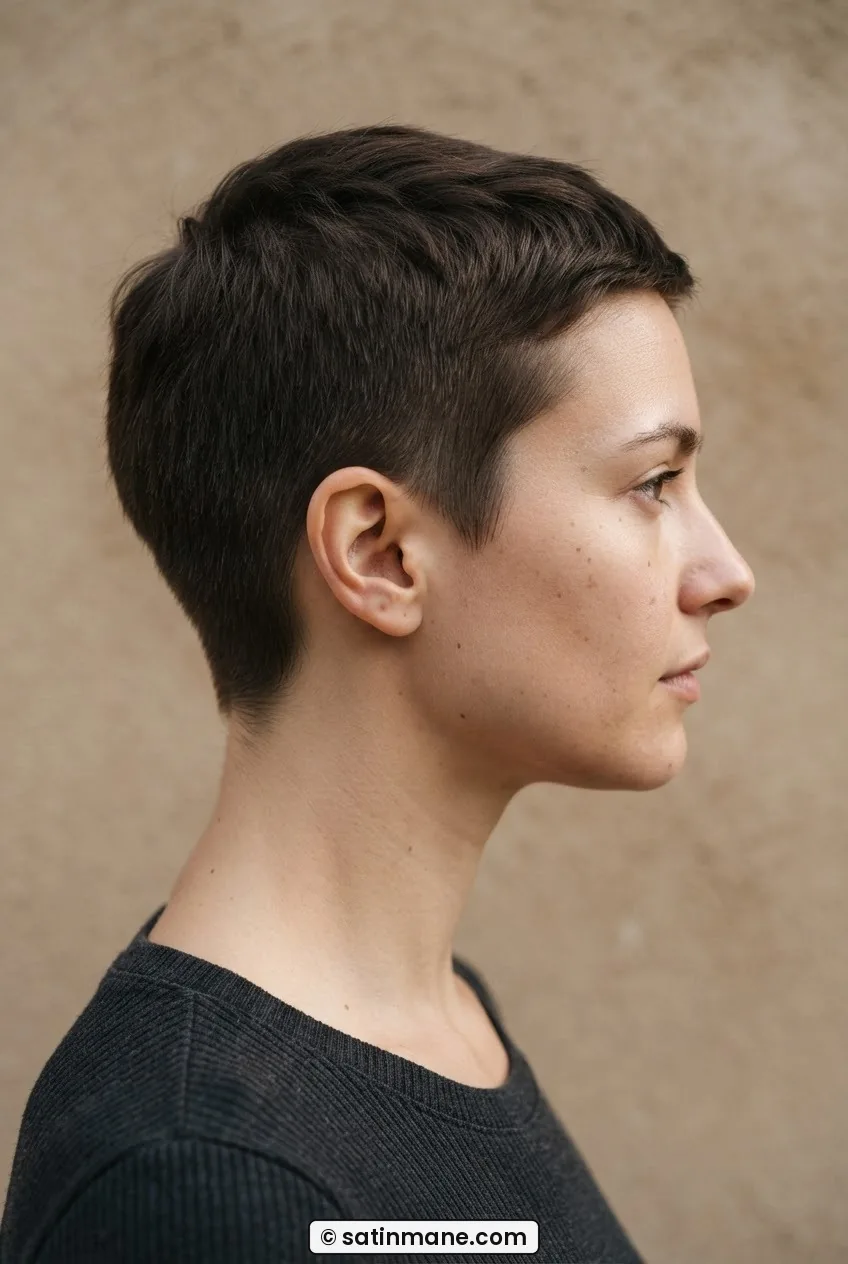
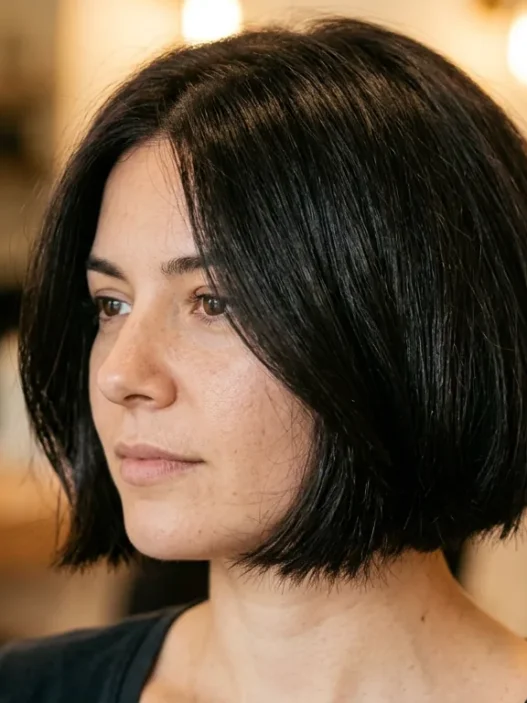
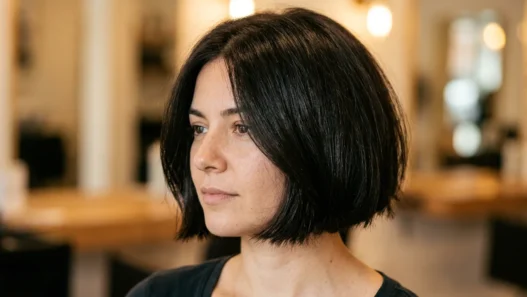
If you’re interested in exploring what different short cuts actually look like across different face shapes, short cuts worth considering vary a lot more than the broad category suggests. A blunt ear-length bob and a tapered pixie are both technically short, but they behave completely differently as they grow.
The Day-One Problem
Day one of a short haircut is almost always the best it’s ever going to look. Your stylist has spent time on it. The shape is crisp. The weight is exactly right. You leave the salon feeling like a completely different person, and that feeling is real and legitimate.
But here’s what happens next — and this is the part that gets glossed over. Short hair doesn’t just “grow out.” It grows out awkwardly. The nape gets fuzzy first, then the area around the ears, then the top starts to lose its shape in a way that feels weirdly poofy rather than longer. The cut that was architectural on day one starts to look like you’re in between styles, even when you’re technically not. You’re just growing.
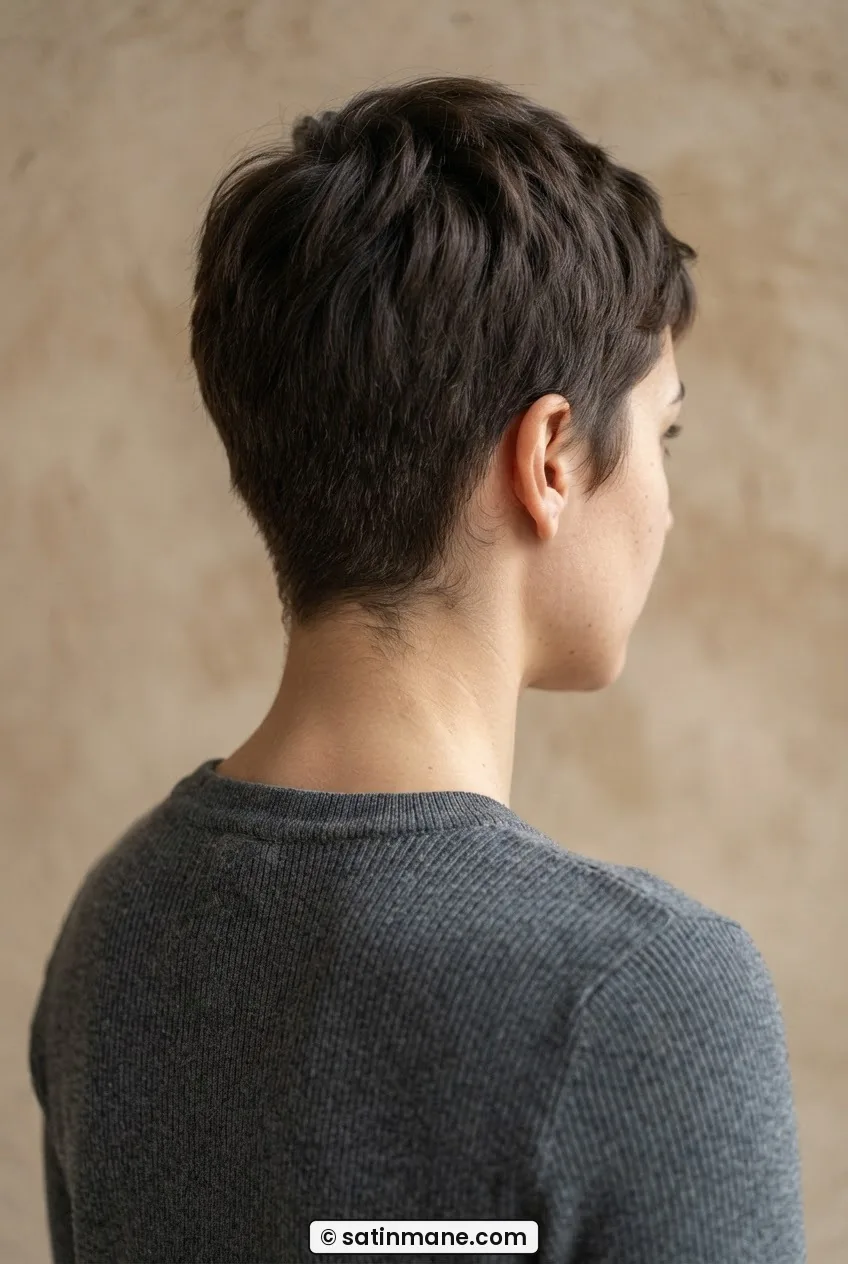
The day-one problem is really a “what do I do with this on day nine?” problem. And the answer depends enormously on your hair’s natural texture. Straight, fine hair tends to go flat and shapeless. Thick hair goes wide. Wavy hair does something interesting that’s either very cool or deeply chaotic depending on how much you slept on it. None of these outcomes are bad, but you have to know which one you’re working with — and you have to have a plan for it that doesn’t involve twenty minutes of styling tools, because if you wanted that, you could have kept the length.
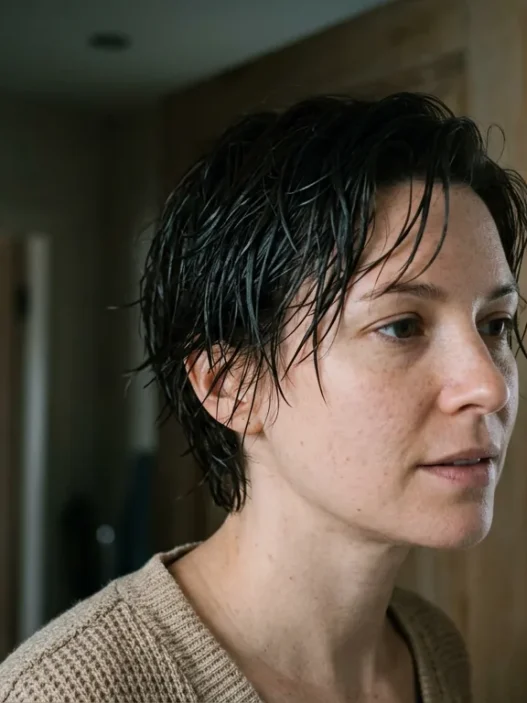
Understanding how short hair dries naturally based on your texture makes an enormous difference in how you experience those in-between days, and it’s worth researching before you commit to a length.
What Week Seven Tells You
Week seven is my favorite diagnostic. By then, the initial glow of the new cut has worn off. The novelty is gone. The client is living in the hair. And what I hear at that seven-week mark tells me everything about whether the cut was genuinely right for them.
The women who love it? They’ve figured out a routine that takes under five minutes. They’ve stopped reaching for tools they don’t need. They’re washing less and air-drying more. They look, frankly, great — and not because they’re working at it, but because the cut is working for them. Their face shape is complemented, not fighting the line of the hair.

The women who are struggling? A few patterns come up again and again. They’re blow-drying every day because the natural result “doesn’t look right.” They’re using dry shampoo every other day because the hair gets greasy fast at short lengths (it does — scalp oil has less hair to travel down, so it shows faster). Or they’ve realized that their particular face shape needs more length to balance, and what looked editorial in the reference photo looks different on their actual bone structure.
This is genuinely not a failure. But it’s worth knowing that face shape matters enormously with short hair in a way it doesn’t as much at medium or long lengths. If you have a rounder face, for instance, the specific cut matters more than it would at shoulder length. I’ve written more on this in a detailed piece about short haircuts for round faces — it goes into exactly which variations work and which ones fight the shape. And if you want to explore even more about how face geometry interacts with cut decisions, the round face category covers a lot of that ground.
What I Changed My Mind About
I used to recommend short hair to almost anyone who came in saying they wanted something easy. And I think that was wrong of me. Here’s my actual, slightly unpopular opinion: a really short crop is not the lowest-maintenance option for most women. A mid-length haircut — something around the chin or just below it — is often far easier to live with than a pixie or a very close cut. The medium-length range grows out gracefully, can be air-dried without looking unkempt, and doesn’t demand a salon visit every six weeks to stay intentional-looking.
Short hairstyles for short hair demand two things that “easy” cuts shouldn’t: frequent professional upkeep and some daily involvement. The shorter the cut, the less the hair does on its own and the more you have to direct it. With a pixie, every cowlick matters. Every growing-out phase is visible. The margin for error is small.

The easiest hair is the length that grows out the most gracefully. That’s not always the shortest hair in the room.
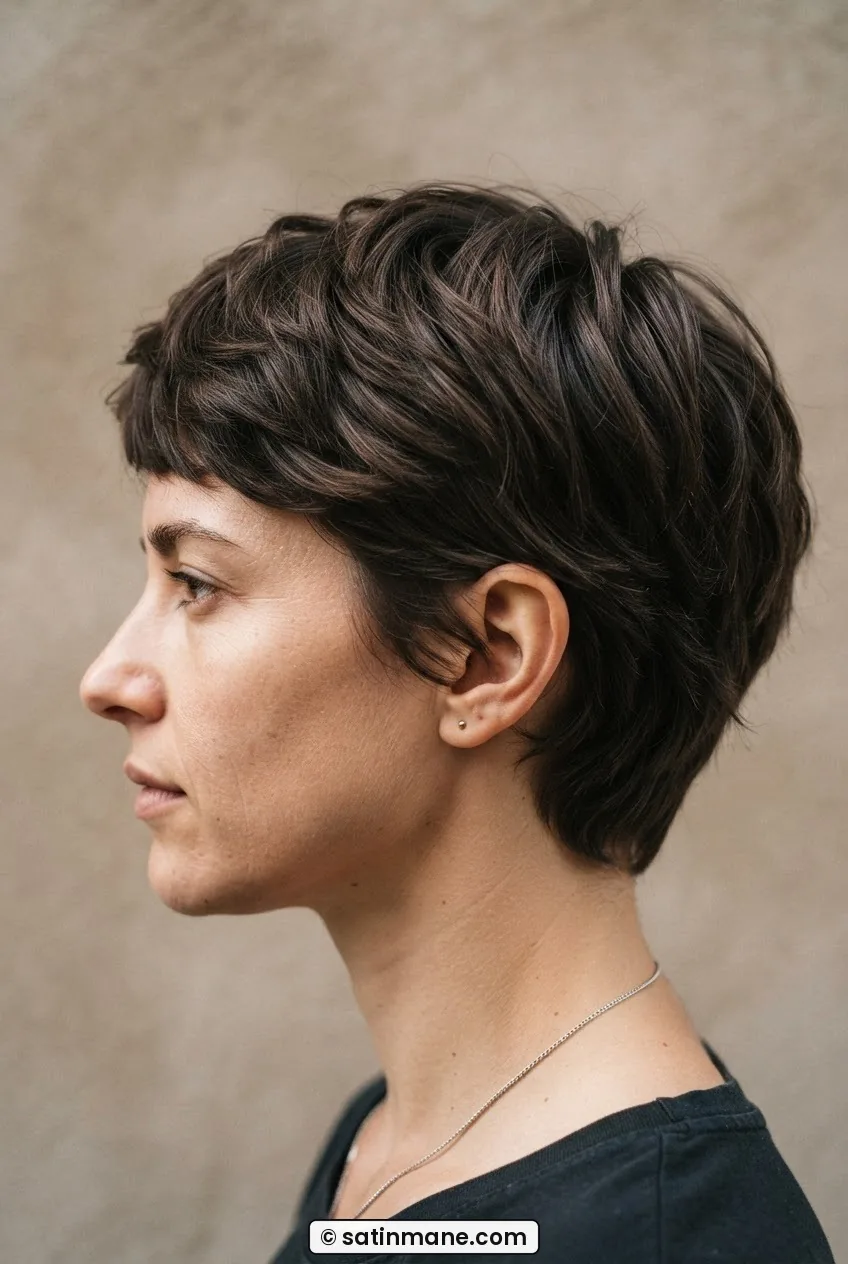
That said — when a short cut fits someone’s texture and face shape and lifestyle? It’s genuinely the most freeing thing. Look at how she’s wearing hers in that photo — no product, no effort, and the cut itself is doing all the work. That ease is real. It just takes finding the right version of short, not just any short. If you’re curious about what that might look like across different options, short haircut guides can give you a useful framework for comparing cuts before you commit.
The Morning Math Nobody Does Beforehand
Before you cut, do the actual math. Not just “will I save time” but: how much time does this cut take on a good day, a bad day, and the morning after you slept weird? And what does it cost per year to maintain it at a salon?
Here’s a rough breakdown of what I’ve seen over the years:
- Pixie / close crop: 2–4 minutes on a good day, 8–12 minutes on a problem day (cowlicks, flat spots). Salon every 5–7 weeks. High annual cost.
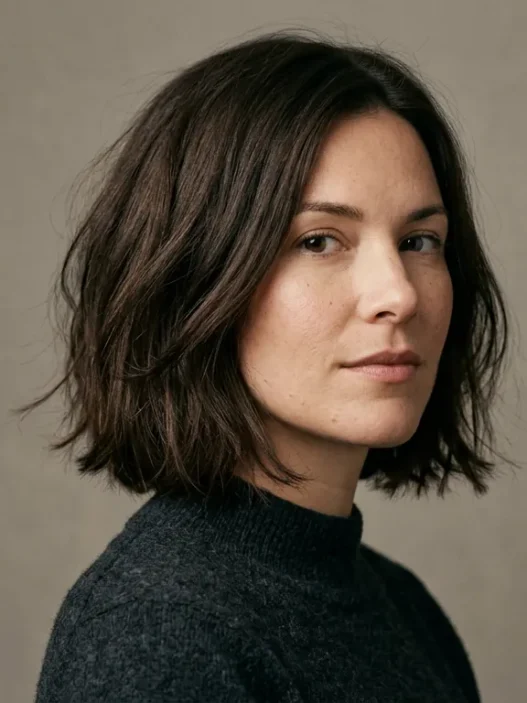
- Textured short bob (ear to jaw length): 3–6 minutes, air-drys well on most textures. Salon every 8–10 weeks. Moderate cost, easier grow-out.
- Shaggy or curtain-bang short cut: Can look intentional at many grow-out stages, which buys you time. Salon every 8–12 weeks depending on how fast your fringe grows. Medium morning investment.
- Really cropped undercut styles: Lowest daily effort but highest salon frequency — some women are back in the chair every four weeks. Only worth it if you genuinely love that ritual.
The women I’ve seen happiest with very short hair are usually the ones who actually enjoy going to the salon — who see it as a standing appointment they look forward to, not an obligation. If that’s not you, there’s no shame in it. It just changes which version of short makes sense. For more on managing short hair between trims and keeping it looking intentional as it grows, the broader Satinmane resource library has a lot of practical material on exactly that — organized by hair type, face shape, and length.
And if you’re still deciding and want to talk through what might actually work for your texture and schedule, the right cut for your face question is worth thinking through properly, not just going on what looked good in a photo.
Questions I Get About This
Does short hair actually save time in the morning?
Sometimes, but not always — and almost never as much as people expect. A well-fitted short cut on the right texture can genuinely be a two-minute routine. But if your natural texture fights the shape of the cut, short hair can actually take longer than longer hair did, because longer hair has more weight to pull cowlicks and frizz into line. The key is matching the cut to what your hair does naturally, not trying to style your hair into the cut.
What’s the most low-maintenance short haircut?
In my experience, a slightly longer short cut — something with some texture built in, around the jaw or just above the ear — grows out the most gracefully and needs the least daily intervention. Really close-cropped cuts (undercuts, tight pixies) look amazing right after a trim but demand frequent salon visits to stay that way. A textured bob or a shaggy ear-length cut gives you more flexibility between appointments.
Can thick hair work with a short cut?
Absolutely — but the cut has to account for volume, not fight it. Thick hair at short lengths can go very wide and very full, which is striking on some face shapes and overwhelming on others. Internal layering to remove bulk is usually the move, but it needs to be done carefully or the hair will pouf unpredictably as it grows. A stylist who works regularly with thick hair will know where to take weight out without wrecking the shape.
How do I know if I’ll actually like it short?
Try a shorter bob before you go fully cropped. It’s a better test than any filter or photo app. Living with chin-length hair for a few months tells you how your texture behaves at shorter lengths, whether you miss the option to put it up, and whether you’re genuinely okay with the visibility of every bad hair moment. Going short in two stages — to jaw, then shorter — is almost always less regrettable than doing it all at once.
The cut that works is the one you’ll still be happy with at week seven, not just day one. That’s the whole test. If you’re genuinely on the fence, I’d rather you take another month to think about it than sit in the chair uncertain — because hair grows, yes, but it grows slowly, and the in-between is a longer road than most people picture. If you have questions or want to talk through a specific situation, feel free to get in touch — I’m always happy to think through what might actually suit you.