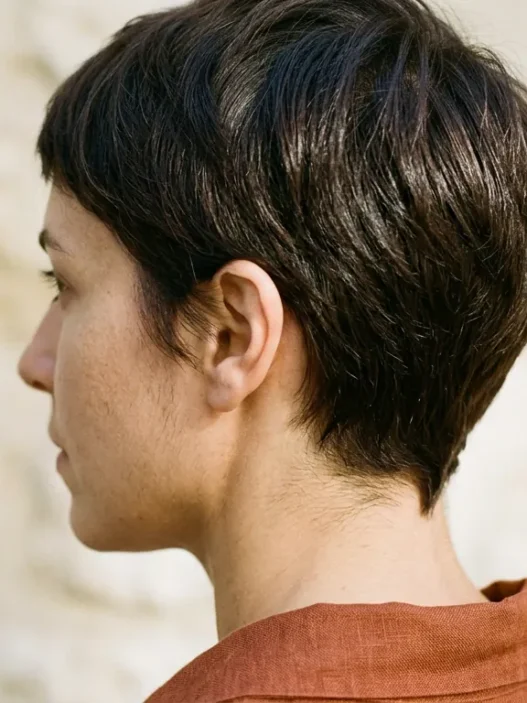












I grew out my fringe three times before I stopped fighting it at the wrong moment. Each time I’d quit somewhere around week six, book a trim, and start over. Then last year I let month four happen — and the whole thing looked completely different to what I expected. Better, actually. Not polished-better, but interesting-better, like the hair had figured something out on its own.
This post is about that month. Not week two, not the full-length finish line. Just the strange, underrated middle of growing out bangs — and why sitting with it one more month almost always pays off.
Why Month Four Is the Real Starting Point
Everyone talks about the awkward stage like it’s a single bad week you push through. It isn’t. Months one through three are genuinely difficult and the internet’s advice — bobby pins, headbands, dry shampoo — is fine but it’s just crowd control. You’re managing the problem, not working with the hair.
Month four is different. Hair grows roughly half an inch per month, so by week sixteen you’re sitting on somewhere between one-and-a-half and two inches of new length past where your fringe originally sat. That’s enough to tuck behind an ear properly. Enough to part and have the part stay. Enough to blend into a lob or a bob without a seam where the fringe used to end.
This is also when most people bail. The hair is still shorter than the rest, still a little heavy in the front, still not quite one thing or another. And I genuinely believe that is the moment you are closest to something good — if you just understand what the shape is actually doing.

Growing out from a shorter base — say, a pixie with a fringe — follows its own slightly different timeline. If that’s where you’re starting, the guide on hairstyles for growing out a pixie is worth reading alongside this one, because the front and crown lengths diverge in interesting ways that affect everything below.
What the Shape Is Actually Doing at Month Four
Here’s the thing nobody explains: at month four, the front sections of your hair are doing something structurally useful. They’re heavy enough to pull down into face-framing curtains but light enough to still move. That weight distribution is not a bug — it’s the reason certain haircuts look incredible on women growing out a fringe but would look flat on someone who never had one.
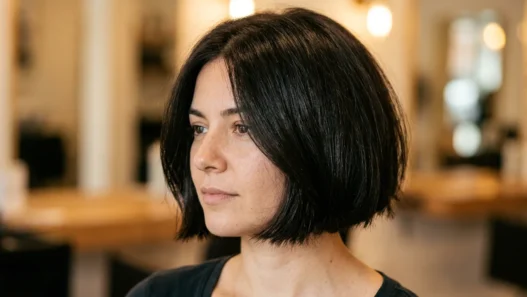
Look at her in this photo — see how those front pieces fall forward with just a little more density than the rest of the cut? That’s the fringe weight, still living in the hair. That’s what gives the shape that softness around the face. Stylists charge extra to replicate that with a razor on someone who never had a fringe.

The parting also starts to behave at month four. Before this point, the fringe fights any attempt at a side part — the hairs are too short and spring back to center. By week sixteen they’re long enough to train, which means you can suddenly reshape the whole silhouette just by moving where the hair originates. A deep side part on month-four grow-out hair can make the shape look deliberately cut that way, not in progress.
One caveat: face shape matters here more than at almost any other point in a grow-out. The front weight sits right at the forehead and cheekbone zone — the most face-adjacent part of any haircut. If you have a square jawline, that weight can beautifully soften the corners. If you’re working with a rounder face shape, understanding how to position the part is critical, and looking at cuts designed specifically for that — like the options in this breakdown of bob cuts for round faces — will tell you a lot about where your grow-out should be headed.
The Styles That Work Right Now
This is not a section about surviving the grow-out. These are actual hairstyles that look good at month four — not in spite of the in-between length, but because of it.
The curtain tuck. Part the hair to one side, let the front sections fall naturally, and tuck the shorter side loosely behind the ear. This works because it shows off the length discrepancy intentionally rather than hiding it. There’s something very effortless about it. I wore mine this way for almost six weeks straight.
The no-part wave. If you add a little bend without heat using a braid overnight, month-four fringe pieces wave into the rest of the hair almost perfectly. The texture disguises where one section ends and the other begins. This one genuinely fooled my own mother into thinking I’d had a trim.

The french tuck-pin. Not a full updo, not a half-up — just the front fringe sections pinned back flat with a single slide pin in a V shape above the ear. Everything else down. It looks intentional because it is intentional, and it takes forty seconds.
The blunt bob redirect. Here’s my slightly controversial opinion: if your hair is already shoulder-length or shorter, month four is actually a good time to visit your stylist and ask them to cut the rest of the hair up to meet the fringe weight, rather than waiting for the fringe to catch up. This sounds backwards but it works. You end up with a chin-length or just-below-chin bob where the front and back are much closer in length, and the whole thing reads as a finished shape rather than a grow-out. I know people bristle at the idea of cutting length to grow out bangs, but honestly — if you want to understand why this works, the detail in posts about bob hairstyles for fine hair or even cuts around the jaw for double-chin concerns, like this one on haircuts for double chin, will show you the geometry behind why shorter-all-over can feel lighter and more intentional than one long piece with short front sections.
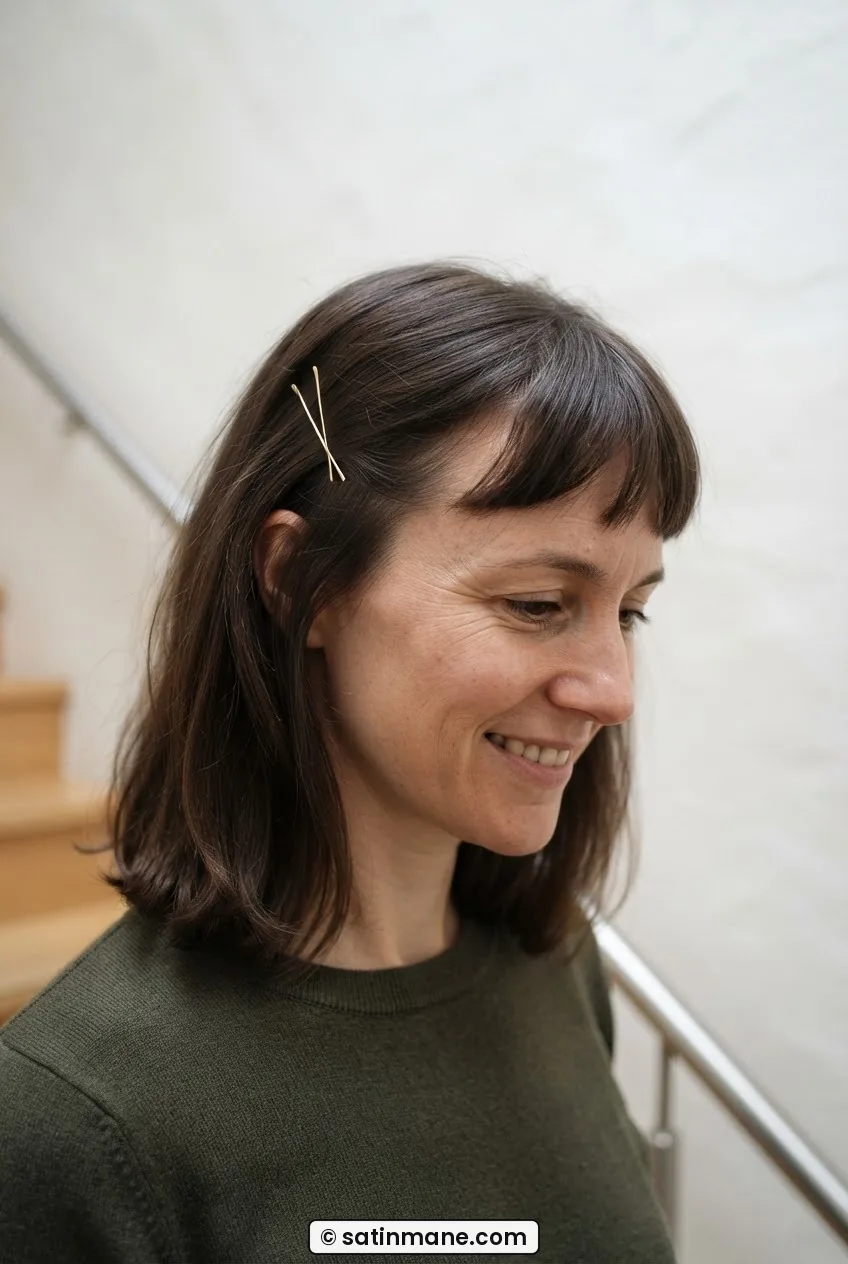
A Stylist Walks Through the Month-Four Options
The Decision Month Four Forces
At month four, the grow-out stops being passive. You have been coasting — pinning, smoothing, hoping. But now the hair is long enough that every choice you make shapes where it ends up. That’s the decision month four forces: are you growing this out to blend into a longer style, or are you redirecting the whole shape into something shorter and more deliberate?
Neither answer is wrong. I’ve done both. But not deciding — just continuing to coast — is where the frustration lives. Because the hair will keep growing regardless, and by month six or seven you will either have a shape you steered toward, or a shape that happened to you.
The thing that helped me most was actually looking at face shape compatibility before making the call. If you’re someone whose jawline benefits from width (a longer face, for instance), growing the fringe fully out to blend into long layers makes a lot of sense. But if you have more width at the cheekbones and jaw, a cut that plays with angles might be worth redirecting into rather than growing past. The detailed take on square face hairstyles is one I come back to often for this exact question — it explains the geometry in a way that makes the grow-out decision feel a lot clearer.

What I’d tell anyone at month four: book a consultation, not a cut. Go in and say “I’m growing out my bangs and I’m at the decision point — what shape is my hair moving toward and is it working for my face?” A good stylist will tell you whether to stay the course or redirect. That fifteen-minute conversation is worth more than another three months of hoping.
Growing Out Bangs Questions I Actually Get
Does getting a trim actually slow down growing out bangs?
No — trimming the rest of your hair does not affect how fast your fringe grows. Hair growth happens at the scalp, not the ends. What trimming does do is keep the overall shape cleaner while the front catches up, which is why I’m firmly in the “trim the back and sides on schedule” camp even during a grow-out.
Is there anything I can use to make the fringe pieces grow faster?
Scalp health genuinely affects growth rate, so a regular scalp massage and keeping the area clean and unclogged is worth doing. Beyond that, you can look at general evidence on hair growth and scalp care — but I’d temper expectations. You’re talking about speeding things up by days, not weeks. The real accelerant is just not cutting them again.
My bangs won’t stay in a side part — what am I doing wrong?
Almost certainly you’re fighting them when they’re dry. Train the part on damp hair — apply a tiny bit of cream or balm, direct them where you want them, and let them dry in that position. Do it three or four days in a row and the muscle memory in the hair shaft starts to cooperate. Blow-drying them in the new direction on low heat locks it in faster.
When is the actual awkward stage over?
Honestly, “over” is the wrong frame. The awkward-looking period is roughly months two and three for most people — too long to sit as a fringe, too short to blend. By month four the hair starts cooperating with styling rather than fighting it. By month six most fringe sections are long enough to layer into the rest of the cut without a visible seam.
If you’re sitting at month four right now feeling like you should just give up and cut your fringe back in — wait. Not forever. Just one more month. Look at the shape. Look at where the weight is sitting. Then decide. You’ll know the right answer then in a way you simply can’t from where you are today.