








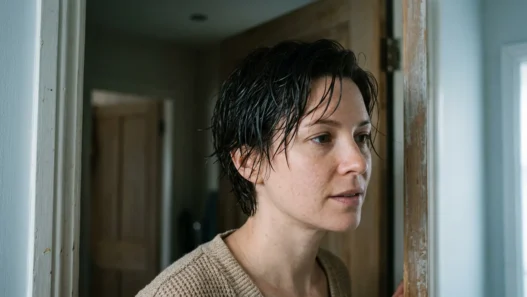


I’ve been thinking about bob lengths the way you’d think about hem lengths on a dress — where the line hits your body changes everything about the proportion. A bob that lands at your ear reads completely differently from one that grazes your collarbone, and the layers inside each of those cuts change the character again. What I want to do here is walk you from the shortest to the longest, one paragraph at a time, so you can feel where the weight wants to sit on your face before you ever book an appointment. These are the ten layered bobs I’d genuinely recommend — and yes, every single one of them still looks intentional in week seven.
Jump to the Length That Fits Your Face
- At the Ear: The Micro Bob With Internal Layers
- At the Ear: The Stacked Nape Layered Bob
- At the Jaw: The Choppy Textured Bob
- At the Jaw: The Face-Framing Blunt Bob
- At the Jaw: The Shaggy Bob
- At the Chin: The Classic Layered Bob
- At the Chin: The Textured Layered Bob
- At the Chin: The Messy Curtain-Bang Bob
- At the Collarbone: The Long Layered Bob
- At the Collarbone: The Shaggy Long Bob
1. At the Ear: The Micro Bob With Internal Layers
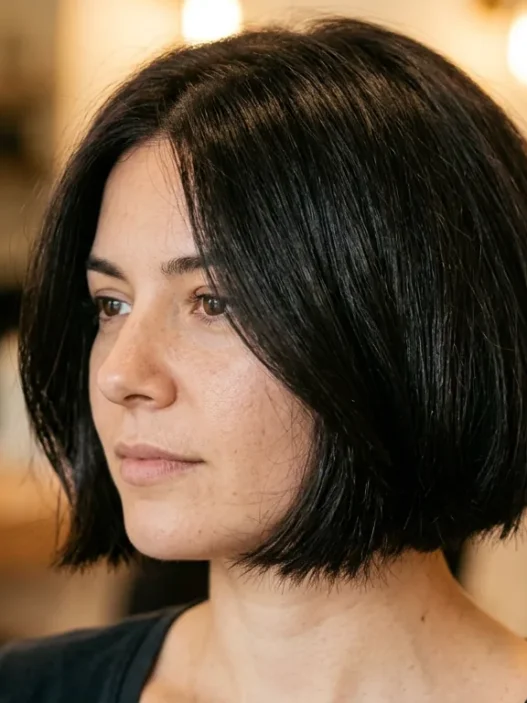
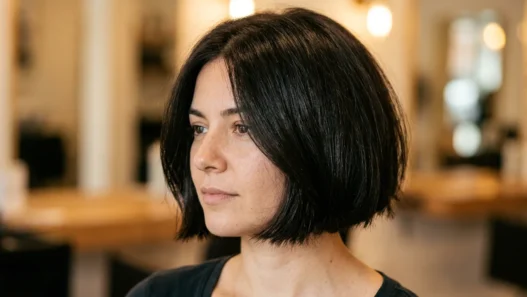
This is where weight sits highest — right at the lobe, or just below it. The perimeter is a clean horizontal line, but the magic is what happens inside: point-cut layers scattered through the mid-shaft that stop the whole thing looking like a helmet. She’s wearing hers in the photo below with almost no product, and you can see how those interior layers create movement without adding bulk at the ends. This length suits thick hair especially well because the layers do the thinning work you’d otherwise need a razor for. The trade-off is the growth cycle — at six or seven weeks the back starts to get a little shaggy, so this one wants a trim roughly every five to six weeks if you’re going to keep it looking sharp. But the day-to-day effort? Almost zero.

2. At the Ear: The Stacked Nape Layered Bob
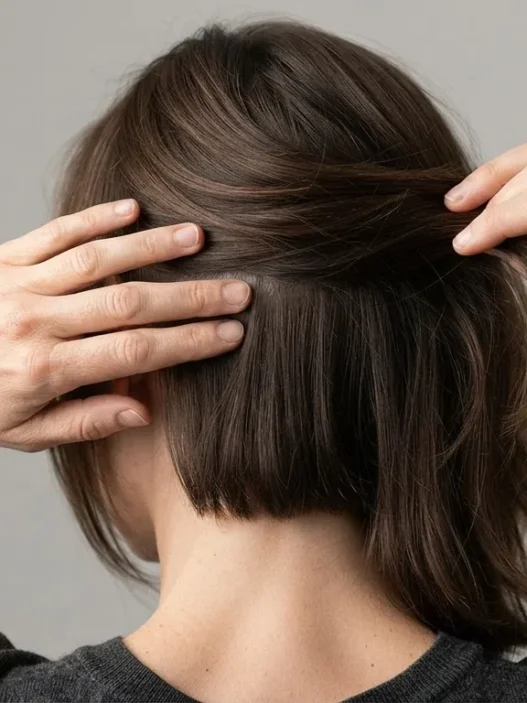
Stacking changes the weight distribution completely. Instead of layers scattered evenly, the nape is cut shorter and graduated upward, which creates a rounded dome of volume at the back that literally holds its shape as it grows. The front pieces stay longer — just skimming the ear — which gives you something to tuck or leave out depending on the day. I love this one for women with fine hair because the stacking builds visual density at the back where fine hair goes flat fastest. Worth reading about bob hairstyles for fine hair that build weight where it shows before you go in for this cut, because the angle of the stack genuinely matters for your specific density.

3. At the Jaw: The Choppy Textured Bob
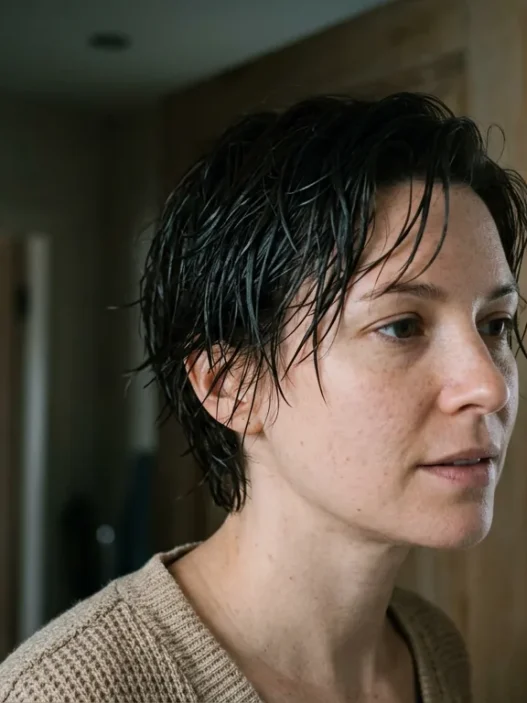
Drop to the jaw and the whole energy shifts. A choppy textured bob has pieces that end at slightly different lengths — not because the cut is imprecise, but because the stylist deliberately disconnects the layers so each section has its own distinct finish. Look at how her pieces sit in this photo: the tips aren’t blunt, they’re sliced, which means wind and humidity work with the cut rather than against it. This is hands-down the style I recommend most to women who air-dry and genuinely don’t want to touch their hair after the shower. It also helps to understand how air-drying affects texture before your first wash at home, because the technique matters as much as the cut itself.

A Tutorial That Shows the Slicing Technique
4. At the Jaw: The Face-Framing Blunt Bob
Blunt doesn’t mean boring at the jaw. Here the perimeter is a clean line, but the stylist cuts face-framing pieces that angle forward — they curve inward along the cheek exactly the way you see in the photo for this one, which is the thing that stops a blunt bob from reading flat. The weight sits at the jaw itself, which is brilliant for anyone with a round or full face because that horizontal line creates the illusion of structure. I’ve written more about how the perimeter angle works in my guide to bob cuts for round faces that lengthen rather than widen — if that’s your face shape, go read that first.

5. At the Jaw: The Shaggy Bob
The shaggy bob is having a proper moment in 2026, and I get it completely. It takes the jaw-length perimeter and throws in curtain bangs, wispy face-framers, and a deliberately undone texture that looks like you’ve just come back from somewhere interesting. The layers are shorter through the crown and longer at the sides, so there’s built-in movement you don’t have to manufacture with a round brush. Wavy and slightly frizz-prone hair is perfect for this one — the texture reads as intentional rather than accidental. Wear it with a center part and let those front pieces fall wherever they want.

My personal pick is the jaw-length shaggy bob — specifically because it’s the one where a seven-week-old cut genuinely looks better than a fresh one. The grown-out softness suits the style. If I had to choose just one cut for someone who hates returning to the salon every five weeks, this is it.
6. At the Chin: The Classic Layered Bob
Chin length is where layered bob hairstyles have lived for decades, and there’s a good reason. The chin is a natural stopping point that elongates the neck and frames the lower face in a way that genuinely flatters most face shapes. The classic version has layers that start around the cheekbone and graduate down, creating a soft C-curve at the ends. It’s predictable in the best way — it always works. The catch is that “classic” can drift toward safe if you’re not careful, so ask your stylist to point-cut the ends rather than straight-cutting them. That one detail keeps it from feeling dated.

7. At the Chin: The Textured Layered Bob
Same length, totally different personality. A textured bob at the chin is cut with a razor or strong point-cutting technique so the ends have a feathered, slightly frayed quality. This is the cut that looks exceptional on women with naturally wavy or lightly curly hair, because the texture technique amplifies what your hair already wants to do. She’s got visible wave in her photo and you can see how the layers let each wave move independently rather than clumping. One thing I always flag when talking about this: layering fine hair requires a specific approach — there’s a layering guide for fine hair worth reading before your appointment, because too much texture on fine hair can make the ends look sparse. Also, I’ve been through this exact mistake myself; my longer post on the layering mistake I made for years on fine hair covers it properly.

8. At the Chin: The Messy Curtain-Bang Bob
Curtain bangs on a chin-length bob are doing a lot of heavy lifting in 2026. The bangs part at the center and sweep outward to blend into the face-framing layers, so there’s no hard bang line to maintain — they just grow with the cut rather than out of it. This is the version I’d push anyone toward who wants a fringe but hates the every-three-week trim situation. When the bob grows past the chin, the curtain bangs simply become longer face-framers. The whole cut has a built-in exit strategy, which I find deeply satisfying.

9. At the Collarbone: The Long Layered Bob
Once the weight drops to the collarbone, we’re technically in lob territory, but I’m including it here because the layering logic is identical and the maintenance gap compared to long hair is significant. The weight line sits at the collarbone — you can see exactly where it is on her in the photo — and layers above that create movement through the mid-lengths without thinning the ends. This is the length I’d steer most readers toward who are nervous about going shorter. It’s a real commitment to something different without the adjustment period of a chin or jaw cut. It also sits beautifully in a low bun or half-up style on the days you genuinely can’t deal with it. If you’re coming at this from a mid-length starting point, my piece on mid-length haircuts and the layering that ruins them is worth a look before you rebook.

10. At the Collarbone: The Shaggy Long Bob
The shaggy lob is the collarbone version’s louder sibling. Heavy layers through the crown, wispy texture at the ends, and often a curtain bang to keep the face from disappearing into all that mid-length movement. It’s the least structured of the ten cuts here, and that’s exactly the point — at week seven, a shaggy lob looks fully intentional. The grown-out softness is baked into the original design. If you’re someone who goes eight or nine weeks between appointments regularly and you’ve made peace with that, honestly, this might be your long-term answer. Pair it with a texturizing spray and a wide-barrel iron for about four minutes, or just let it air-dry and go. Both outcomes are good. For a wider comparison across the full low-maintenance bob spectrum, the roundup of bob haircuts for women with nothing to maintain has a lot of ground covered.

The Bob Length Questions That Come Up Every Time
How do I know which bob length suits my face shape?
The general rule is that weight at or below the jaw lengthens a round or full face, while cuts at the ear or chin work well for oval and longer faces. But the face-framing pieces matter just as much as the perimeter length — angled layers that draw the eye downward do more slimming work than the raw length alone. When in doubt, take a photo of yourself with your hair pulled back and look at where your face is widest; you want the visual weight of the cut to land below that point.
Can fine hair pull off a layered bob without looking thin at the ends?
Yes, but the layering technique has to be right. Fine hair needs layers concentrated in the mid-shaft rather than the ends — thinning the ends of fine hair leaves them looking wispy and see-through. Ask specifically for “internal layers” or “weight-building layers” and steer away from razor cuts unless your stylist has worked with fine hair specifically before. A blunt or lightly point-cut perimeter preserves the density where you most need it.
How often do layered bobs actually need trimming?
Shorter bobs at the ear need the most attention — every five to six weeks to keep the back from going square. Jaw and chin-length bobs are more forgiving, usually every seven to nine weeks. Collarbone-length lobs are the most relaxed; with good layering you can stretch to ten or twelve weeks and the grown-out shape still reads intentional. The choppier and more textured the cut, the longer it tends to stay presentable between trims.
Is a layered bob hard to style at home every morning?
Not if you pick the right texture for your hair type. Choppy and shaggy versions are genuinely wash-and-go for wavy hair. Blunter versions might want a quick pass with a round brush to activate the curve at the ends, which takes maybe five minutes once you’ve done it a few times. The cuts that need the most daily effort are the very blunt ones at the ear, where the shape is precise enough that any overnight sleep-wrinkle is visible.
If I had to land on one length for most people reading this — and I know that’s not a precise recommendation — I’d say chin to jaw. It’s the range where the cut is distinctive enough to feel like a real style choice, forgiving enough to look good at week seven, and versatile enough to wear a dozen different ways without touching a styling tool. But honestly? Pick the length that makes you feel something when you look at the photo. That instinct is usually right.