





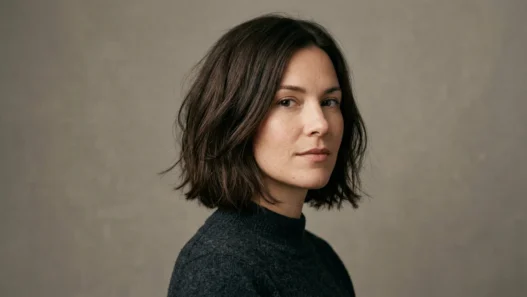

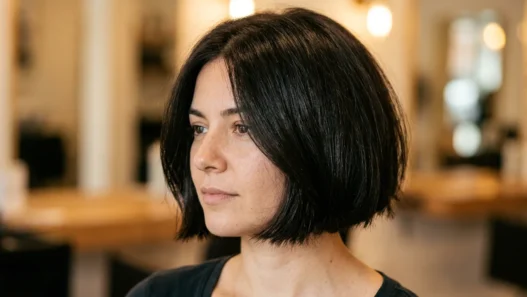




I have a round face, so I notice width before I notice anything else. Length means very little if the fullest part of the cut sits right at my cheeks. I started paying attention to where each medium cut gets widest, and honestly, that changed how I choose. These are the nine placements I keep coming back to.
Where the Width Sits in Each Cut
- 1. Widest at the Temple With a Soft Side Part
- 2. Widest at the Cheekbone, But Long and Smudged
- 3. Widest at the Jaw With Angled Fronts
- 4. Widest Below the Chin in a Clean Lob
- 5. Widest Below the Chin With Face-Framing Layers
- 6. Widest at the Collarbone With Air-Dried Ends
- 7. Widest at the Jaw in a Bouncy Blowout
- 8. Widest Below the Chin With a Curtain Fringe
- 9. Widest at the Temple With Lived-In Texture
- My Final Take on Width Placement
Quick note on how I see it. A round face is widest through the cheek area with soft, curved edges. A medium cut adds its own widest point on top of that. When those two widths line up, my face looks wider. When the hair width sits higher or lower, my face looks longer. That is the whole game here.
1. Widest at the Temple With a Soft Side Part
I love this one for second-day hair. The volume sits up near the temples, the side part breaks up the symmetry, and everything from the cheekbones down lies flatter and a little longer. It gives a nice upside-down triangle feel without looking severe.
When I wore something similar last spring, my stylist kept the layers very long through the front and only added short, lift-giving pieces around the crown. She blow-dried the roots forward with a flat brush, then flipped the part over at the very end. That little flip is what keeps it from falling flat by lunch.
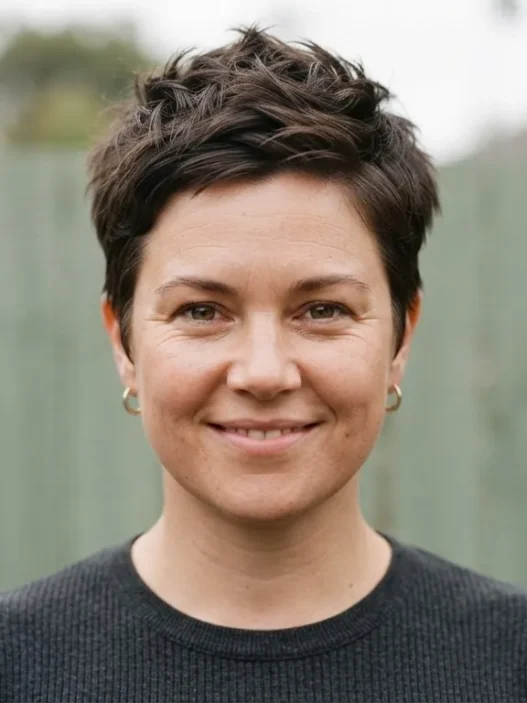
Look at how she is wearing hers in the photo below. See how the top has that soft lift and the sides just skim past her cheeks? That is the shape you want. If your hair is fine, ask for a deep side part and a light, root-lifting spray. If it is thick, ask for internal thinning up top so it does not puff out too far.
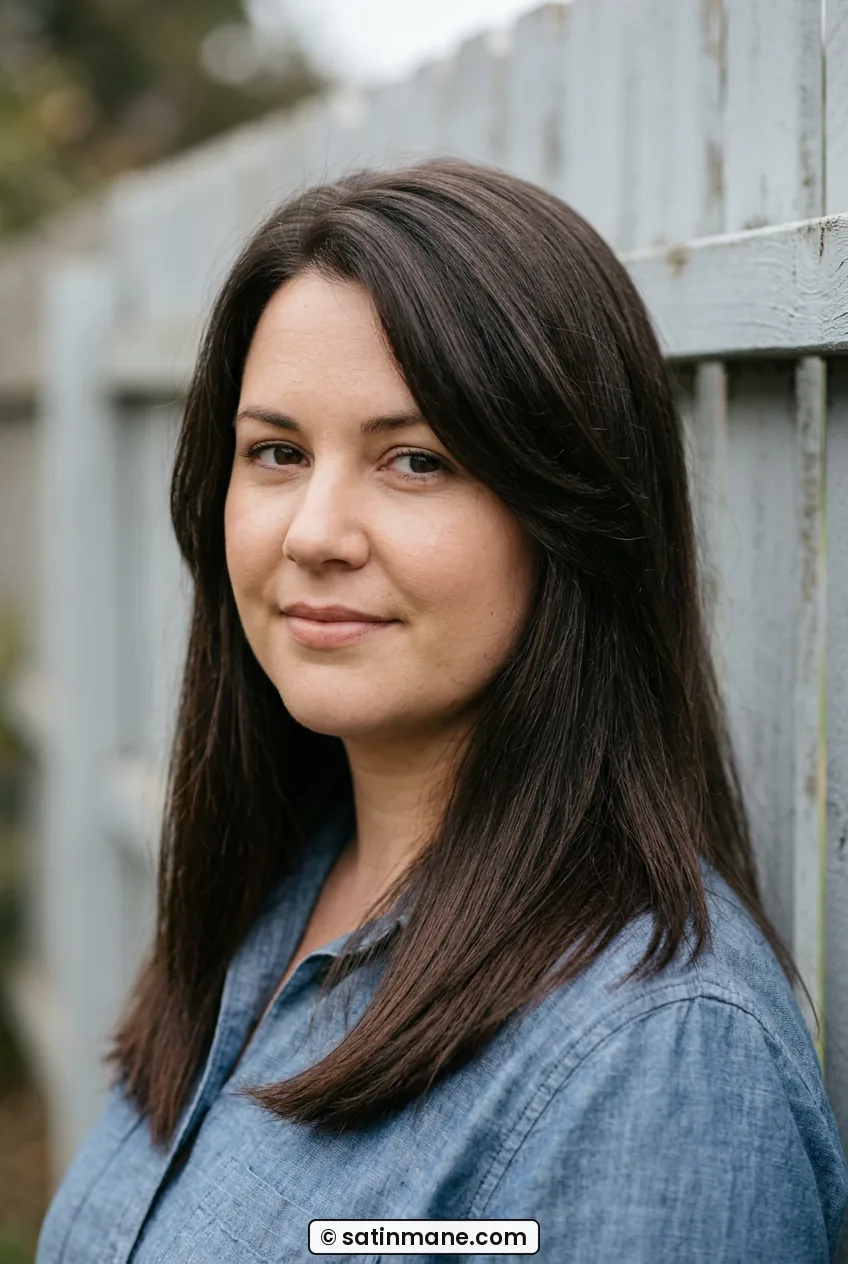
This placement works best if you like to tuck one side behind your ear. The tuck keeps one cheekbone clear while the other side keeps height. I do this on work mornings when I have about four minutes and a slightly damp fringe. For more ideas in this face-shape lane, I keep a running list of round face cuts that actually lengthen.
2. Widest at the Cheekbone, But Long and Smudged
Yes, width at the cheekbone can work. It just has to be soft, not blunt. Think long, smudged layers that graze the cheek rather than a hard horizontal line that stops right there.
I was nervous about this placement for years because a too-short bob made my face look like a full moon in photos. But a shoulder-grazing cut is different. The cheek width is balanced by another six inches of length underneath, so the eye keeps traveling down. My stylist calls it a trailing effect, and I think that is exactly right.
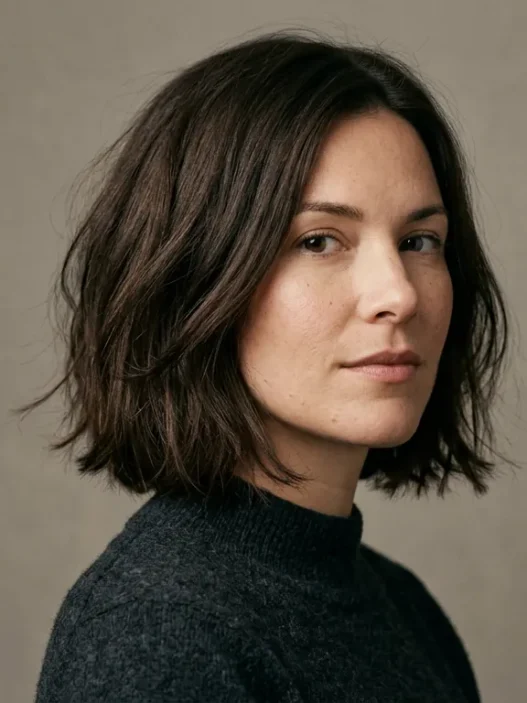
She has got a similar face shape to mine, and honestly, this cut looks incredible on her. The ends are feathered, not chopped, and the color has a little dimension through the mid-lengths which breaks up the width. If you have wavy hair, let those front pieces air-dry forward. They will naturally curve in a little and feel less wide.
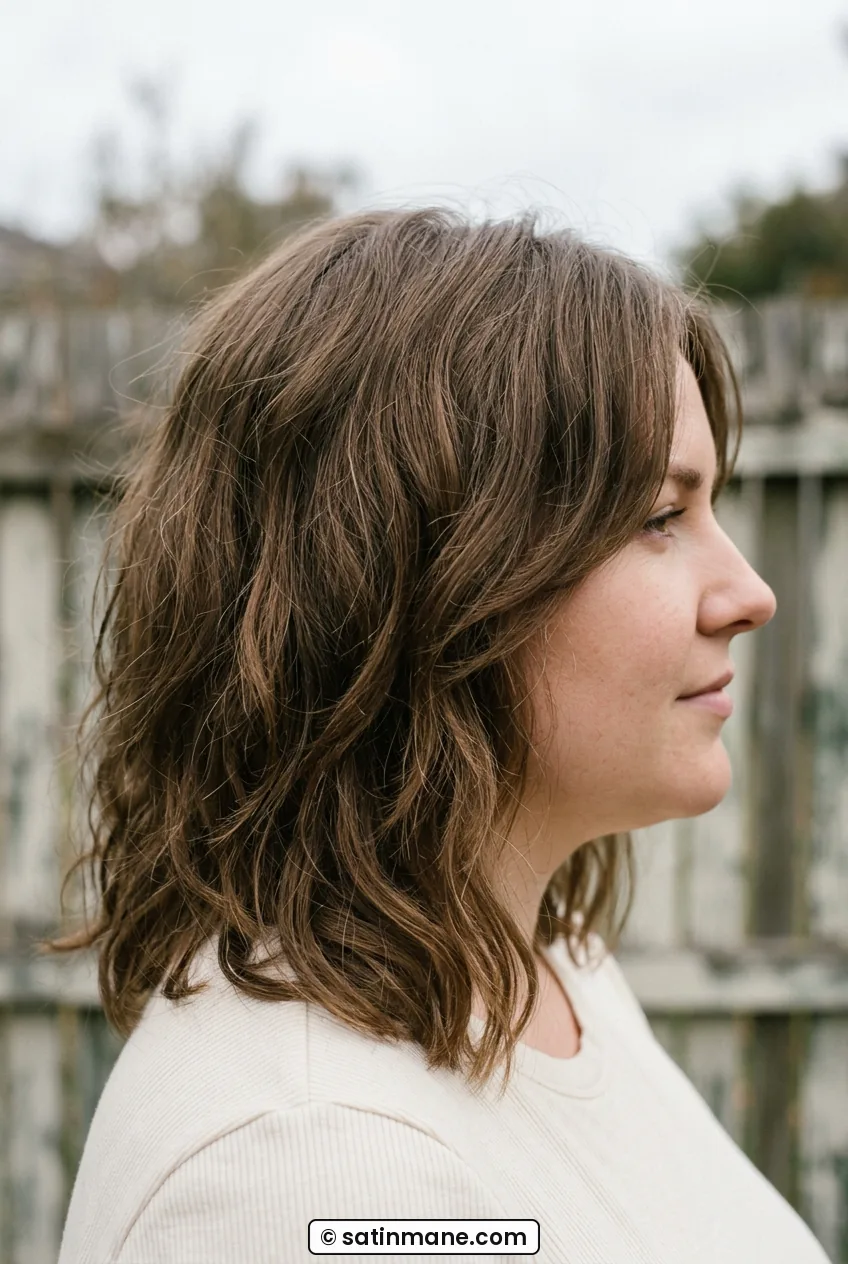
The mistake to avoid? A heavy, one-length line at cheek level with no softening. That will widen. Ask instead for a long, face-opening layer that starts at the lip and melts into the length. You can read up on medium cuts that hold this kind of soft edge between trims, because this one grows out beautifully.
3. Widest at the Jaw With Angled Fronts
This is the angled lob everyone pins, and there is a reason it keeps showing up for round faces. The back sits a little higher, the front angles down past the jaw, and the widest visual point drops to the jawline instead of the cheeks.
I asked for this before a wedding two years ago because I wanted something that looked polished but did not need curling every day. My stylist cut the front at a very slight diagonal, maybe an inch longer in front than in back, and kept the baseline clean. On straight hair, that angle reads as length. It pulls the eye down in a V shape.
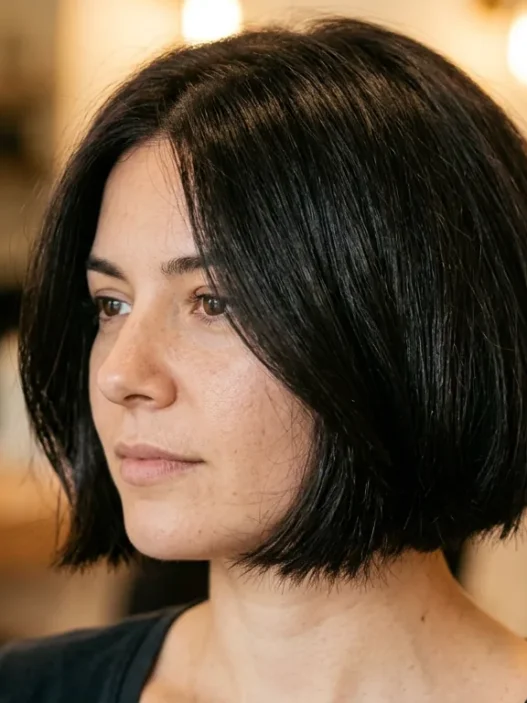
This is the length I am talking about. See how it hits just below her chin in front? That extra inch matters more than any product. You can also learn about angled lob styling techniques before your appointment, since the way you tuck the shorter back section changes the whole outline.
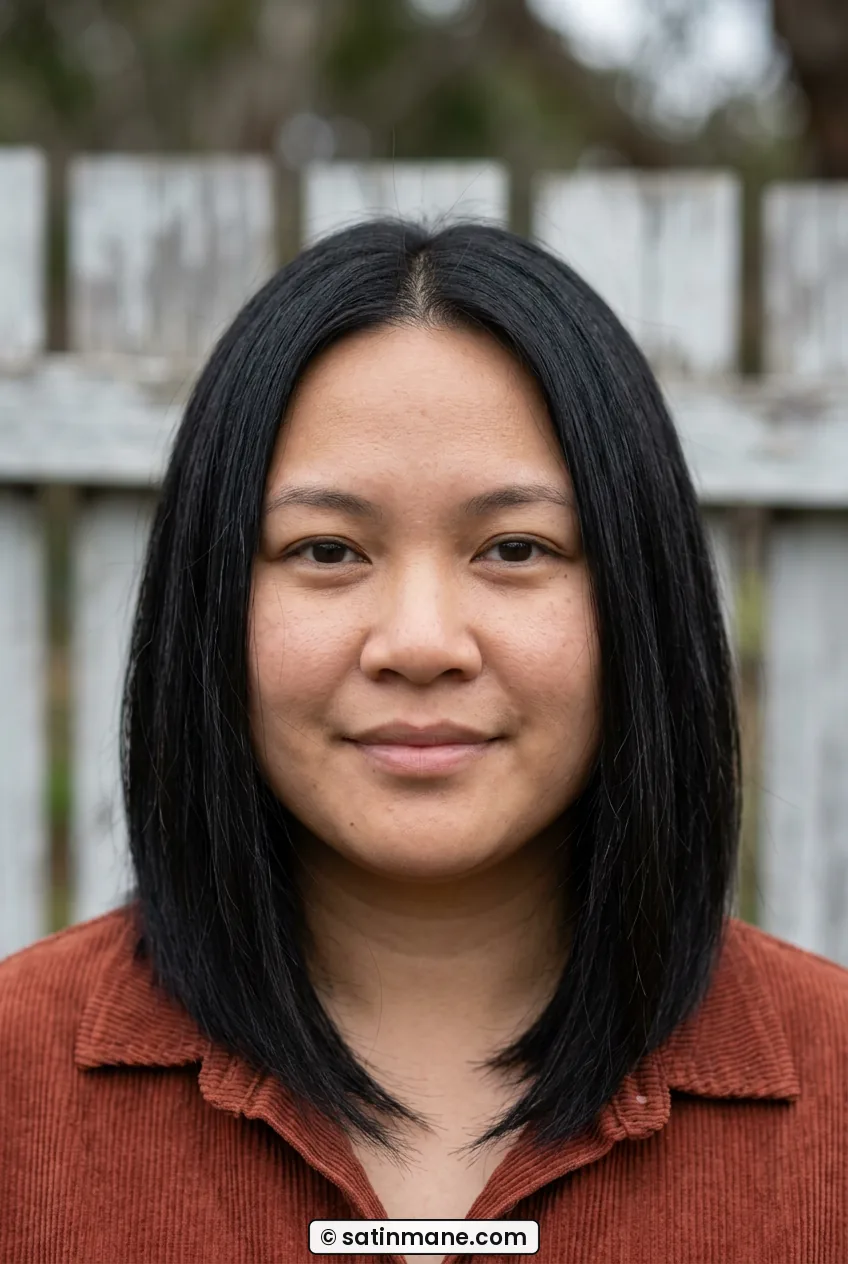
If your hair flips out at the jaw, do not fight it every morning. I let mine flip once and then flat-ironed just the very front pieces under. The slight bend inward at the jaw slims more than a pin-straight finish. For a shorter cousin of this shape, my notes on bob cut for round face break down which jaw lengths lengthen rather than widen.
4. Widest Below the Chin in a Clean Lob
If you only remember one placement from this list, make it this one. When the fullness sits below the chin, around the upper neck, a round face instantly looks longer. There is no width competing with your cheeks at all.
I think of this as my low-drama cut. It is one length with maybe two long layers in the very back to keep it from going triangular. It takes me about ten minutes with a round brush, and on lazy days I just let it air-dry with a middle part and a little cream on the ends. Because there is no short layering around the face, it never poufs out where I do not want it.
Look at how she is wearing hers, dead center part, ends just brushing the collarbone. That clean vertical fall is doing all the work. No curls piled at cheek level, no heavy fringe cutting the forehead short. Just length.

Who should skip it? If your hair is very thick and blunt, this exact line can feel heavy and swing forward. I have been there, and the fix was simple. My stylist removed weight from underneath without touching the outline, which is exactly what I describe in my piece on weight removal for thick medium hair. Ask for hidden internal layers and keep the outside line clean.
My personal pick is No. 4. I reach for that below-the-chin fullness every time I want to look a little slimmer in photos without styling for an hour.
5. Widest Below the Chin With Face-Framing Layers
This is No. 4 with a little more movement. The bulk still sits low, below the chin, but you get two or three soft, face-framing pieces that start at the lip or chin and melt down. They frame without widening because they are long and diagonal.
I love this version for wavy hair. My natural wave wants to kick out right at the cheek, which is the worst spot for me. When the shortest face piece starts lower, at the corner of the mouth, the wave kicks out lower too. Problem solved without heat.
In the photo, notice the longest framing piece hitting near her collarbone. That is what keeps the eye moving down. I always ask my stylist to cut those framing layers when my hair is dry, or at least to check them dry, because wet waves spring up and suddenly your below-the-chin layer is a at-the-cheek layer. Learned that the hard way.

Styling is simple. I wrap just the two front pieces away from my face with a one-inch iron for about five seconds, then shake them out. The rest I leave alone. If you want that soft, lived-in bend to last, you can read about long-lasting wave methods on your way home from the salon, since prep matters more than the iron itself.
6. Widest at the Collarbone With Air-Dried Ends
Do you air-dry? This placement was made for you. All the weight hangs down near the collarbone, with almost no layering up high. It is quiet on top and fuller at the bottom, which stretches a round face beautifully.
Mine looked best at this length when I stopped layering the top altogether. I know, it sounds boring. But with medium density and a little natural wave, those long, heavy ends pulled everything down and gave me that straight, column-like silhouette. I washed, scrunched in a pea-sized amount of cream, and went to school drop-off. Done.
She is wearing it exactly how I mean, slightly parted off-center, ends just kissing the collarbone and spreading softly over a tee. That little spread at the bottom is good width. It is low width. Low width lengthens.

One caution. If your ends are thin, this can look straggly rather than full. I had my stylist blunt the very bottom by half an inch and keep everything else untouched. That blunt edge fakes thickness right where you want the eye to land. My guide to medium cuts has a few more low-layer options if you like this wash-and-go feel.
7. Widest at the Jaw in a Bouncy Blowout
Okay, what about volume lovers? You do not have to go flat to flatter a round face. You just want the bounce to peak a little lower, near the jaw rather than at the ears.
I get this blowout when I want to feel polished. Big round brush, sections curved under at the jaw, crown smooth. The difference between flattering and widening is about two inches. Bounce at ear level? Wider. Bounce at jaw level with smoothness on top? Longer. I watched a stylist do it once with the brush held vertically instead of horizontally through the front, and I have copied her ever since.
Look at her blowout in the photo. The top is sleek, almost tucked, and then it kicks with soft fullness right around her jaw. That contrast is everything. And can we talk about how good a side-swept front looks with this? It cuts across the roundness diagonally.
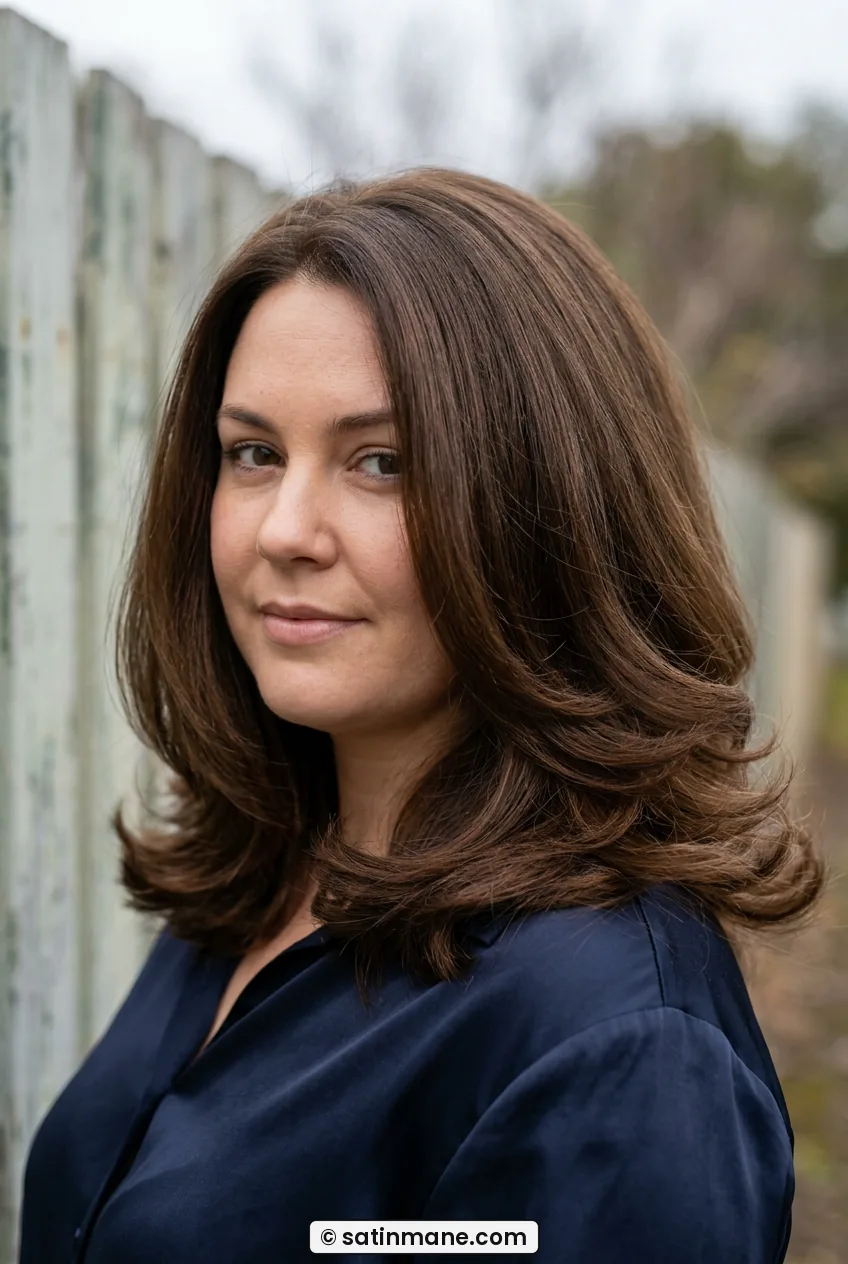
This is not my everyday cut because my fine hair drops by 3 p.m. But for events, it photographs so well. I use a Velcro roller just at the jaw on each side while I do makeup, then pull them out right before I leave. Instant width exactly where I want it. You can brush up on smooth root-lift techniques if your crown tends to go flat while your sides go big, that balance makes or breaks this look.
See That Jaw-Level Bounce Done Live
8. Widest Below the Chin With a Curtain Fringe
A curtain fringe plus medium length is such a good pairing for round faces, if the fringe opens in the middle. That center opening creates a vertical line down the forehead, and the longer sides of the fringe melt into low, below-the-chin fullness.
I grew out a too-short fringe into this last year and the in-between stage was awkward for about three weeks. Once the middle hit nose length and the sides hit lip length, everything clicked. My forehead looked longer, my cheeks looked narrower, and I could still pull it all back on greasy-hair days.
See how her fringe parts softly and hugs the temples rather than sitting straight across? That diagonal drape narrows. Keep the shortest bit no higher than the eyebrows or it will cut you off and round you out.

Styling tip from my own trial and error. Blow-dry the fringe forward with a small round brush, then split it with your fingers while it is still warm. If you let it cool stuck to your forehead, it separates weirdly. For fringe growers, my notes on short haircuts for round faces also help, because the same opening-up principle applies when you are deciding how short to go up top.
9. Widest at the Temple With Lived-In Texture
Last one, and it is for my wavy and curly girls. This is a shoulder-grazing shaglet with soft texture through the crown and temples, then longer, piecey ends. The width up top is broken up by texture, so it reads as height and movement, not roundness.
I love texture, but I have learned to place it carefully. Too much layering right at cheek level on curly hair turns into a triangle that sits wide. When my stylist kept the shortest layer at temple length and carved out the bulk underneath, my curls stacked vertically instead of puffing sideways. Such a difference in photos.
In the image, check the crown. It is piecey and airy, not a solid shelf. And the ends are thin enough to hang rather than kick. That combination keeps the widest point feeling high and narrow.
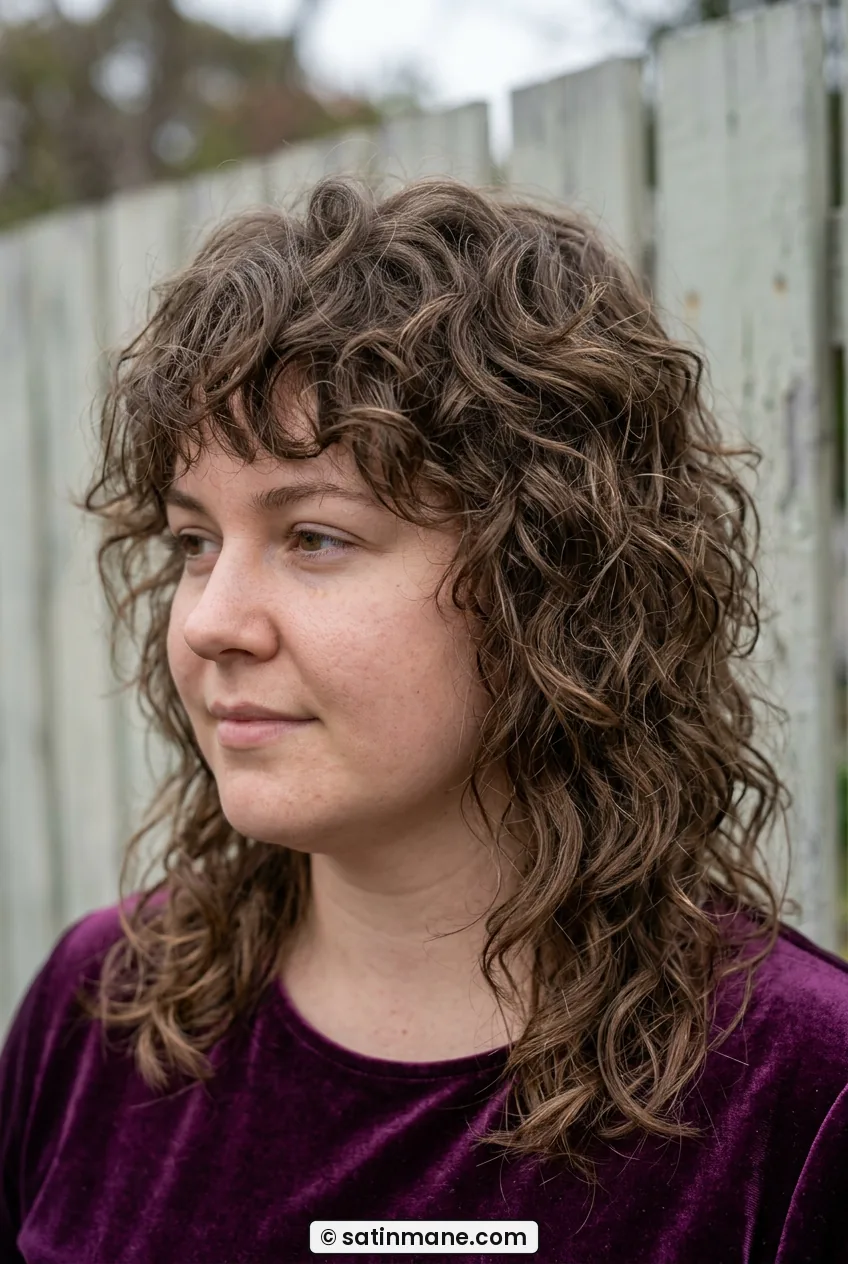
For thick hair especially, ask about weight removal that preserves length. I wrote a whole breakdown on how weight is removed from medium length haircut for thick hair after my own too-poofy phase, and the temple-area thinning trick in there is what makes this ninth shape wearable instead of overwhelming.
My Final Take on Width Placement
So where would I tell my sister to put the width? Below the chin, almost every time. That low fullness is the most forgiving across hair types, and it needs the least styling. I reach for a clean lob or those long, face-framing layers when I want to look a little longer with almost no effort.
But do not be afraid of height at the temples either, especially if you love a side part or lived-in texture. Just keep the cheeks clear. Show your stylist where you do not want width, not just where you do. That one sentence has saved me from more bad haircuts than any inspo photo.
What I Get Asked About Medium Length and Round Faces
Should the shortest layer sit above or below the cheekbone?
Below, in most cases. A shortest layer that ends right at the fullest part of the cheek doubles the width there. I ask for lip length or lower as the shortest face piece.
Is a middle part or side part better for a round face?
I wear both, but for different reasons. A middle part gives a clean vertical line that lengthens, while a deep side part adds asymmetry that breaks up roundness. Try both in the mirror at the salon before you decide.
Can I wear curls at medium length without looking wider?
Yes, if the curls start low. Keep the top smooth through the cheeks and let the curl or wave kick in from the jaw down. I use larger sections up top and smaller ones at the ends to get that shape.
How often should I trim to keep the width where I want it?
Every 8 to 12 weeks for most medium cuts. Layers creep up as they grow, so a below-the-chin layer can become a cheek layer by month four. I go in for a light dusting rather than a full recut.
Tell me which placement you are leaning toward? I am still team low width, but that temple-lift side part tempts me every fall.