










I have worn my hair short for most of my adult life, and I have learned the hard way that not all short bobs grow out the same. Some look great on day one and fuzzy by week three. Others just sit there and behave. That second kind is what I live for now.
So I pulled together the short bob haircuts for women I actually recommend when someone wants less fuss. We are talking a full range here, from a tucked-in cut at the ear all the way down to a soft skimmer at the collarbone. Same family, very different upkeep.
Think of this as a walk down the head. We start super short and get a little longer as we go. By the end I will tell you which length I send most friends home with.
What Is Inside This Short-Bob Walk-Through
- 1. Ear-Hugging Micro Crop At the Ear
- 2. Tapered Nape Chop At the Ear
- 3. Sharp Jaw-Grazer At the Jaw
- 4. Soft French-Style Cut At the Jaw
- 5. Full Chin-Skimmer At the Chin
- 6. Layered Swing Cut At the Chin
- 7. Dark Blunt Edge At the Chin
- 8. Airy Lob Skimmer At the Collarbone
- 9. Grown-Out Long Bob At the Collarbone
- Where I Would Start If You Are on the Fence
- Short-Bob Questions I Hear All the Time
1. Ear-Hugging Micro Crop At the Ear
This is the shortest I will go before it stops feeling like a bob and starts feeling like a pixie-bob hybrid. I love this one on fine hair because there is nowhere for flatness to hide.
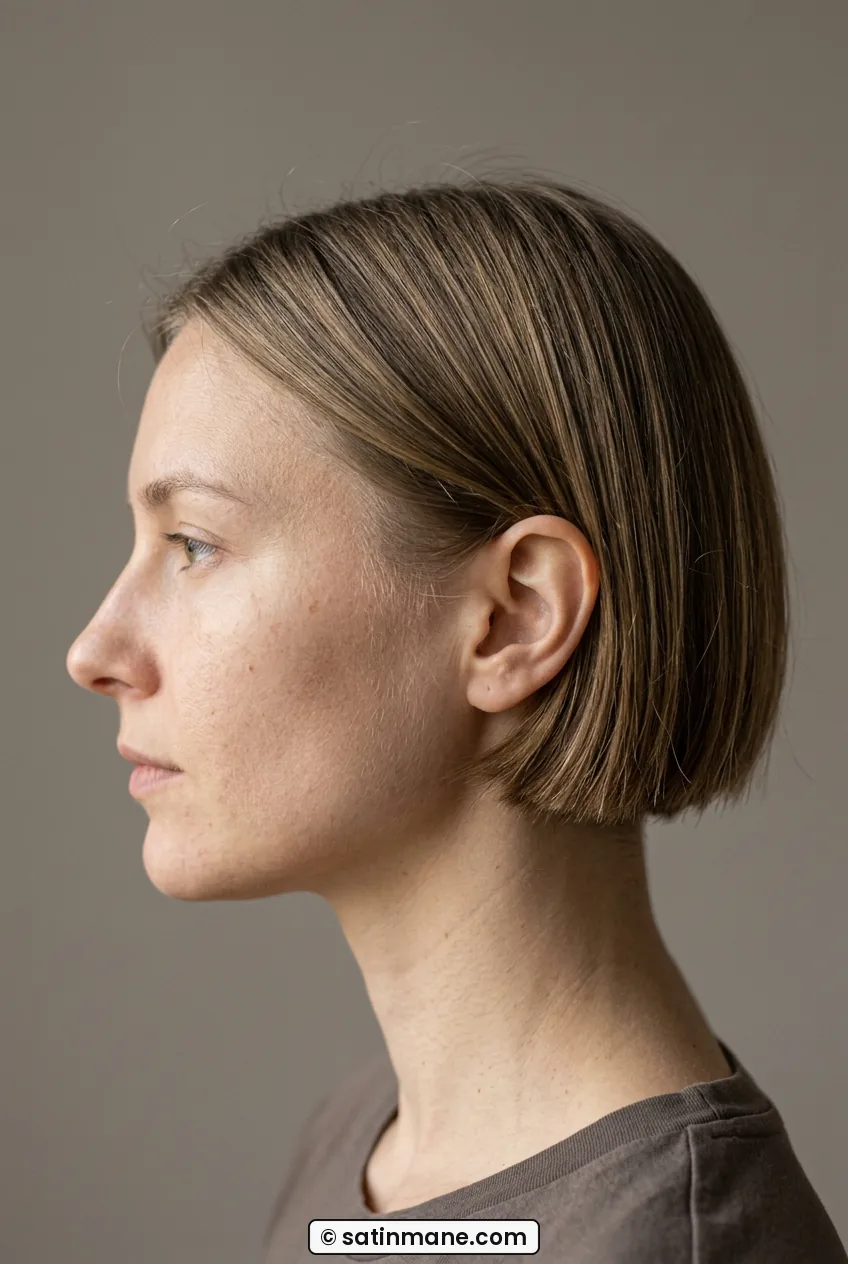
Where does the weight sit? Right at the ear. The top stays a little full, the sides hug close, and the back is cut tight so it does not poke out as it grows. When I had mine this short, I could towel-dry it, push the front to one side, and walk out the door. No round brush, no drama.
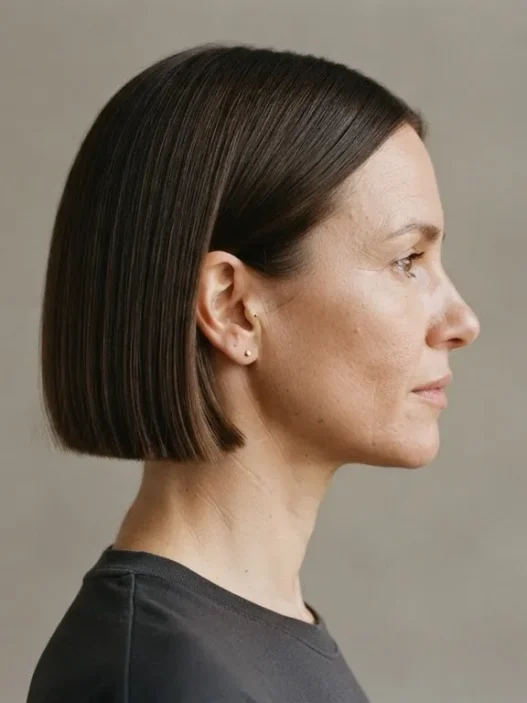
Look at how she is wearing hers in this side view. See how clean that line is just over the ear? That close perimeter is what keeps it from going puffy. It is an extra-short bob in the best way, crisp but not severe.
Fair warning, you will need a quick neckline tidy around week five or six. I just book a 10-minute clean-up with my stylist. The shape itself holds, it is only that fuzzy nape that gives it away. If you wear glasses, this length is a dream because nothing fights with your frames.
2. Tapered Nape Chop At the Ear
I think of this as the grown-up sister of the micro crop. Still very short, still at the ear in front, but the back is softly tapered instead of blunt. My neck runs short, so this is the version I ask for when I want height without bulk.
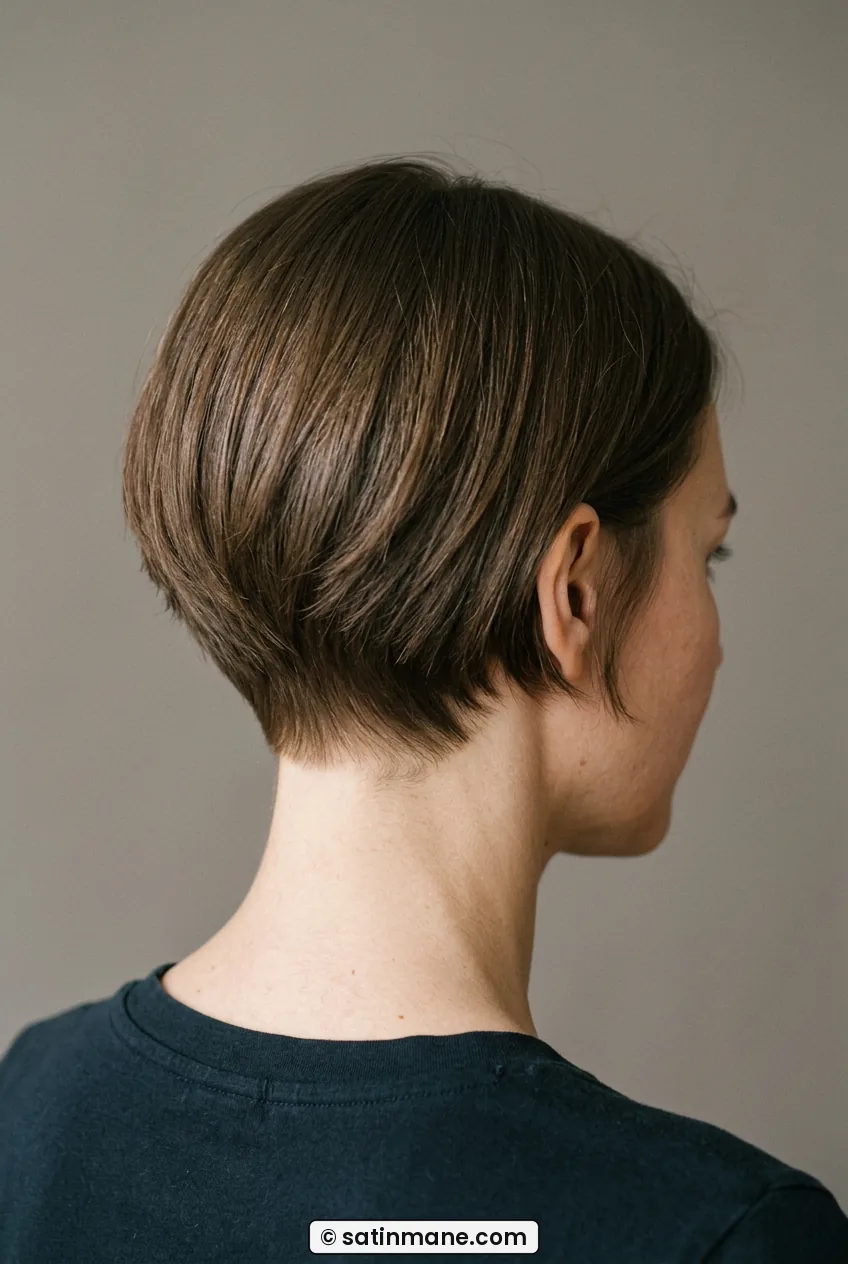
Where does the weight sit? Low and tight at the ear and nape, with a little lift through the crown. That placement matters. Because the fullness lives up high, the bottom can grow out for weeks without flipping or kicking. I have read up on tapered cutting techniques before my last appointment and it helped me explain what I wanted without bringing in eight photos.
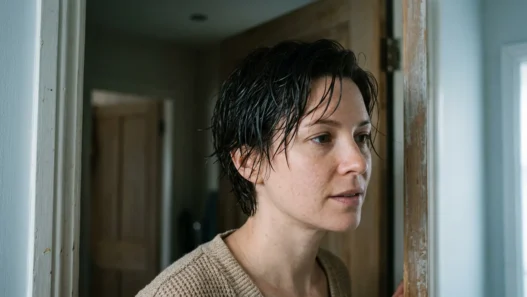
She has got a similar hair texture to mine, thick through the back, and honestly this cut looks incredible on her from the back three-quarter angle. You can see the taper melting into her neckline with no harsh line. That is the whole trick for thick hair. Take the weight out underneath and let the top lie smooth.
Drying time? About four minutes with a towel and a little air. I add a pea-sized dab of cream and pinch the ends. Done. If you air-dry wavy, this one gives you a cute kicked-under shape without heat. It is probably the lowest-fuss very-short bob I know.
3. Sharp Jaw-Grazer At the Jaw
Now we are moving down to classic short-bob territory. This one hits right at the jaw, and I mean right there. Not below, not above. When it is cut well, it swings when you turn your head, which I find weirdly fun.
Where does the weight sit? In one clean, jaw-level line. There are almost no layers, just a slightly undercut interior so the ends tuck instead of puffing. I love this on straight hair because that one line does all the work. My straight-haired friend wears hers exactly like this and she trims every eight weeks, not every four.
This is the length I am talking about in the photo. See how it hits just at her jaw corner and angles a touch forward? That forward angle keeps cheeks looking lifted and makes styling almost automatic. Side part or middle part, both work.
One mistake I made with this cut once? I asked for it too blunt on my wavy hair and got triangle-head by week three. If your hair has wave, ask for soft internal texture, not visible layers. And if your face is round, have a look at short haircuts for round faces before you book, because jaw-length can go either way depending on where that front corner lands.
4. Soft French-Style Cut At the Jaw
This is my Paris-on-a-budget bob. A little undone, a little flippy at the ends, usually with a soft fringe or long curtain bangs. I wore this for almost a year in my late thirties and I miss how easy mornings felt.
Where does the weight sit? Still at the jaw, but broken up. Instead of one heavy line, the weight is scattered through choppy ends and a few face-framing pieces. That means grow-out is invisible. When my bob grew from jaw to chin, nobody noticed because there was no solid line to outgrow.
Look at how she is wearing hers with that airy texture and slightly lifted crown. That is exactly what I mean about a lived-in perimeter. You can also read about air-dried texture techniques on busy school mornings when I do not want to pick up a dryer at all.

I think this is the best pick if you have wavy hair and hate flat-ironing. Wash, scrunch with a little mousse, go. The messier it dries, the better it looks. Which is rare, right?
My personal pick is this soft French one. It survived a humid August, a week of hat hair, and my laziness, and still looked intentional.
5. Full Chin-Skimmer At the Chin
Okay, chin length. This is home base for so many of us. Not too short to feel exposed, not long enough to tie back, just that neat little bob that frames everything.
Where does the weight sit? In a full, rounded shape that bottoms out at the chin. Think short chin-length hair with the bulk sitting low, right along the jaw and chin. That low weight is why it feels stable between appointments. It does not lose its shape quickly because the shape IS the bottom edge.
This front view shows it perfectly. See how full it looks under her cheekbones? If you like a tidy, polished bob that still air-dries well, this is it. I always suggest browsing chin-length bobs for inspo before you go, because tiny differences in the front angle change the whole mood.

Upkeep is simple. I trim mine every 7 to 8 weeks. In between I tuck one side behind my ear when I am working on my laptop and let it fall forward when I go out. Two looks, zero heat. For fine hair, ask your stylist to keep the ends blunt. For thick hair, ask for weight taken out inside so it does not bell out.
6. Layered Swing Cut At the Chin
If the blunt chin-skimmer feels too heavy on you, this layered version is the fix. I sent my sister in for this last spring because her thick, straight hair was just sitting there like a helmet. Layers changed everything for her.
Where does the weight sit? Higher than you would expect, through the mid-lengths rather than the ends. The bottom at the chin stays light and swingy, while the movement lives up around the cheeks. That lifted weight stops the dreaded flip-out during grow-out and it dries faster too, which I appreciate on work mornings.
She is wearing it in a three-quarter turn here and you can really see those short layers doing their job. The ends flick just slightly, nothing over-styled. I love a short bob with layers like this for thick hair because it removes bulk without making the ends see-through.
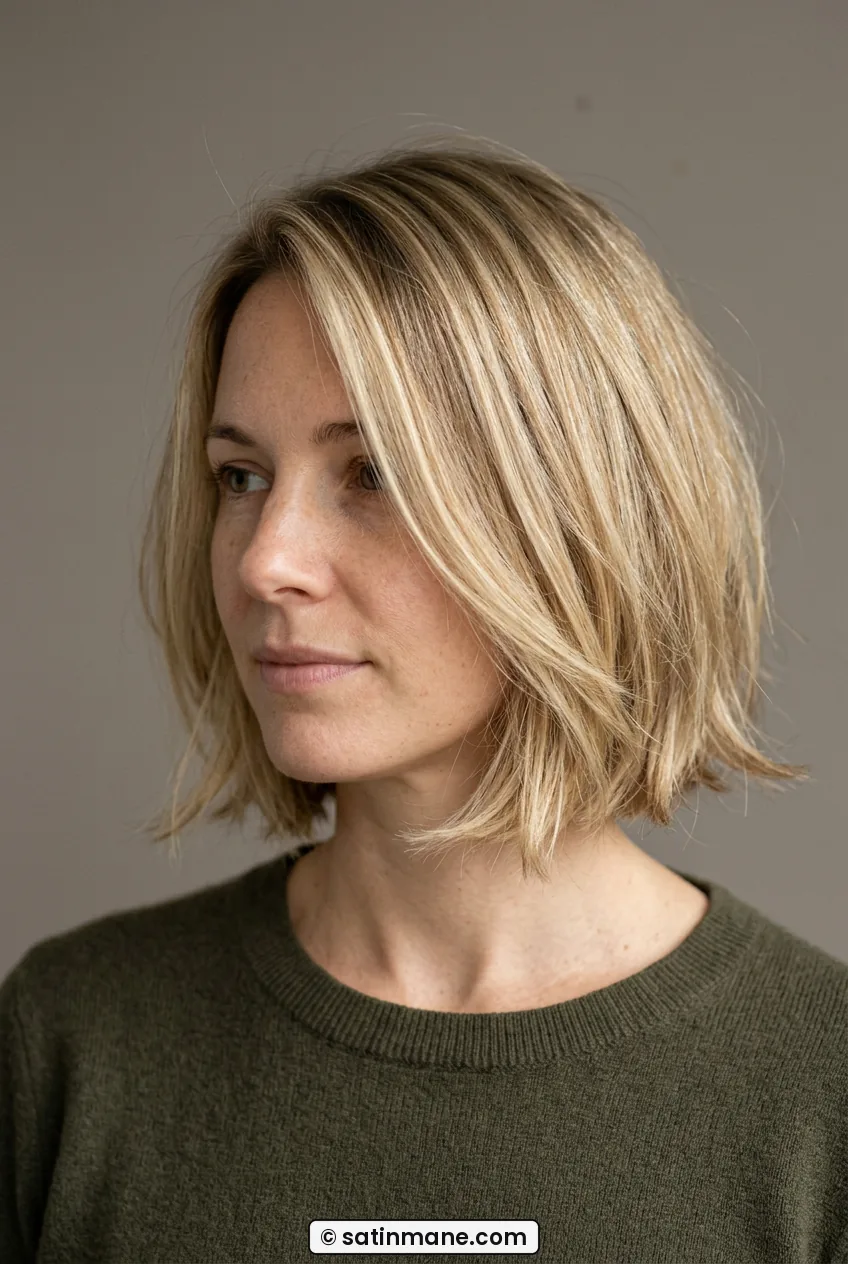
My tip? Do not over-layer the top if your hair is fine. You want long, soft layers, not short choppy ones. And if you like that airy feel, textured bobs are worth a scroll. That texture-first approach is what makes this chin cut feel light instead of blocky. You can learn more from layered cuts for thick hair before you decide how much layering you want.
See Layering That Keeps Its Shape
7. Dark Blunt Edge At the Chin
Dark hair shows every line, so a blunt cut at the chin looks extra sharp. I had deep espresso hair for two years and this was my go-to. Shiny, graphic, very put-together with almost no styling.
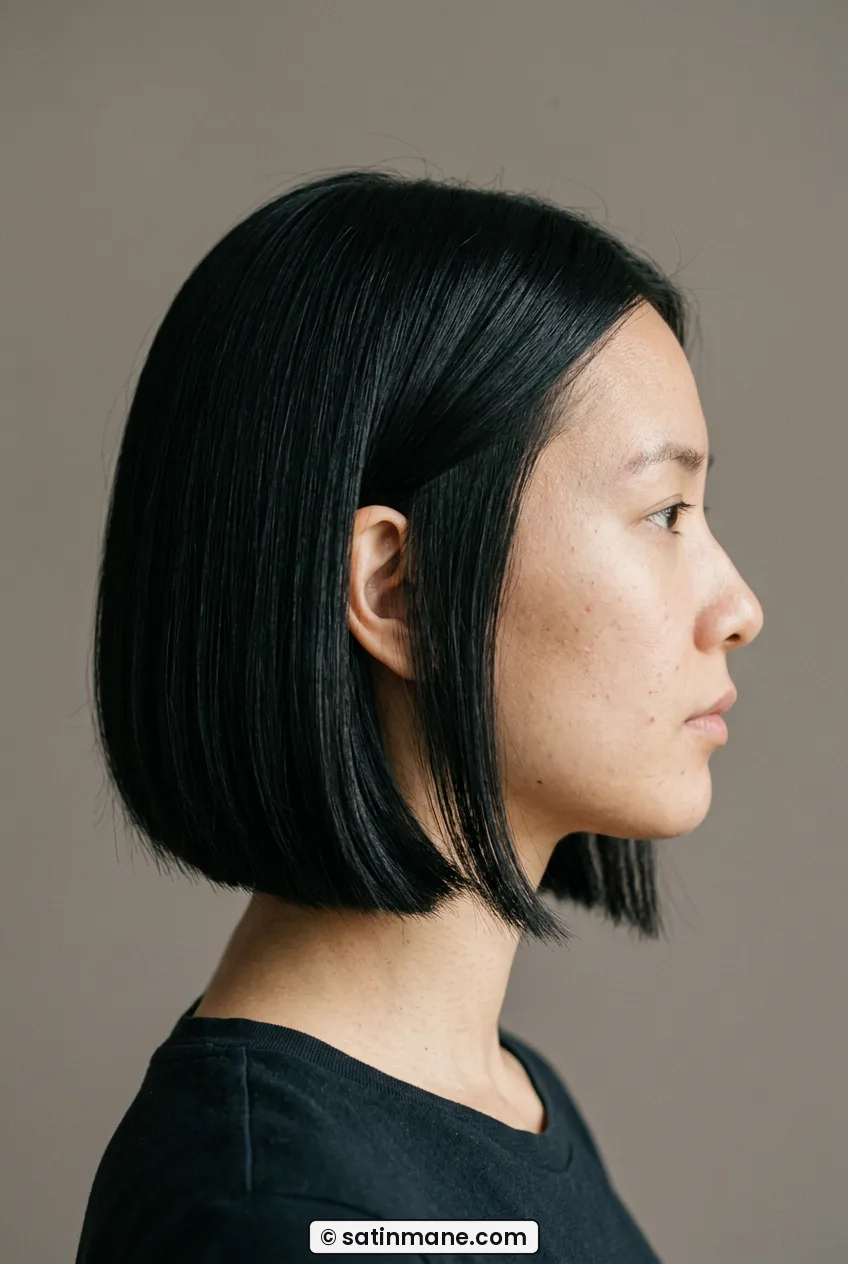
Where does the weight sit? All along that chin-level edge, heavy and even. On dark hair that low, solid weight reads as shine. Light bounces off that one clean line in a way you just do not get with layers. My stylist called it a glass edge, and I still think about that.
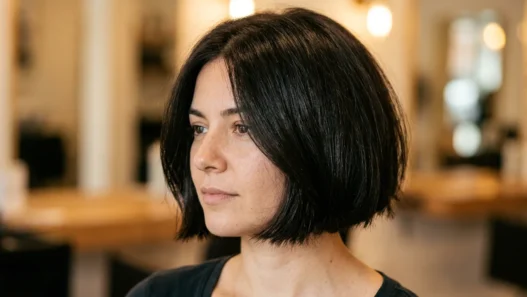
Look at her side profile here. That cut line is dead straight, chin-grazing, with no flyaways. This is the exact finish I mean when I say blunt works hardest on a short bob in dark hair. Color that is one even tone makes the shape look more precise, even at week six.
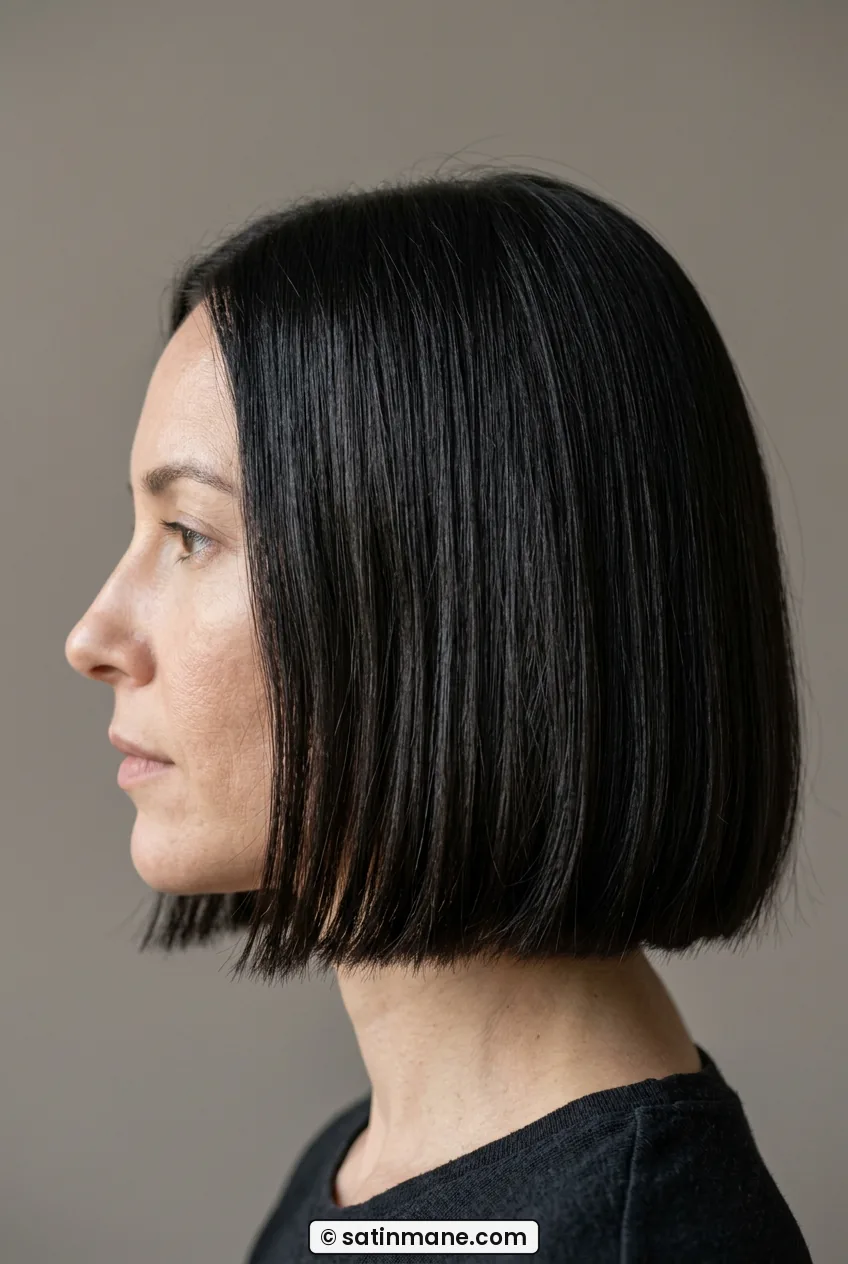
Does it need more trims? A little. To keep that edge razor-sharp I went every six weeks. But here is the secret, even grown out to week eight it still looked like a bob, just a softer one. If you have a round face and worry about width at the cheeks, check bob cuts for round face for where to place that front length. A touch longer in front can lengthen everything.
8. Airy Lob Skimmer At the Collarbone
We are getting longer now. This one barely counts as short, but I had to include it because so many women land here after growing out a chin bob. It grazes the collarbone and feels light and breezy.
Where does the weight sit? Low and wispy at the collarbone, with airy ends that do not堆 up. Okay, let me say that normally. The weight sits low but it is thinned out, so the ends float instead of stacking. That makes this the most forgiving length in the whole post. Bad hair day? Twist it up for two minutes and it still falls nicely when you take it down.
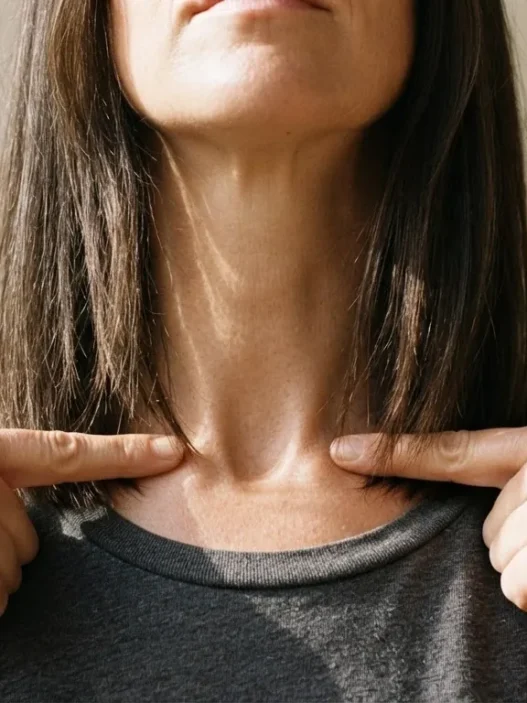
In this wider chest-up shot you can see the full length down to her collarbone. See how the ends just kiss the bone and break apart? That broken edge is why it holds between appointments. There is no solid line to outgrow, so month three still looks fine.

I wore this length through a whole summer of air-drying and I barely touched my straightener. If you want ideas that are truly low-fuss at this length, have a peek at low-maintenance bob haircuts. That roundup is what convinced me to let my chin bob grow that extra inch and a half.
9. Grown-Out Long Bob At the Collarbone
Last one, and honestly? This might be the smartest low-upkeep move of all. You start with a neat chin bob and just let it grow to the collarbone with tiny dusting trims. No awkward stage if you plan it right.
Where does the weight sit? Right on the collarbone, sitting on the shoulders just enough to bend under naturally. That contact point does your styling for you. I used to hate that flip, but at this length the ends curve instead of kick. My hair finally behaved when it had somewhere to rest.
She is shown from a soft back angle here and I love that view for this cut. You can see how even the back edge stays full without getting bulky. When I grew mine out, this was the stage where strangers started asking who cut my hair. Funny, because I had not had a real cut in ten weeks.
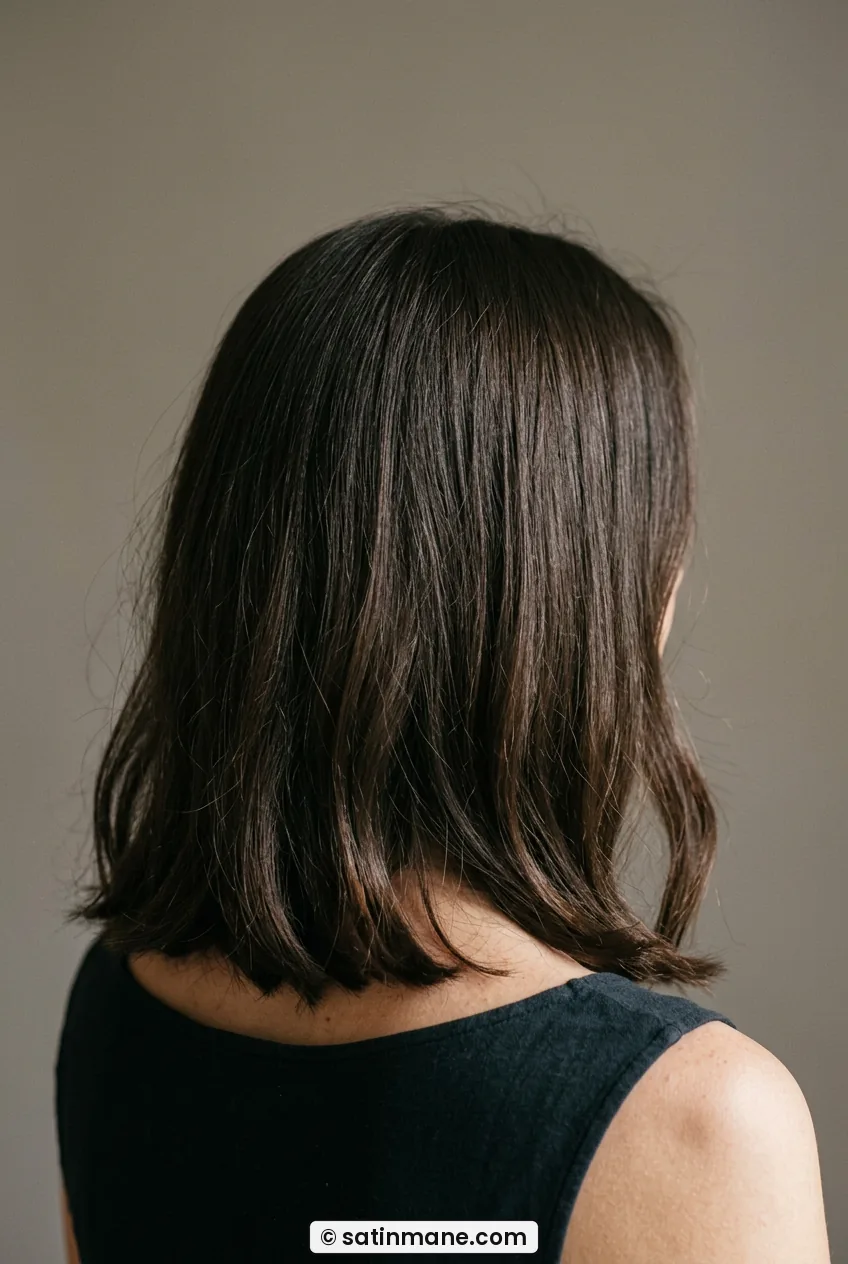
Trim every 10 to 12 weeks, just the very ends. Sleep on it, shake it out, go. If you have curls or strong waves, this longer bob gives them room to stretch and soften. Shorter bobs can spring up, this one hangs. That hanging weight is your friend.
Where I Would Start If You Are on the Fence
If you asked me in the salon chair tomorrow, I would tell most women to start at the chin. Not at the ear, not at the collarbone. Chin.
Why? A chin bob suits almost every face shape with a tiny tweak in front, it air-dries in under 15 minutes, and it gives you two directions to go. Hate it short? Let it slide to the collarbone and you are in lob land. Want it bolder? Tuck it up to the jaw next time. You have options without starting over.
My second choice for true wash-and-go girls is that soft French cut at the jaw. It hides regrowth better than anything else here. My third choice for thick hair is the layered swing at the chin. Lighter, faster drying, no helmet head.
Bring two photos to your appointment, one of the length you want and one of the texture you want. Tell your stylist how often you really want to come back. Be honest. If it is every ten weeks, say so, and let them cut for that grow-out.
Short-Bob Questions I Hear All the Time
How often do short bobs need a trim?
It depends on the edge. My blunt cuts look best with a tidy every six weeks, while my textured and collarbone lengths easily go eight to twelve weeks. Tell your stylist your real schedule and they can leave more room in the shape.
Which short bob works for thick hair without daily styling?
I have thick hair in my family and the layered swing at the chin wins every time. Internal layers take out bulk so it lies flat and dries faster. A tapered nape also helps a ton if the back poofs up.
Can a very short bob suit a round face?
Yes, but placement matters more than length. I ask for a little extra length in front and height on top to lengthen rather than widen. An ear tuck on one side also breaks up width and shows off cheekbones.
Will a chin bob air-dry nicely?
Mine does, especially with a little texture cut in. I towel-dry, add a dab of light cream, and push the part where I want it. Straight hair dries sleek, wavy hair dries with a soft bend. Give it ten minutes untouched and do not fuss it while it is damp.
So which one are you leaning toward? I am still partial to that messy French jaw cut for everyday life, but my neat-freak side loves a dark blunt chin bob. Send me a message or save this for your next appointment, and tell your stylist how low-upkeep you really want to go.