











My morning clock starts the second the towel comes off my head, and I have exactly ten minutes before someone is yelling about lost shoes.
Your 10-Minute Hair Clock
1. Minute One: Out of the Towel
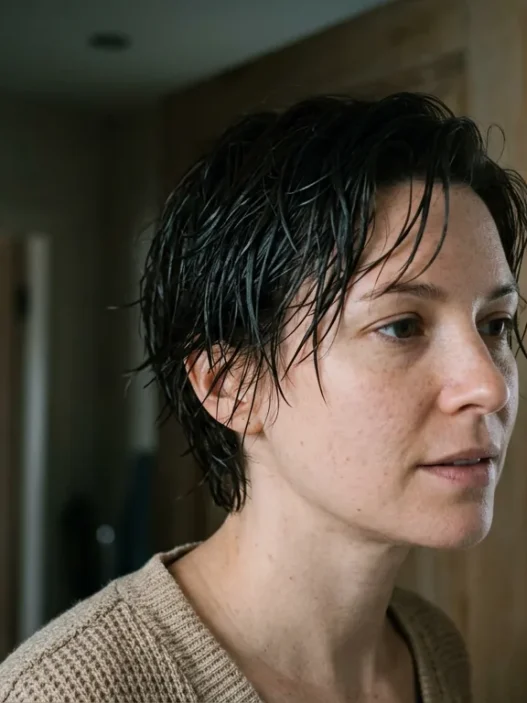
The first minute is diagnostic. You squeeze the towel, flip your head upright, and whatever your hair does in that first second — that’s the shape you’re working with. I spent years fighting mine. Frizzy at the roots, flat at the ends, weirdly volumized on one side only. The cut that changed everything wasn’t a styling trick. It was understanding that the right haircut for a busy mom should look intentional while still damp and completely unstyled.
That’s the whole premise of this list. Every cut here is rated on one thing only: how it behaves in that first minute out of the towel. Because if you need heat tools to make it work, it’s not a low-maintenance haircut — it’s a hairstyle in disguise.

2. Minute Two: The Parting Decision
Before we get into specific cuts, a quick word about partings — because this is where most women lose two minutes every morning without realizing it. A great cut for a busy mom should have a natural fall. Meaning: your hair wants to go somewhere, and a good stylist works with that, not against it.
I always tell my stylist exactly where my hair parts itself when wet and left alone. That’s the parting your cut should be built around. Center, side, zigzag — doesn’t matter which. What matters is that you’re not spending minute two fighting gravity. If your current cut requires deliberate placement every single morning, it’s costing you more time than you think. You can read more about what separates a genuinely low-maintenance haircut from one that just looks casual in a salon photo — the difference is real, and it comes down to how the cut is constructed, not just how it’s described.

3. Minute Three: The Textured Bob
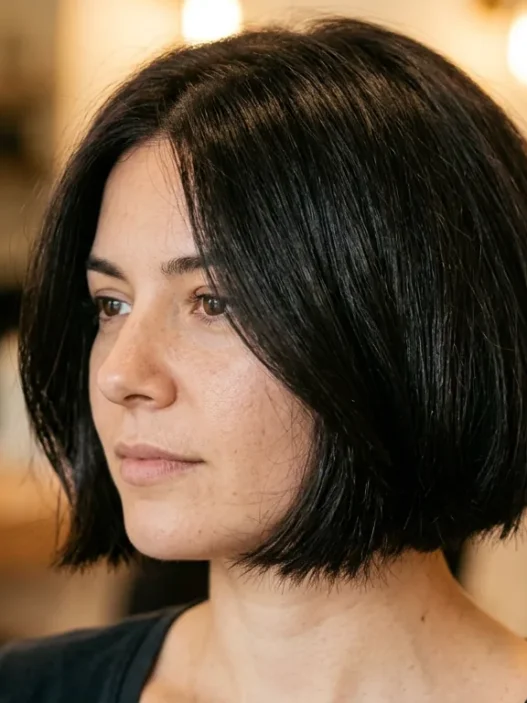
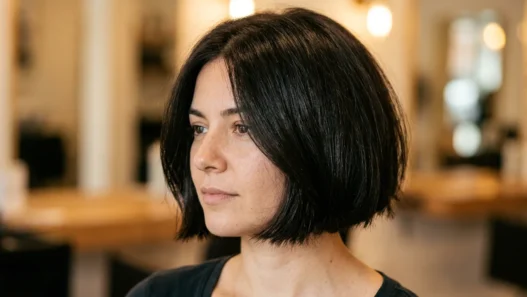
If I had to pick one cut I’ve seen work on the widest variety of face shapes and hair types, it’s a textured bob. Not a blunt bob — that requires precision and a blow-dry. A textured bob, meaning the ends are point-cut or razor-finished so they fall softly rather than holding a strict line.
By minute three, a textured bob is basically done. You scrunch the ends, separate a few pieces at the front, and it looks like you meant it. She’s wearing hers in the photo below with zero product, and look at how the ends curl under slightly without any encouragement — that’s the texture doing the work. This is also why I’d push anyone with fine hair toward this cut specifically: the point-cutting adds visual weight that fine hair usually needs, without actually adding bulk. There’s a deeper breakdown of exactly this kind of shape in this guide to hairstyles for short hair that’s worth reading before you book.

4. Minute Four: The Mom Chop
The so-called “mom chop” has a reputation. People act like it’s a capitulation — like you’ve given up on having a personality. That’s nonsense. The mom chop, when done well, is simply a chin-to-jaw-length cut with enough internal layering to move. It’s not about giving up length. It’s about choosing a length that survives a school run.
By minute four, this cut can be finger-combed and done. The jaw-length frame shortens the appearance of a long face, softens a square jaw, and — this is the part nobody talks about — it dries faster than almost anything else. Less hair, less time. I’ve had clients go from shoulder-length to the mom chop and report back that they’ve reclaimed twenty minutes every morning. Twenty. That’s not nothing when you’re also packing lunches and finding the permission slips.
My personal pick for anyone who hasn’t slept a full night since 2022: the mom chop with a soft c-curve at the ends. It frames the face, it doesn’t require a round brush, and it grows out gracefully rather than hitting an awkward in-between stage. Get your stylist to keep the nape slightly longer so you have the option to tuck it behind your ears when it grows. You’ll thank me in three months.
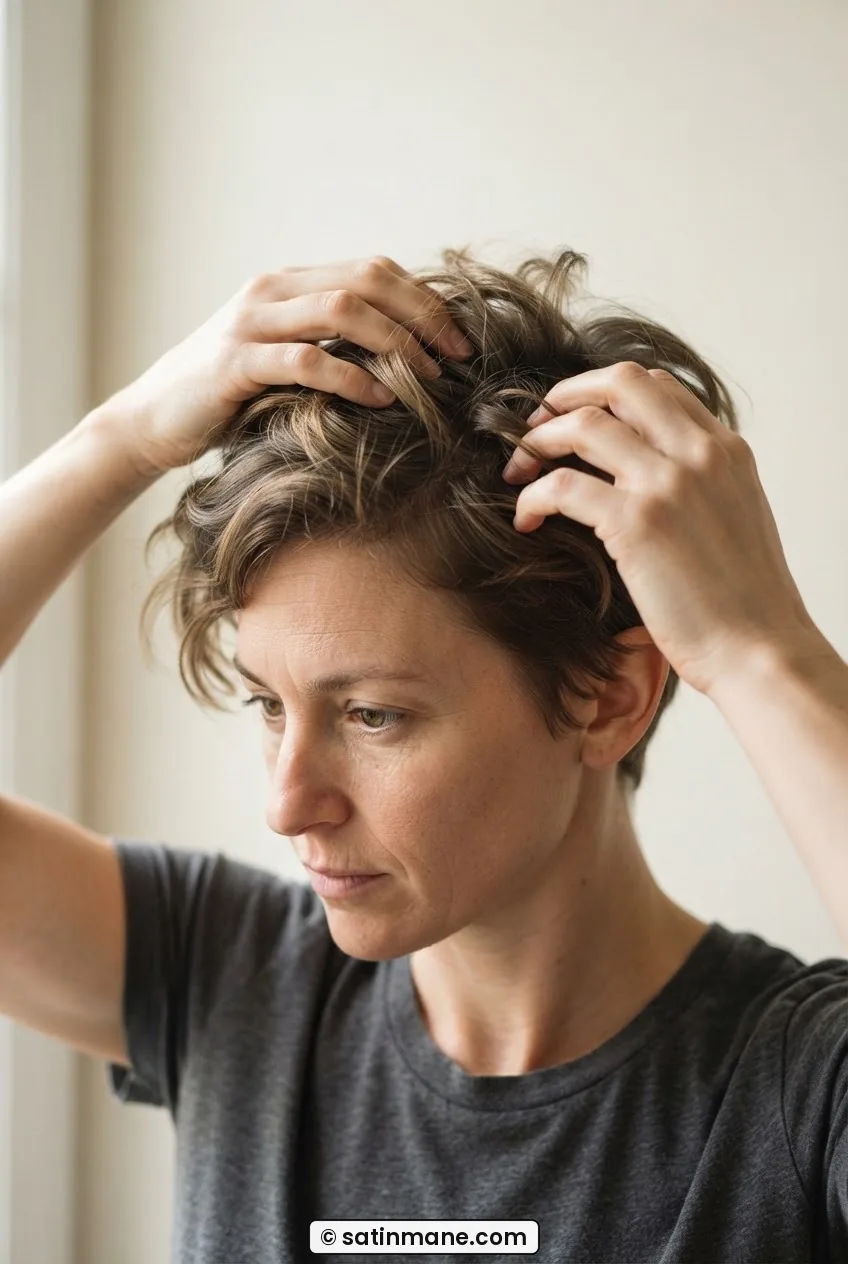
5. Minute Five: The Soft Pixie
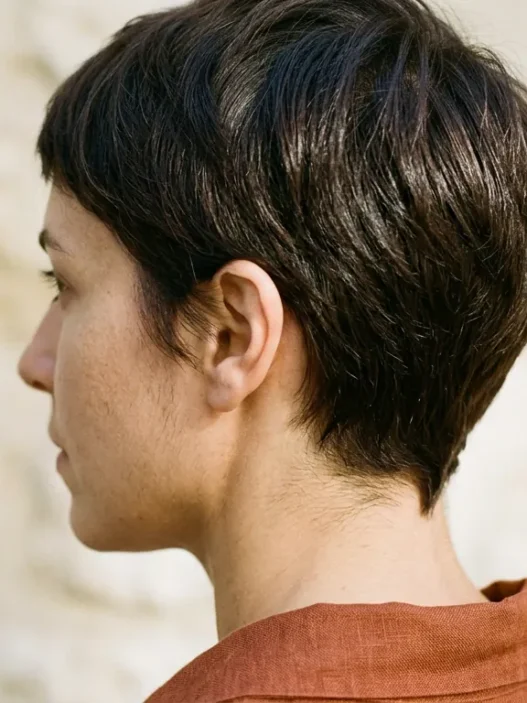
Here’s where I’ll be direct: a soft pixie is genuinely the fastest-drying, fastest-styling cut on this list. But I won’t call it low-maintenance without caveats, because a pixie that isn’t cut well needs more attention, not less. The soft version — longer at the crown, tapered at the sides, no harsh undercut — is the forgiving one.
By minute five, your hair is mostly dry anyway because there’s so little of it. You push the crown forward with one hand, press the sides back, and you’re done. The shape holds because the weight distribution does the work. It also happens to be particularly flattering for fine hair, which can look limp at longer lengths — at pixie length, fine hair looks intentionally sleek rather than thin. The guide to short hairstyles for women with fine hair goes into the specific details of why this works mechanically, not just aesthetically.

6. Minute Six: The Shoulder-Grazing Layer
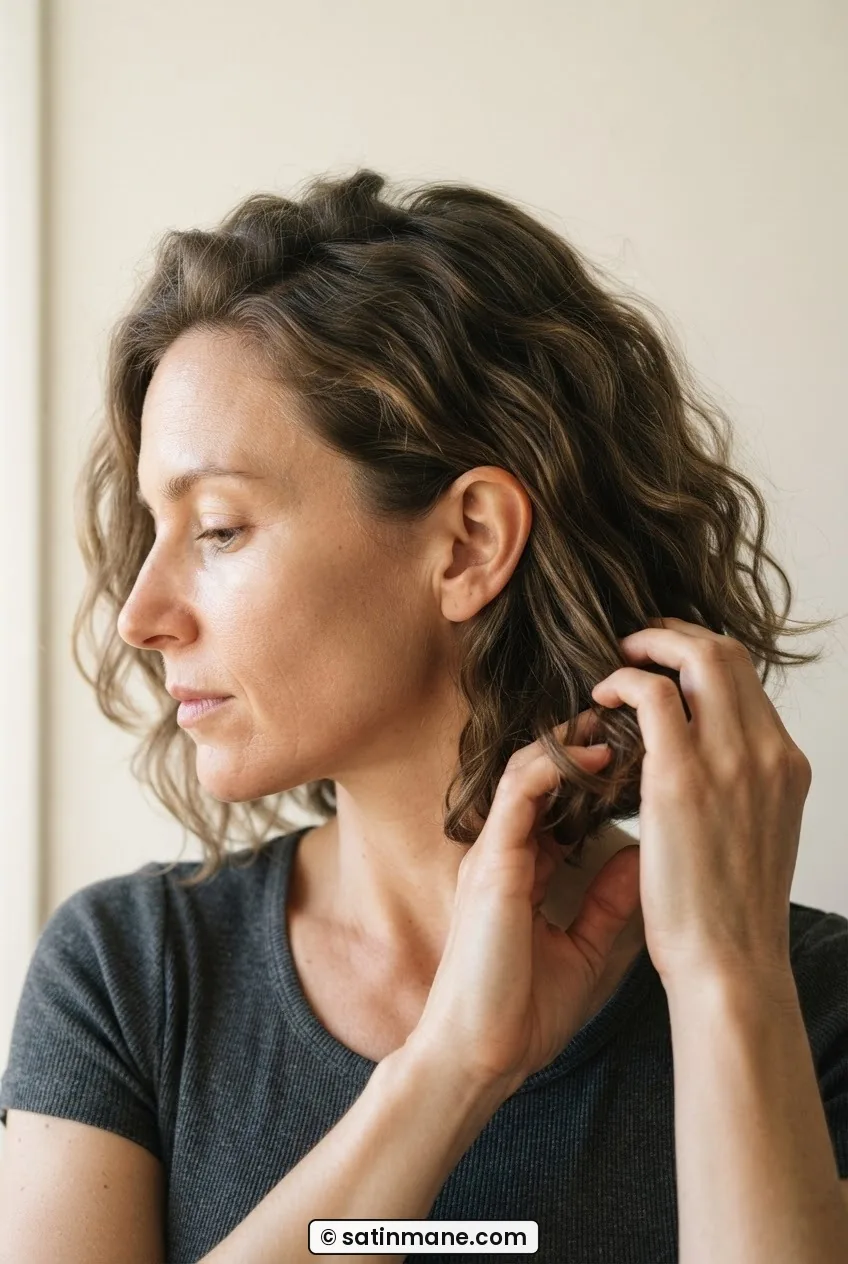
Medium cuts are polarizing. Too long for the pixie crew, too short for the long-hair loyalists. But I think they’re actually the sweet spot for most moms who want to keep some length without spending their mornings on it. The shoulder-grazing layered cut — sitting right at or just past the collarbone with layers that start at the cheekbone — is the definition of a shape that forgives the towel.
Layers do something structurally important here: they redirect the hair as it dries. Instead of all the weight falling straight down and looking deflated, layers create movement that’s already built in. She’s wearing hers in the image below without a single product, and you can see how the front pieces fall forward at a different angle from the back layers — that’s physics, not styling. This is minute six material: scrunch, separate, walk away.

7. Minute Seven: The Collarbone Cut
The collarbone length is interesting because it’s the exact point where hair either starts to work for you or against you, depending on how much of it you have. For thick hair, this length is actually ideal — there’s enough weight to sit flat and enough movement to avoid the triangle effect. For fine hair, this is typically where things start drooping. So the key question is: what does your hair do at this length?
If you’ve had collarbone-length hair before and it looked flat by 10am, the cut itself probably wasn’t layered enough to compensate. A good stylist will add face-framing layers at the front that lift the hair away from the face and create the illusion of movement even when the hair is completely dry and unstyled. Done right, this cut hits minute seven with the front pieces already doing something interesting and the back sitting neatly without a single intervention from you.

8. Minute Eight: The Long Lob
The long lob — which sits two to four inches below the collarbone — is the longest cut I’d genuinely recommend to a mom who wants to air-dry her hair and have it look right. Beyond this length, most hair types need some kind of intervention to look presentable. But the long lob, with the right interior layering, can absolutely survive an unstyled morning.
What makes the long lob work at minute eight rather than minute fifteen is specifically the weight removal. A blunt long lob will take longer to dry and will likely look stringy at the ends. But a long lob with internal thinning and a subtle convex shape — shorter underneath, slightly longer at the face — creates movement and drying speed that a uniform blunt cut simply can’t match. You can ask your stylist to explain the shape clearly so you don’t end up with a haircut that looks great in the salon and flat every day after.

9. Minute Nine: The Curtain-Bang Frame
Curtain bangs aren’t a haircut — they’re an addition to a haircut. But I’m giving them their own minute because they genuinely change the morning math. A face-framing curtain bang, grown long enough to tuck behind the ear, adds structure to the front of any length without requiring a blow-dry to behave. They air-dry into a soft part almost automatically.
The version that works best for hairstyles for busy moms is longer than you’d expect — starting at the outer corner of the eye and blending into the face-framing layers. This means if they’re having a flat day, you can simply pin them back without looking like you made a bad decision. They also do something genuinely useful for round or square face shapes: they break the horizontal line of the face and draw the eye down and inward. See how hers fall in the image — the center part naturally splits them and she didn’t have to do a single thing to make that happen.

10. Minute Ten: Done
Total time from towel to out the door: ten minutes. But here’s what I want you to take from this list — it’s not really about speed. It’s about cuts that are architecturally honest. A haircut that works towel-dry works because the stylist understood your hair’s natural movement and built the shape around it, not against it.
If you’re currently growing out something that isn’t working — maybe you went shorter than you planned, or you’re somewhere in the messy middle — the guide to hairstyles for growing out a pixie covers exactly that terrain, because the in-between stage is its own problem worth solving. And if you’ve been wondering whether short cuts actually work for your face shape, the honest breakdown of short haircuts for round faces is the most practical thing I’ve read on the subject.
Ten minutes. That’s the whole promise. Get the right cut and the ten minutes is generous — most of these shapes are genuinely done at six or seven. What the extra minutes buy you is coffee, or breakfast, or just standing still for a moment before the day begins. And for most moms, that’s not a small thing.
What Moms Actually Ask Before Booking a Cut
Is the mom chop actually flattering, or is it just practical?
Both, if it’s cut right. A jaw-length cut with soft internal layering frames the face beautifully on almost every face shape — it shortens a long face, softens a square jaw, and adds width to a narrow one. The reputation it has for being frumpy comes from blunt, flat versions with no movement. Ask for texture and a soft curve at the ends and it looks intentional rather than functional.
How often do I actually need to get a trim for these cuts to stay low-maintenance?
Shorter cuts like the pixie and textured bob need a trim every six to eight weeks or they start growing in awkward directions. Medium cuts — collarbone, long lob — can stretch to ten to twelve weeks if the shape is generous to begin with. The key is asking your stylist to cut it slightly longer than your target length so you’re not sprinting back to the salon every five minutes.
What’s the actual difference between a wash-and-go haircut and one that just looks low-maintenance?
A genuinely wash-and-go cut is built around your hair’s natural texture and growth pattern — it works with how your hair dries on its own, not how it looks after a blow-dry and round brush. A cut that only looks low-maintenance was probably styled heavily at the salon and doesn’t replicate at home. The test: ask your stylist to show you what it looks like air-dried before you leave the chair.
Can curtain bangs work if my hair is very fine?
Yes, but they need to be cut longer than usual — starting from the outer corner of the eye at the shortest point. Fine hair cut into short curtain bangs tends to look wispy and sparse rather than soft and framed. Longer curtain bangs on fine hair catch more light and move more convincingly, which is exactly what fine hair needs to look fuller at the front.
Go get the cut. Tell your stylist exactly where your hair parts when it’s wet and left alone, ask them to build the shape around that, and stop spending your mornings in negotiation with your own head. You’ve got ten minutes and a whole day ahead of you.