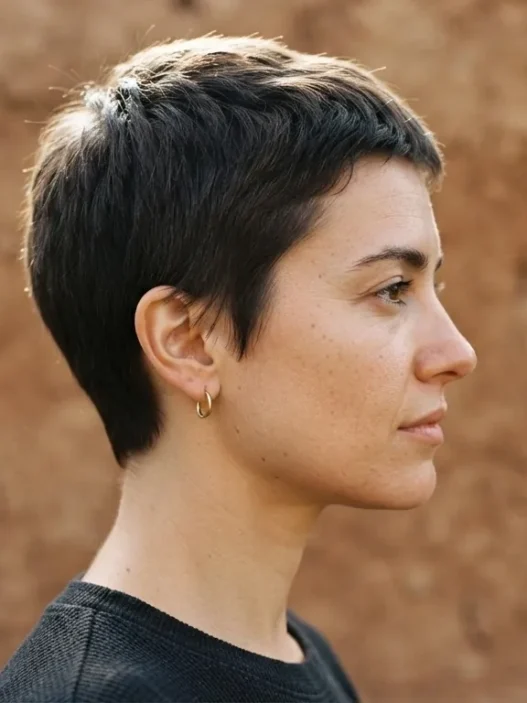












She sat down and said she’d been told her whole life that short hair “didn’t work” on a round face. She was forty-three, she had gorgeous thick hair, and the last stylist had literally talked her out of going short. I remember thinking: that’s not a face-shape problem. That’s a placement problem. And it’s one I’ve watched get mishandled over and over again — by well-meaning stylists who learned the rule without learning the reason behind it.
The Appointment That Changed How I Think
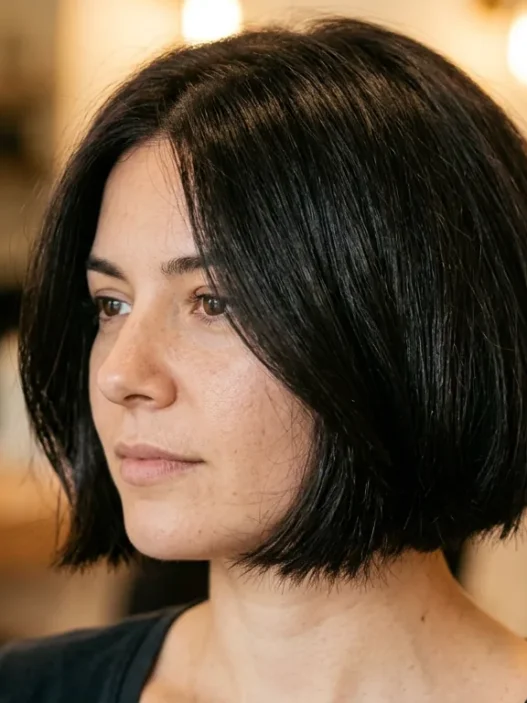
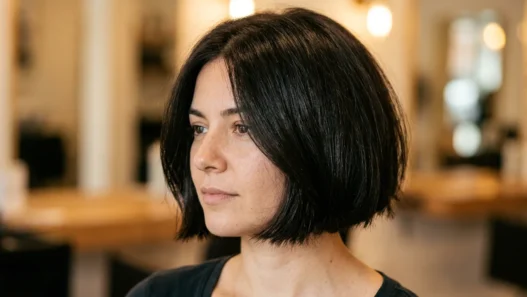
The client I mentioned — let’s call her Clare — had been growing her hair past her shoulders for years, convinced that length was her only option. When she finally came in for the chop, I gave her a chin-length bob with the ends curved gently inward, the longest point sitting just at her jaw. She looked incredible. Not because the cut was some kind of magic trick, but because we’d found the right landing spot for the weight.
She cried. Happy tears, but still. And I felt terrible that she’d spent years avoiding something that suited her this well, all because of a half-understood “rule.”
The truth about short haircuts for round faces is that the old advice — avoid short hair, keep it long, add volume on top — is only partially right. It’s right about the principle. It’s wrong about the conclusion. Short hair absolutely can work. What matters is where the widest point of the cut falls on your face. Once I understood that, everything changed.

The Mechanism Nobody Explains
Here’s the thing nobody actually explains in those “best hairstyles for your face shape” articles: your eye is drawn to width. Whatever the widest part of a haircut is — that’s what the eye registers first. So if the widest point of your cut sits right at your cheekbone, it echoes the widest point of your face, and suddenly everything looks very… round.
But push that widest point down — below the cheekbone, ideally landing somewhere between the jaw and the chin — and the eye reads a different silhouette entirely. The face looks longer. Narrower. More oval. Not because your bone structure changed, but because the shape of the cut is leading the eye somewhere else.
This is why a chin-length bob works when an ear-length blunt cut doesn’t, on the same woman, with the same face. It’s not about short versus long. It’s about where the bulk and the ends land. You can read about the broader science of how proportions work with different face shapes to get deeper into the geometry, but honestly? The cheekbone rule is the whole game.
Asymmetry helps too. A cut that has one side slightly longer, or a side part that shifts the visual centre, does a lot of work. So does texture — jagged ends, piece-y layers, anything that breaks up a solid horizontal line at the jaw. A blunt cut at the cheekbone on a rounder face is the one shape I’d actively caution against. Everything else is negotiable.

A Stylist Who Actually Shows the Geometry
What the Cut Costs You Each Morning
This is the part nobody glamourises but everybody needs to hear. A well-placed short bob or a textured lob below the chin is flattering — when it’s freshly cut. Week one is glorious. Week four starts to tell a different story.
As short cuts grow out, the ends start to widen. A chin-length bob that was beautifully controlled at the cutting chair starts to puff at the sides as it grows toward the shoulders, and that’s exactly where you don’t want the width — at or near the cheekbones. So the maintenance cycle on these cuts is real. Most of my clients with rounder face shapes find they need a trim every six to eight weeks, not ten to twelve. Otherwise the grow-out phase works against them.
Morning-wise? A good cut at the right length is genuinely low effort. If your stylist has shaped it correctly, you’re mostly diffusing or rough-drying and shaking it out. But if you’ve drifted even a centimetre too long or too short, you’ll spend fifteen minutes trying to blowdry it back into the right silhouette. That’s the honest daily cost — not the initial cut, but the staying-in-the-sweet-spot maintenance. Worth knowing before you commit.
What I Changed My Mind About
I used to think pixie cuts were always wrong for round faces. I said it to clients for years. Keep some length. Don’t go that short. And honestly? I was wrong, and I’m glad I eventually admitted it.
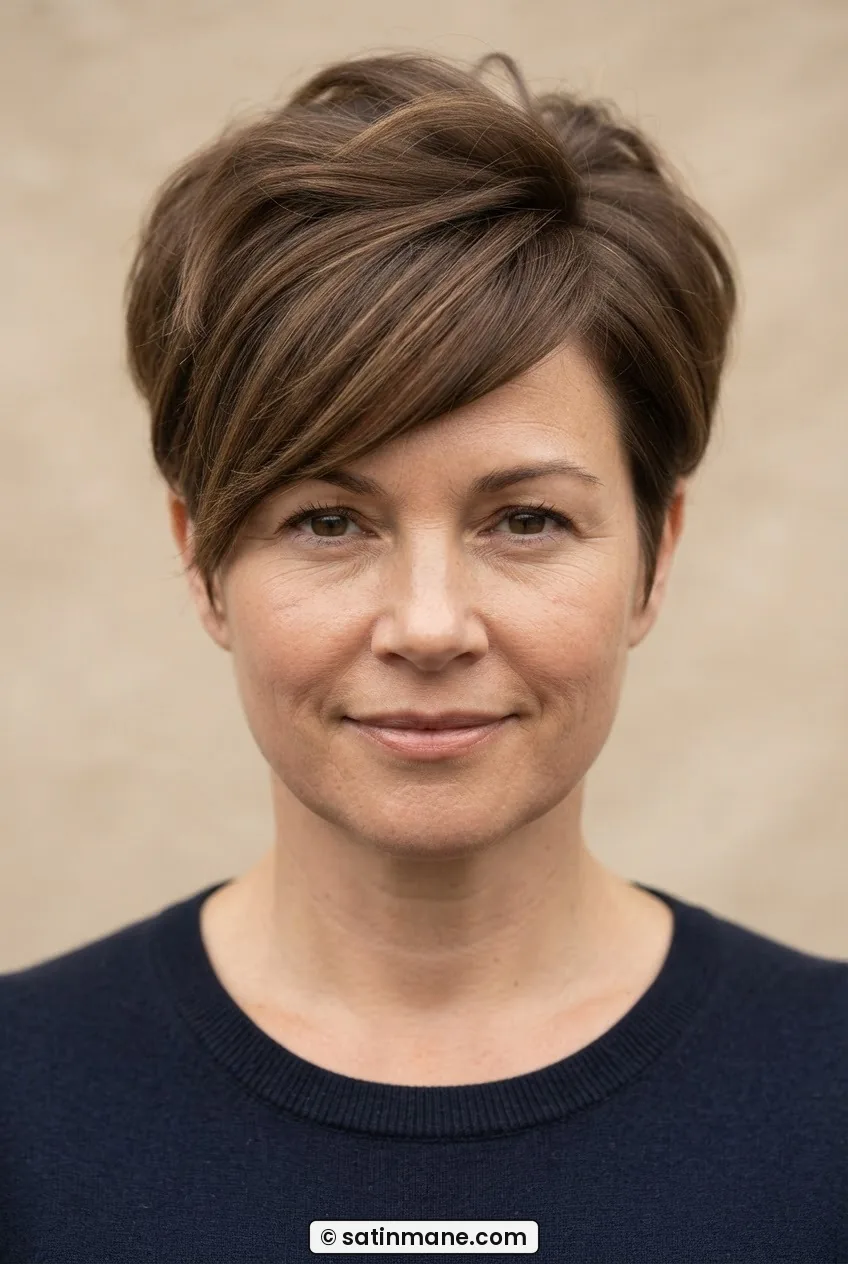
The right pixie — specifically a tapered pixie with a longer, side-swept fringe and some volume at the crown — can be incredible on a round face. The fringe pulls the eye downward and forward. The crown volume creates vertical lift. The taper at the sides keeps the ear and cheekbone area lean. When all three of those things are working together, it doesn’t just “work” on a round face. It’s one of the most flattering shapes possible.
What I actually mean when I say “I changed my mind” is that I stopped thinking about face shape as a prohibition and started thinking about it as a set of proportional targets. The question isn’t “can this length work?” It’s “where does this cut put its width, and does that placement help or fight the face?” Ask that question, and suddenly a lot more options open up. Even the short ones. Especially the short ones, sometimes.
Look at how she’s wearing her fringe swept to one side in the photo below — that diagonal line is doing exactly what I’m describing. It interrupts the roundness of the face shape without fighting it. That’s the thing a good stylist is doing that you might not even consciously notice.

Before You Book the Chair
A few things I genuinely wish more clients knew before they sat down:
Bring a photo of the length you want, not the face shape you want. Stylists are good at translating length references. We’re much worse at translating “I want to look more oval.” Give us the landing spot, not the goal — we’ll handle the goal.
Tell your stylist you’re thinking about face shape. Not all stylists bring it up unprompted, and a good conversation at the start of the appointment is worth a thousand micro-corrections later. Ask specifically: “Where do you think the weight should land for my face?” If they give you a thoughtful answer, you’re in good hands. If they look blank, that’s information too.
Consider your hair texture before your face shape. Fine, straight hair at a jaw-length bob behaves completely differently from thick, wavy hair at the same length. A cut that looks incredible in a photo might take twenty minutes of product and heat to replicate on your hair type. Understand what your hair does naturally — there’s good guidance on matching cut to hair texture — and factor that into the conversation.
Go slightly longer on the first appointment. If you’re genuinely unsure whether a chin-length cut will land right on you, ask your stylist to leave it a centimetre longer than planned and see how it sits. You can always take more off. You cannot put it back.
This is also where it’s worth mentioning that over at Satinmane.Com there’s a lot more written about making cuts work for real life — including the low-maintenance side of keeping a short style looking intentional between trims. It’s worth a read if you’re in the research phase.

Questions I Get About This
Does a short bob actually work on a very full, round face — or only on slightly round ones?
It works on any round face as long as the landing point is right. A fuller face might need the bob to sit slightly lower — closer to the jawline than the chin — and benefit more from soft layering at the ends. The fuller the face, the more deliberate you need to be about keeping the sides lean. But “very round” is not a reason to rule it out. It just means the placement matters even more.
What about short hair with bangs on a round face?
Side-swept bangs: almost always yes. They create a diagonal across the forehead that visually lengthens the face. Blunt, full fringe across the whole forehead: trickier. A heavy straight fringe can shorten the face significantly, which is the last thing you want. If you love a fringe, go for a curtain bang or a side-parted fringe with some movement — something that doesn’t create a solid horizontal line across the face. A good conversation with your stylist about bang styles for round faces will help you narrow it down before you commit.
How often do I really need to trim to keep the shape?
For most short cuts on round faces, every six to eight weeks is the honest answer. Not because the hair needs it, but because the shape does. Once the ends start widening past the right landing point, the proportions shift. Some people can stretch to ten weeks if their hair grows slowly and they’re comfortable with a slightly less precise silhouette. But if you’re booking twelve-week appointments with a short cut, expect to spend more time fighting your hair each morning during the last few weeks of the cycle.
Can I find more content like this about cuts and face shapes?
Yes — there’s a whole section on this over at the About page which explains what the site covers, and the Contact page if you want to ask something specific. The face shape section in particular has a lot of practical, non-prescriptive guidance that isn’t just a list of “dos and don’ts.”
If you take one thing from all of this, let it be this: the question has never been whether short hair works on a round face. It does. The question is where the widest point of your cut lands. Get that right, and the rest tends to fall into place. Get it wrong — even by a centimetre — and you’ll spend every morning in a small war with your own hair. Book a stylist who talks to you about placement, not just about what’s fashionable. And if they try to talk you out of going short purely because of your face shape, ask them why. Their answer will tell you everything.