







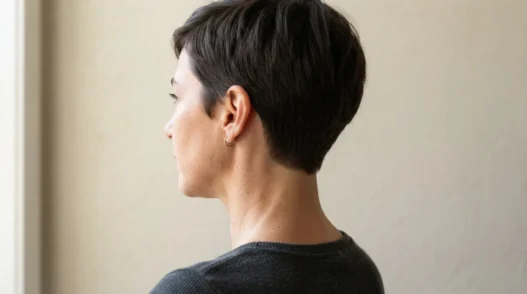
The first pixie I ever cut on fine hair — and I mean genuinely fine, not just thin-feeling, but actually small-diameter strands with almost no natural texture — looked incredible walking out the door. I remember the client turning her head side to side in the mirror and exhaling like she’d been holding her breath for three years. Two appointments later she came back frustrated, and I didn’t have a good answer for her. That bothered me for a long time.
I’ve been behind the chair since 2015, and the question I’ve probably answered most — badly, then better, then honestly — is whether pixie cuts are actually good for fine hair. The short answer is yes, sometimes, with caveats nobody puts on the mood board. This is what I actually think.
The Day-One Problem
Walk out of the salon with a fresh pixie and fine hair and you’ll probably feel like a different person. Good lighting, the stylist’s hands, a diffuser used properly — it all adds up to something that looks fuller than your hair has any right to. That’s real. I’m not going to talk you out of that feeling.
But here’s what nobody says clearly enough: day one is the advertisement. It’s not the product. The cut is freshly point-cut at the ends, the weight line is sitting exactly where it was designed to sit, and the nape taper is clean. Everything is doing its job in concert. What you’re seeing is the cut at its absolute peak performance.
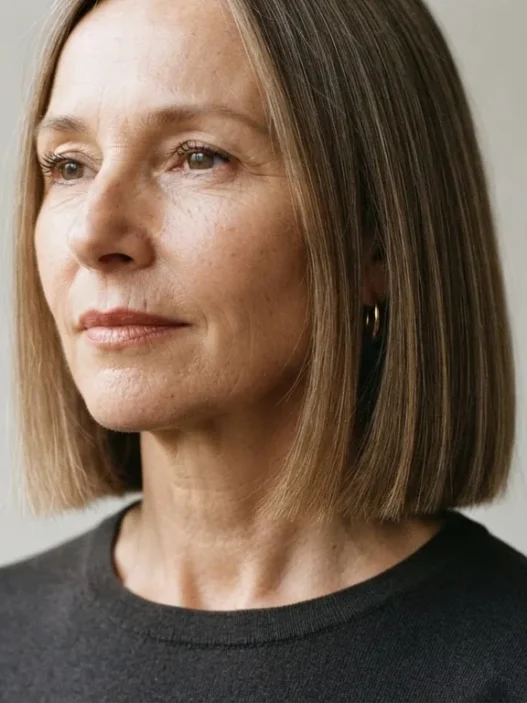
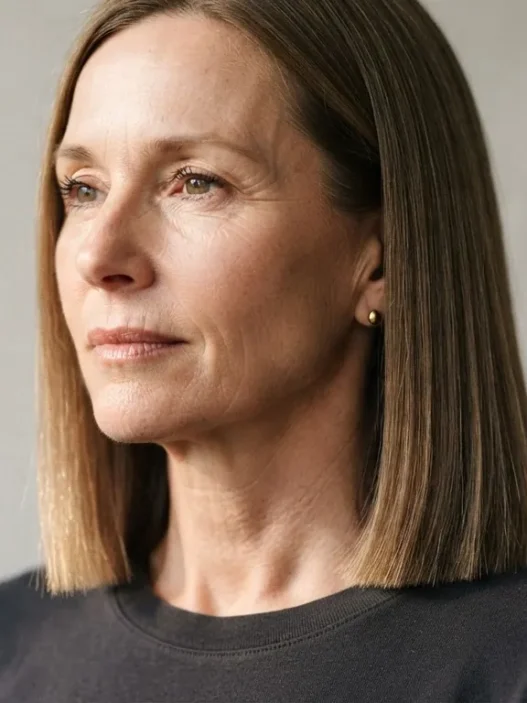
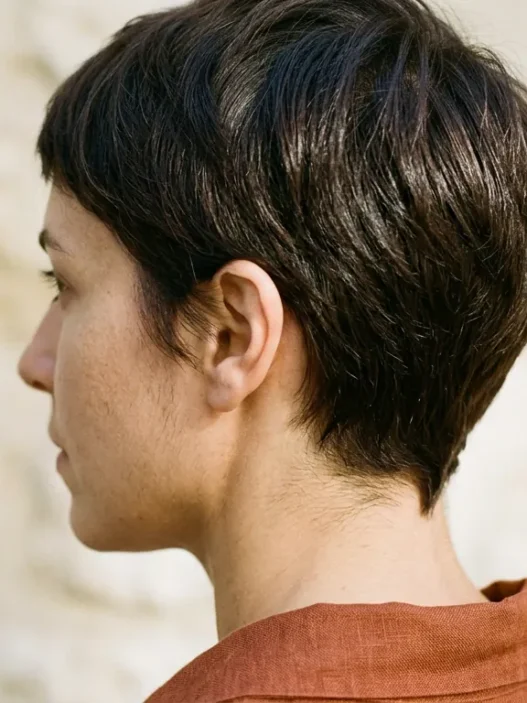
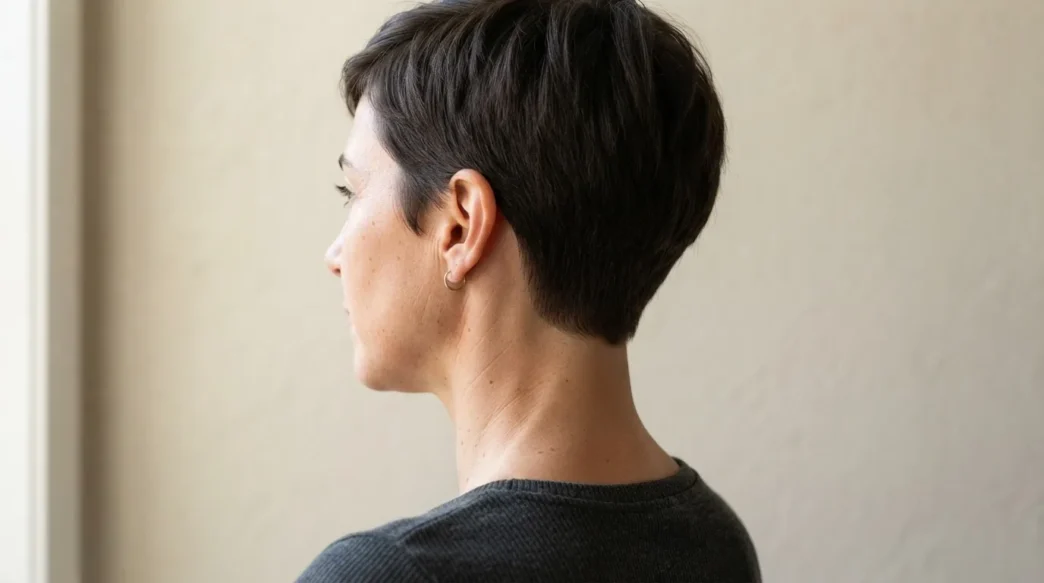
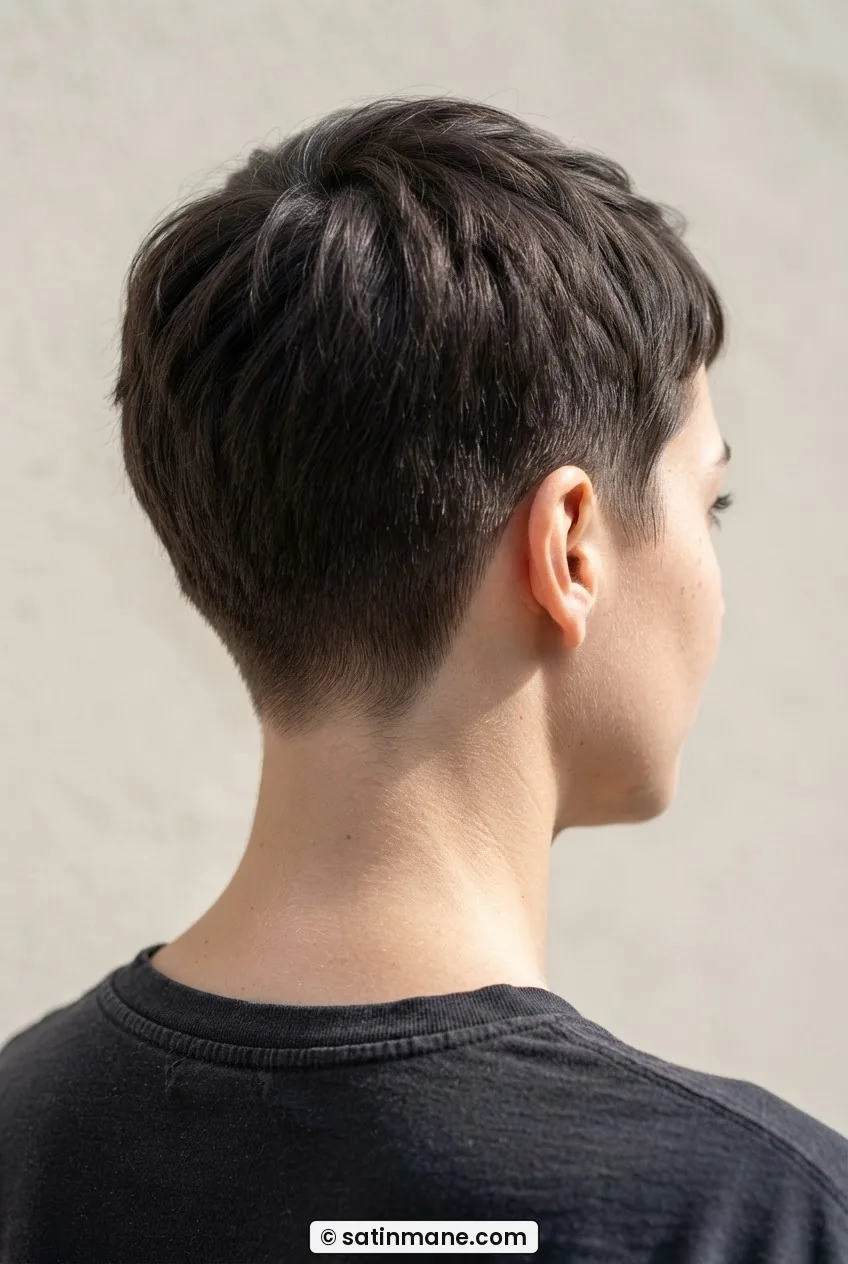
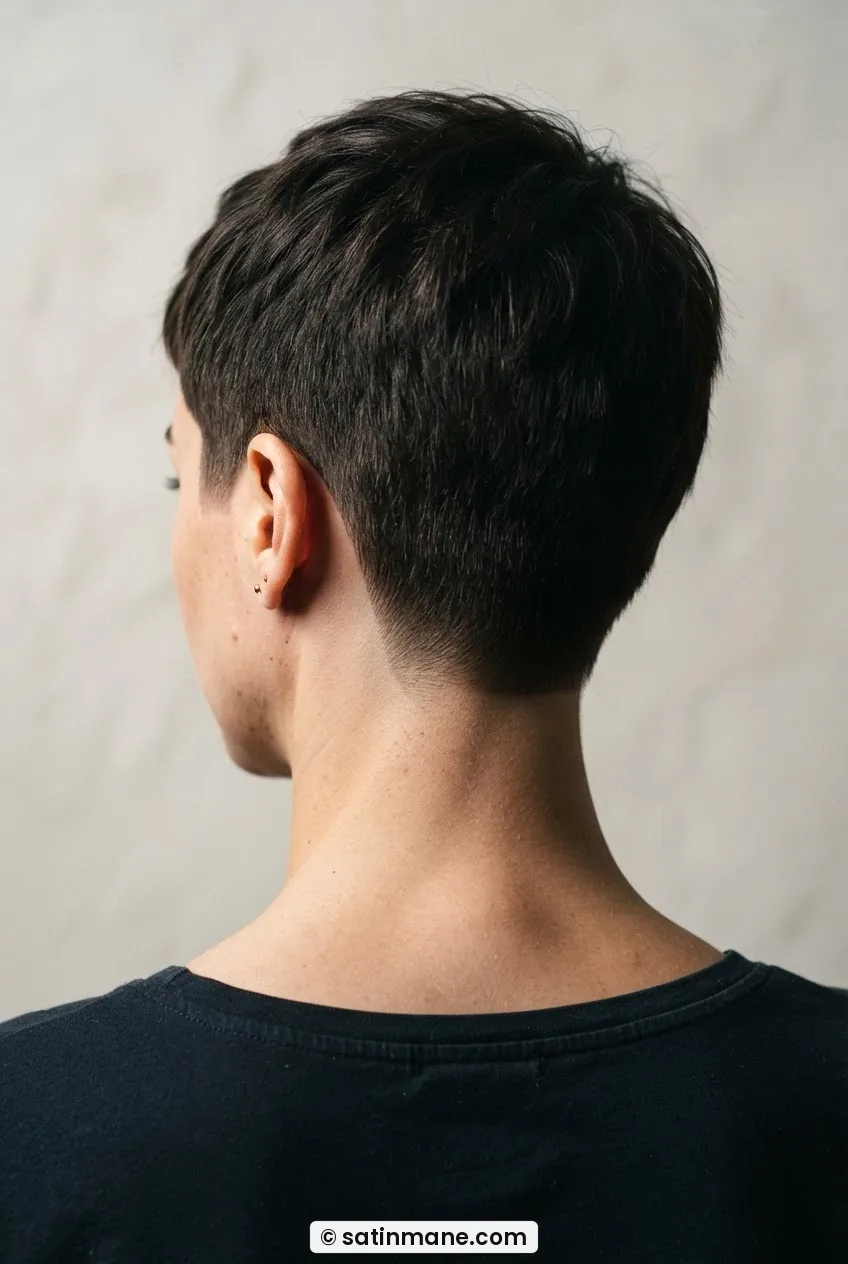
Look at the woman in this photo — notice how the taper through the nape is almost architectural. That precision is doing heavy lifting. The line between where the hair ends and where skin begins is sharp, and that contrast is what reads as volume. Your eye fills in the rest.
The problem is that fine hair grows fast — faster, it often seems, than thicker hair, though I’ve never found a study to confirm that impression. And when a pixie grows even a centimeter past its intended lines, the mechanics start to unravel. The weight line drops. The nape gets soft. The whole illusion depends on precision, and precision has a shelf life.
The Mechanism Nobody Explains
Let me tell you what’s actually happening when a pixie makes fine hair look thicker. It’s not magic. It’s geometry.
Fine hair’s main problem isn’t that there’s less of it — although sometimes there genuinely is, especially if thinning is a factor — it’s that each strand is narrow enough that light passes through instead of bouncing off. Longer fine hair lies flat against the scalp because there isn’t enough strand diameter to create resistance. The hair just collapses under its own length.
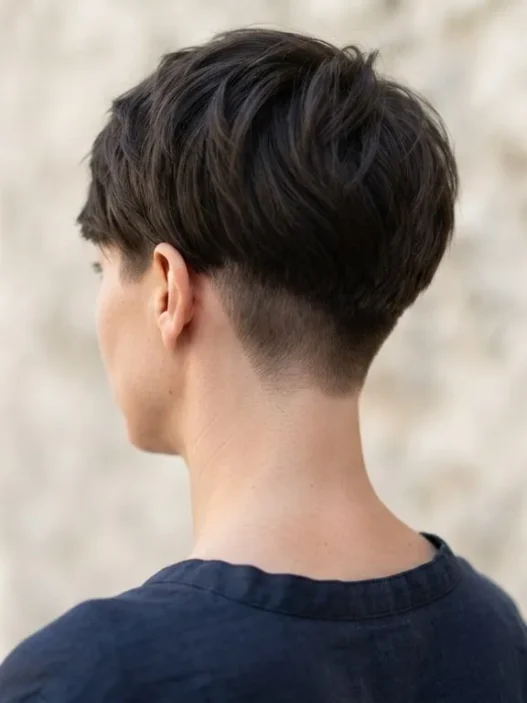
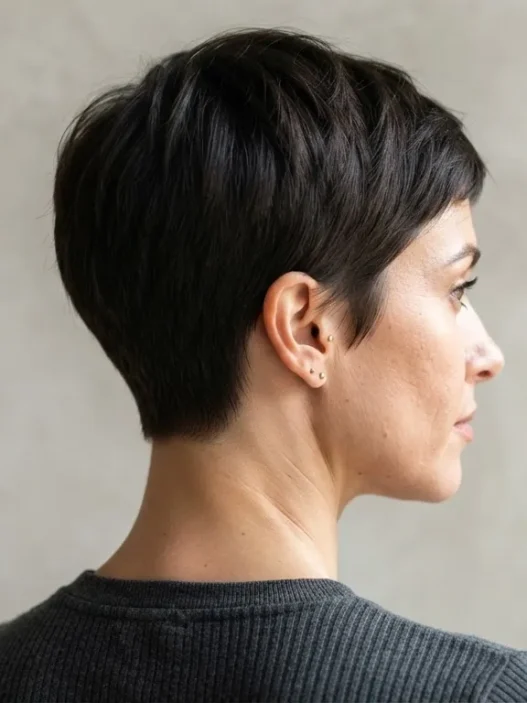
A well-cut pixie solves this through perimeter weight. When you cut the hair short enough that it can’t lie flat, and you leave a small amount of weight at the ends of a defined perimeter line, the hair is essentially forced to sit away from the head. The nape taper — see how cleanly it graduates in the photo above — removes bulk exactly where bulk would drag the shape down, while leaving enough density at the sides and top to hold a silhouette. It’s not about adding; it’s about strategic subtraction. That’s the part that’s genuinely clever about a tapered pixie on fine hair.
The same principle is why a blunt-ended soft pixie sometimes works better than a heavily textured one on the finest hair. How blunt ends add weight to fine strands is something a lot of clients ask me about, and the short answer is: removing too much from the ends in the name of texture can leave fine hair looking even more sparse. Texture is great. Aggressive point-cutting on hair that already has minimal density is not always your friend.
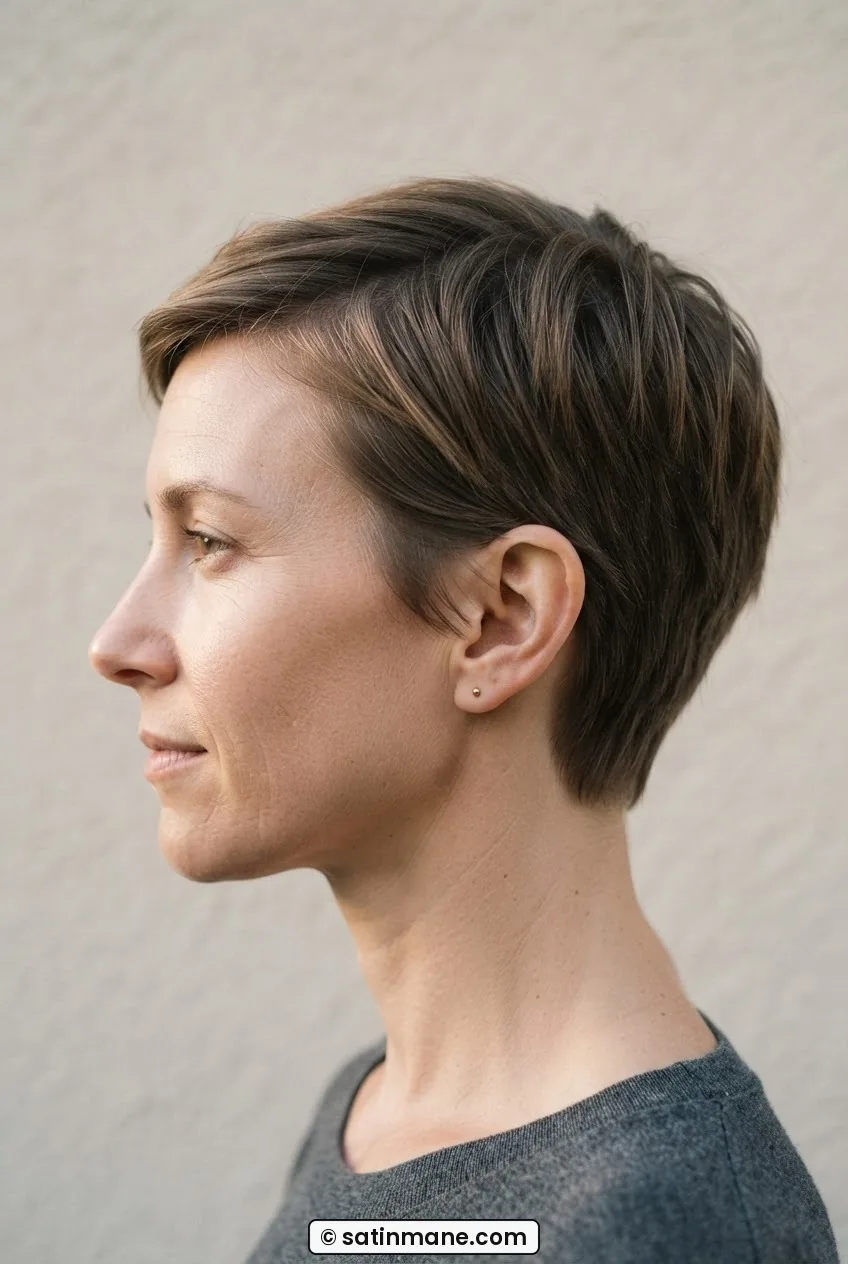
See the Perimeter Weight in Action
What Week Seven Tells You
Week seven is the real interview. Not week one, not week three when it’s still close enough to the original cut that you can manage it. Week seven — which is roughly where you land if you’re on a six-to-eight week trim cycle — is where you find out whether the cut is actually working for your life.
For most fine hair, here’s what week seven looks like: the top has grown enough to start flopping instead of standing. The nape — depending on how fast your hair grows — may have gotten soft or even started to curl under slightly. The sides that once framed the face sharply are now doing something slightly undefined. It still looks like a pixie, technically. But it takes noticeably more effort to get it there.
And that’s the honest cost of a pixie on fine hair. You are not locked into the wash-and-go lifestyle that Pinterest implies. You can get there — but you’re probably working harder than your thick-haired friends who also have pixies. Their hair has enough natural texture to hold a shape with minimal encouragement. Yours may need a small round brush, a touch of product at the roots, maybe a quick hit of heat at the crown. Probably five to eight minutes. Not nothing.
This is also the point where the case for short cuts in general gets interesting: the pixie isn’t the only option. An ear-length cut with more interior weight can actually be more forgiving through the grow-out phase. I’ve steered clients that way and had them thank me. I’ve also steered them toward the pixie and had them love it unreservedly. Both outcomes are real. It depends enormously on whether you mind the trim schedule.
What I Changed My Mind About
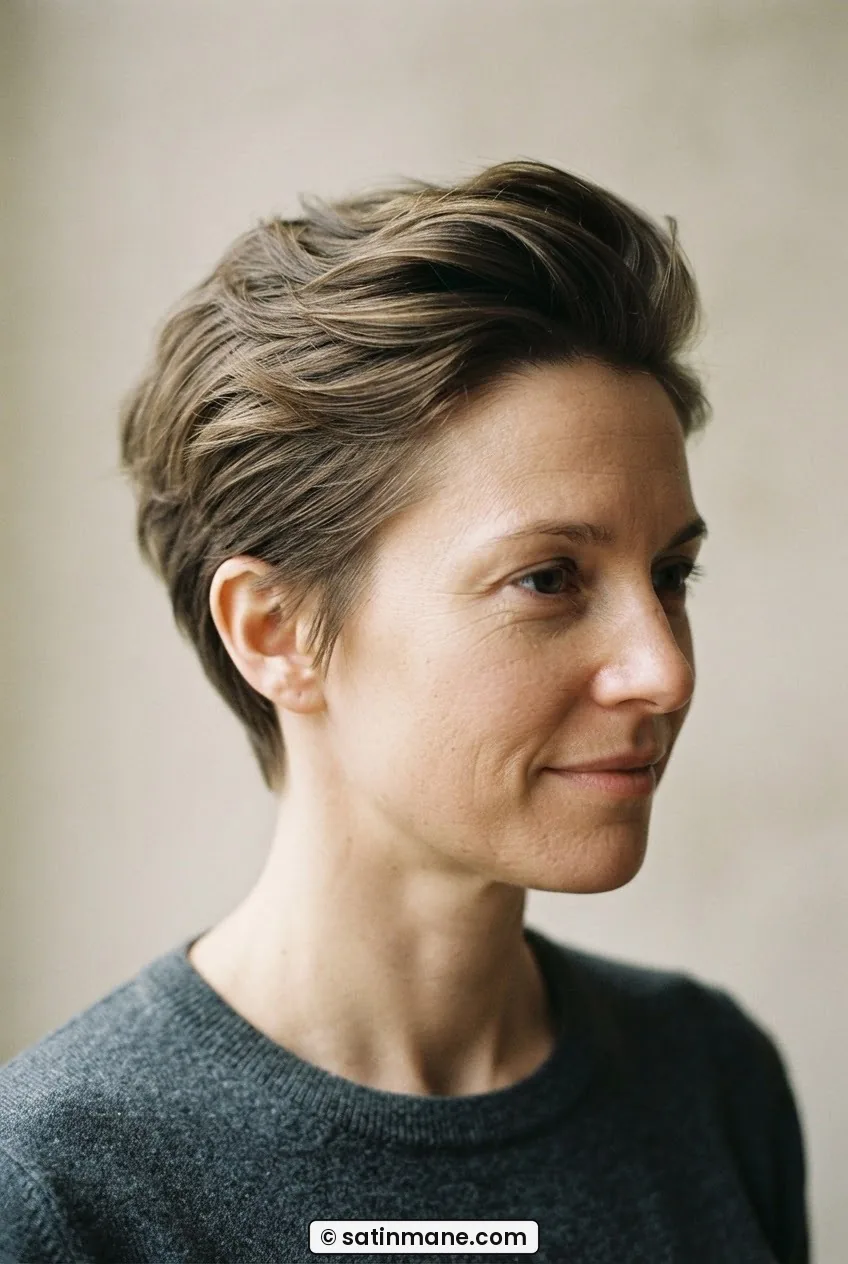
Here’s my genuinely controversial take, and I say this having done hundreds of these cuts: I think a slightly edgier, more structured pixie is often better for very fine hair than the soft, wispy version that gets recommended everywhere.
The soft pixie — all feathered ends and gentle graduation — reads beautifully on hair that has enough natural body to fill out those feathered pieces. On truly fine hair, the feathering just looks sparse. The ends have nothing. You end up with a cut that’s trying to be delicate but reading as thin.
A cleaner, more architectural line — a tighter taper at the nape, a more defined perimeter, even a slightly harder edge around the ear — gives fine hair something to work with. The contrast between skin and hair does the optical work that the hair itself can’t do through density alone. I know it sounds counterintuitive. Edgier cuts are usually positioned as being for thick hair. But I’ve seen the results enough times to be confident about this.
If you want to go this route and you’re navigating a round face shape, this matters even more — the lines of the cut have to do work that your hair texture won’t do naturally. I wrote more on this in a piece specifically about short haircuts for round faces, and the geometry applies directly to this conversation. You can also browse cuts by face shape over at the round face section if you want to see the range of options.
The Morning Cost — Honestly
Let me just walk through what mornings actually look like, because I think this is where the gap between expectation and reality lives.
Week one through three: genuinely low maintenance. Shower, towel dry, maybe a pea-sized amount of something light at the roots, done in two minutes. This is the part that’s true. The pixie hype is not lying about these weeks.
Week four through six: you start noticing things. The crown might need coaxing. If you sleep on one side, that side is going to be making decisions in the morning. A bit of product and a quick hit of a dryer with a small brush — I’m talking three minutes, not a salon blowout — usually sorts it. Still faster than managing longer fine hair. But not nothing.
Week seven and beyond: this is where your trim schedule starts mattering. If you’re stretching to ten or twelve weeks, you’re adding morning time. The cut is working against you now, not for you. The fine hair truth is that the payoff of low morning effort is directly tied to how often you’re in the chair. Which costs money. That’s part of the real equation and it deserves to be said plainly.
The technique for styling fine pixie hair matters here too — specifically root lift, which is the single highest-leverage thing you can do on fine hair regardless of length. Learning it on a pixie is actually easier than learning it on longer hair because you have less to manage.
On the question of face shape: if you have a longer face, you have more flexibility with how much volume you carry at the crown, and morning styling is genuinely easier because you’re not trying to avoid adding height. If you’re working with a rounder face shape — check out the full breakdown on the Satinmane site for visual references — you’ll want to be more deliberate about where you’re building volume, which does add a minute or two to the process. Not a dealbreaker. But worth knowing going in.
And one more thing on thinning hair specifically: if you’re noticing actual thinning — not just fine-diameter strands but genuinely fewer of them — it’s worth understanding why fine hair thins at the crown before committing to a cut that relies on density at specific points. A pixie can work beautifully even with some thinning, but the placement of your taper and the length you keep on top matters more, not less.
Questions I Get About This
Will a pixie actually make my fine hair look thicker?
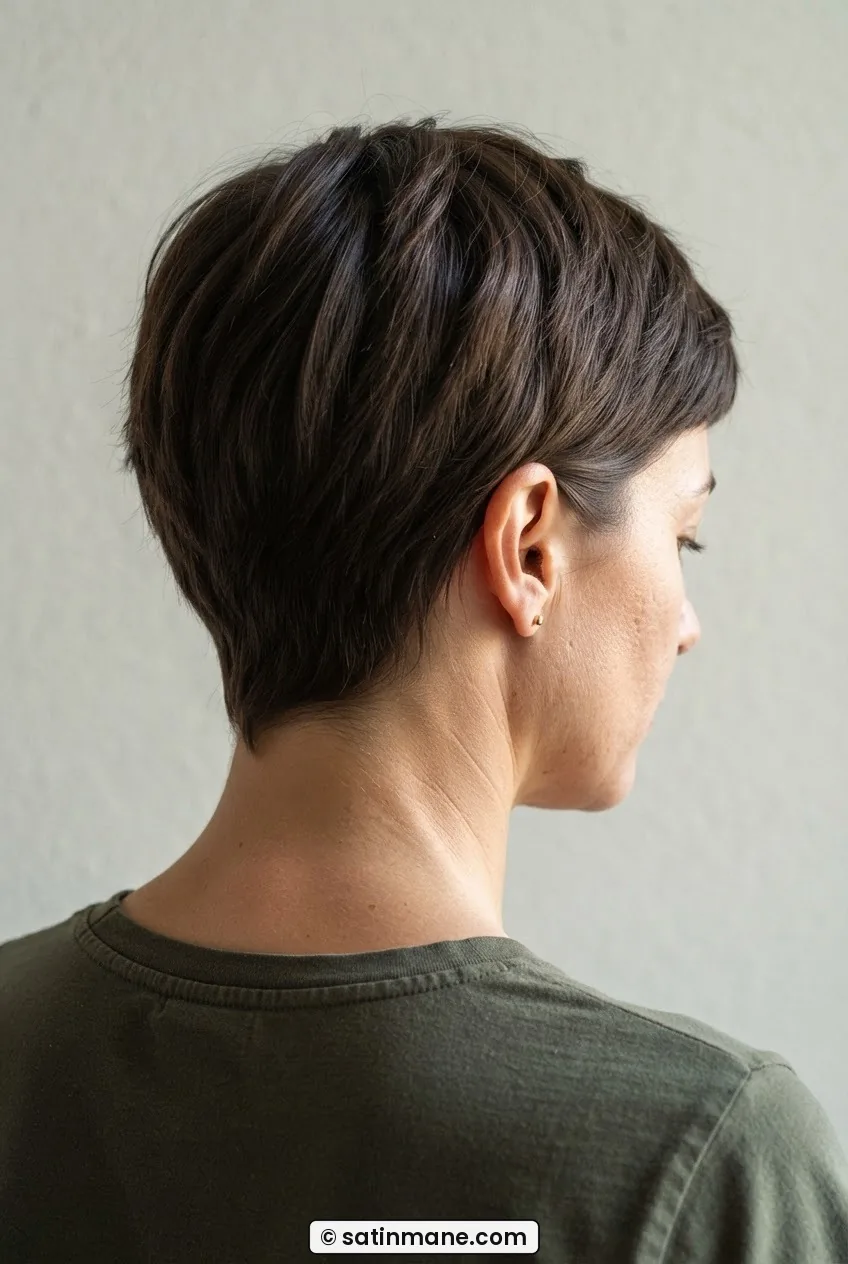
Yes — specifically because of perimeter weight and the contrast between skin and hair, not because you’re adding any actual density. The effect is real but it’s optical, and it’s most convincing in weeks one through four of a fresh cut. After that it depends on your maintenance schedule.
How often do I really need a trim?
Honestly? Every five to six weeks if you want the cut to do its job properly. You can stretch to eight if you’re okay with more morning effort and a softer silhouette in the final two weeks. I’ve had clients go ten and survive. I’ve also watched that conversation end the pixie era for them permanently because the grow-out felt like failure. Be realistic about your schedule before you commit.
Is a pixie harder to grow out if you have fine hair?
The grow-out itself isn’t harder — but it does look different than a grow-out on thicker hair. Fine hair going through the between-stages length can look flat in a way that thicker hair doesn’t. There are cuts that help bridge the gap — ear-length bobs with interior weight are the most reliable — and the short cuts category has solid options for this exact transition. The key is not cutting back to the pixie out of impatience when you’re actually almost through the awkward stage.
Should I go soft or edgy with a pixie on fine hair?
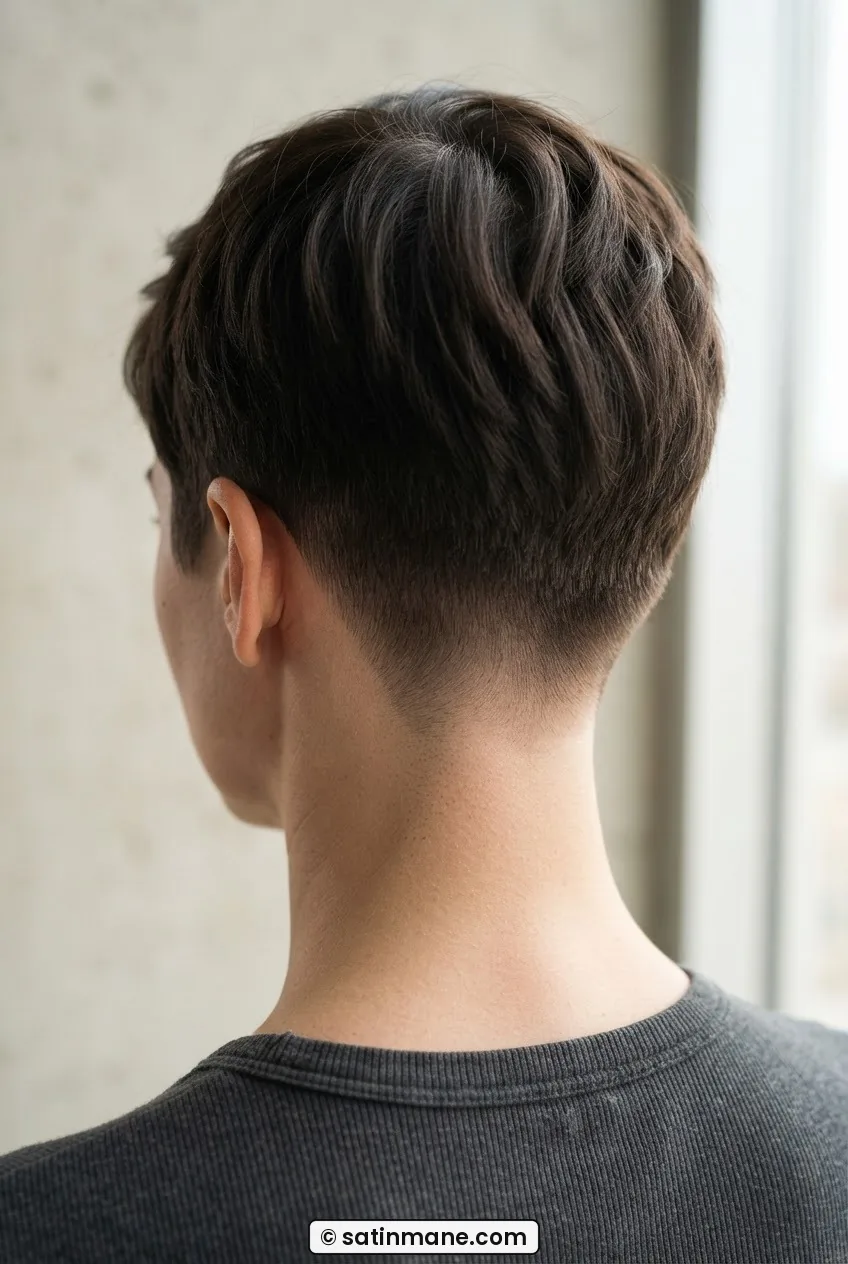
My opinion — and it’s a strong one — is edgier, cleaner lines for very fine hair. The soft, feathered pixie needs texture to look intentional. Without it, the ends can read as thin rather than delicate. A tighter taper, a cleaner perimeter, more defined lines around the ear: these give fine hair something to lean on. It’s not for everyone aesthetically, but structurally it tends to perform better.
If you’ve read this far and you’re still unsure, that’s probably useful information too. A pixie on fine hair is not a beginner-level low-maintenance cut — it’s a precision cut that rewards attention and punishes neglect. When it’s right, it’s genuinely one of the most flattering things I know how to do. When it’s wrong, it’s just a bad season of hair. Know which one you’re signing up for, and you’ll be fine either way.