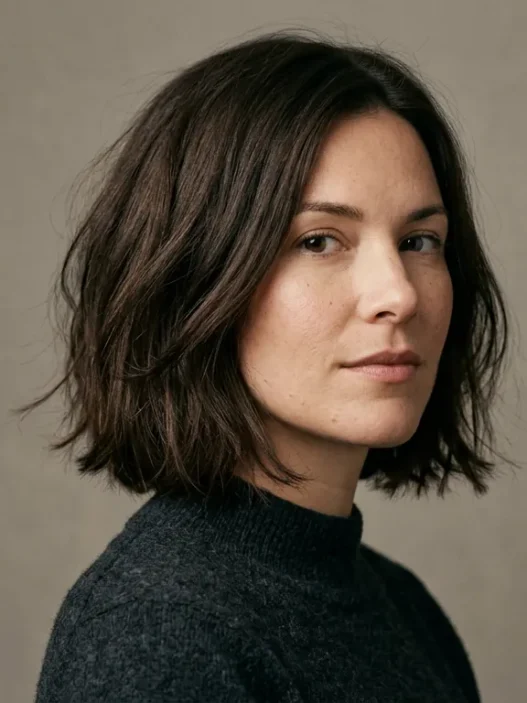








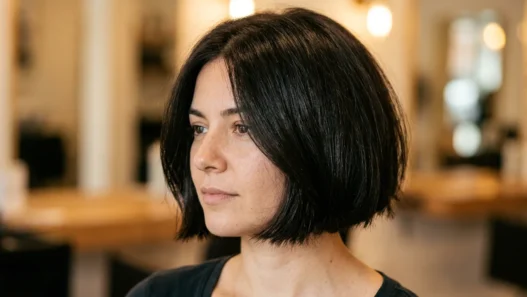

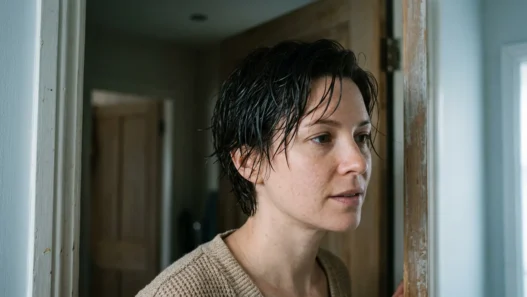


For almost a decade I kept asking for the same thing at every salon visit: more layers, more movement, more something. My hair looked flat two days after every trim, and I blamed the haircut every single time. It took one very patient stylist — in a tiny salon in Bristol, of all places — to finally sit me down and explain what I’d been doing wrong. I felt a little embarrassed. Then I felt relieved. Then I went home and wrote everything down because I knew I wasn’t the only one making this mistake.
Your Guide to Getting Layers Right on Fine Hair
The Question My Stylist Finally Asked Me
She tilted her head, looked at my hair in the mirror, and asked: “Are you layering it to add volume, or are you layering it because you think layers are supposed to make fine hair look better?”
I opened my mouth. Closed it. Opened it again. The honest answer was: I didn’t really know. I’d always assumed those two things were the same thing. Layers equal volume. Fine hair plus layers equals full-looking hair. That’s just… what you do, right? That’s what every magazine, every YouTube thumbnail, every listicle with stock photos had told me for years. So that’s what I’d been asking for.
What she was pointing at — gently, because she was a good stylist and not a cruel one — is that most women with fine hair come in asking for layers the way they’ve seen them on someone else. Someone with thick hair. Someone with natural wave. Someone whose texture can hold a layer without it collapsing into a wispy nothing by lunchtime.
The question she was really asking was: do you know your hair, or do you know a Pinterest photo?

The Short Answer (And Why I Ignored It)
Yes. Layered hair for fine hair works. Full stop. But — and here’s the part that took me years to actually hear — the layers have to be placed with a completely different intention than they would be for thicker hair.
Fine hair doesn’t have the density to support lots of short, choppy layers throughout the length. When you cut too many layers too high up on fine hair, you remove the very weight that was holding the hair down and giving it the illusion of thickness. What you’re left with is a top section that poofs slightly, a middle section that goes limp, and ends that look thin and frayed — even when they’re freshly cut. I know this because that is exactly what happened to me for about four consecutive years.
The short answer my stylist gave me: long layers, placed low, with weight preserved through the mid-lengths. That’s it. That’s the whole thing. Fewer layers, lower down, with the perimeter left intact so the ends still sit together and read as full rather than straggly.
I ignored it the first time someone told me a version of this because it sounded boring. Long layers felt like a compromise. Like I was settling for something restrained when what I wanted was a dramatic, movement-filled cut. But “dramatic movement” on fine hair is not achieved through lots of layers. It’s achieved through the right ones.
Long layers on fine hair should feel invisible — like the hair is just moving well, not like someone has cut a staircase into it.

Why the Short Answer Is Not Enough
Because “long layers, placed low” is the what. And you still need the why, the how, and the what-about-my-specific-situation before you can actually act on it.
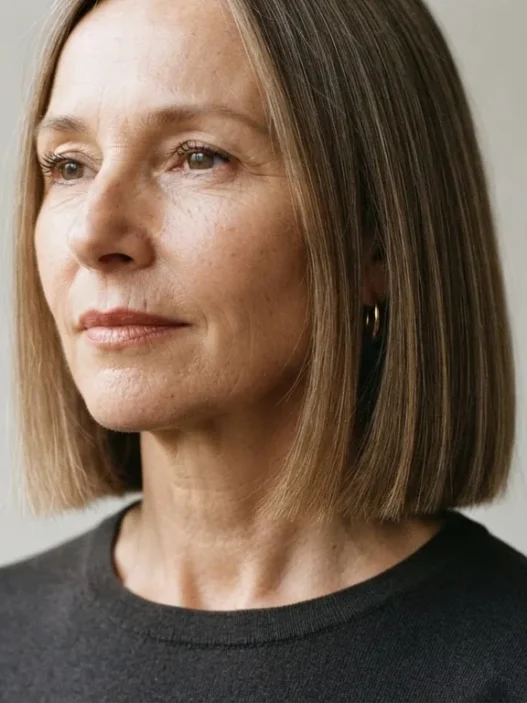
Here’s what I mean. Long layers work brilliantly for fine hair when the hair is a certain length — roughly collarbone and below, where there’s enough length for the layers to actually graduate into each other. On shorter fine hair, say a bob or anything sitting above the shoulders, the rules shift again. That’s where I’d point you toward something like the bob hairstyles for fine hair that build weight where it shows — because a layered bob on fine hair is a different conversation entirely, and the cutting technique has to account for the shorter length.
The other thing that makes “long layers” not enough as advice: texture. Fine hair is not a monolith. Fine, straight hair behaves completely differently from fine, wavy hair. Fine straight hair needs layers that are long and gentle — almost imperceptible graduation — because there’s no natural wave to disguise the layer line and add bounce. Fine wavy hair can handle slightly more dramatic layering because the wave creates visual bulk between the layer points. I have fine, fairly straight hair, and it took me embarrassingly long to figure out that the layered looks I was saving to my phone mostly belonged to women with a natural wave pattern I simply don’t have.
And then there’s face shape, which matters more for fine hair than it does for thick hair — because with fine hair, you have fewer styling tricks available to compensate for a layer placement that doesn’t suit your features. If you have a rounder face, layers that elongate a round face will look completely different to what works for someone with a longer or more angular face. Fine hair with layers lives or dies on precision, which is why vague advice always feels like it’s not quite landing for you specifically.
What the question she asked me reveals about everyone asking it: you already sense that your layers aren’t doing what they’re supposed to. You’re looking for someone to confirm that you’re not imagining it — and to tell you exactly where the miscommunication happened.

What Happens When You Layer Fine Hair the Wrong Way
I want to be specific here because “wrong layering” sounds vague, and the actual results are very recognizable once you know what you’re looking at.
Too many layers, too short: The mid-length of the hair loses density. It looks fine — almost thin — through the body of the cut, with a slightly puffier crown. When you pull the hair back or put it up, you can see through it.
Razor-cut layers on fine hair: This is a controversial opinion but I’ll say it anyway — I think razoring on genuinely fine hair is almost always a mistake. Razoring splits the ends at a microscopic level, which creates a wispy, diffuse finish that looks gorgeous on thick hair but makes fine hair look damaged and thin even when it’s healthy. A clean scissor cut holds better. How razoring affects fine hair texture is worth understanding before your next appointment.
Layers cut without considering the natural fall: If your stylist isn’t factoring in where your hair naturally parts, how your crown sits, and whether you have any growth patterns that affect the way layers fall, the result will look amazing in the salon chair (because they’ve blow-dried it into submission) and completely different at home two days later. This is one of the things that makes fine-hair layering harder to get right than thick-hair layering — there’s very little margin for error.
The good news is that wrong layering on fine hair usually grows out relatively quickly — fine hair tends to grow fast — and a single correction appointment with the right brief can fix most of it. I know this from experience. Multiple experiences, honestly.

The Length That Changes Everything for Fine Hair
If I had to pick one thing that matters more than any specific layering technique, it would be length. The length you’re working with fundamentally determines what kind of layering is even possible, and whether layers will help or hinder.
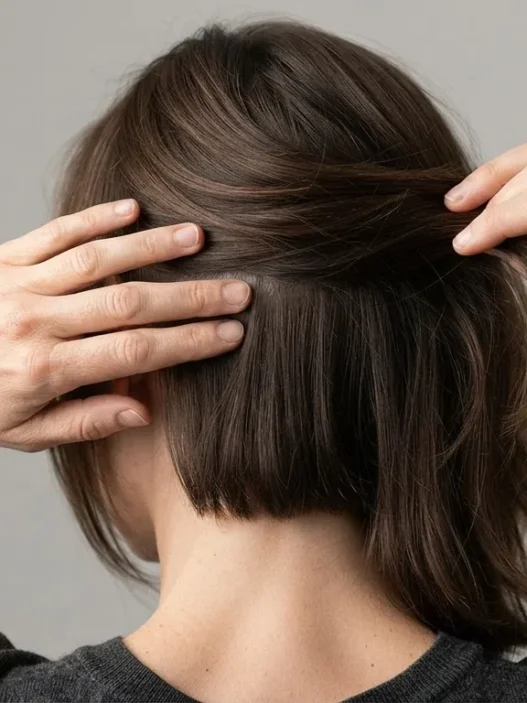
Medium length — sitting somewhere between the chin and the collarbone — is where layered hair for fine hair gets genuinely tricky. There’s not quite enough length for long, sweeping layers to graduate beautifully, but there’s too much length for the blunt, weight-building approach that works so well on shorter cuts. Medium fine hair with layers needs a very particular kind of internal layering: removed from underneath, not from the surface. It creates movement without sacrificing the perimeter weight that keeps the hair looking full rather than see-through.
Long fine hair — past the collarbone — is actually where I think layers do their best work. When the hair is long enough, long layers can add genuine swing and movement while the overall length still reads as full and healthy. See the woman in this photo: the way those longer pieces move without separating into thin sections is exactly what I mean. That’s the visual signature of long layers done right on fine hair.
Below the shoulders is also where a genuinely low-maintenance haircut becomes achievable for fine hair — because the length and weight work together with the layers rather than against them, and the style holds its shape for longer between trims. I’ve found that a long layered cut on fine hair needs refreshing about every ten to twelve weeks rather than the six-week schedule shorter cuts demand. That’s a meaningful difference in both time and cost.
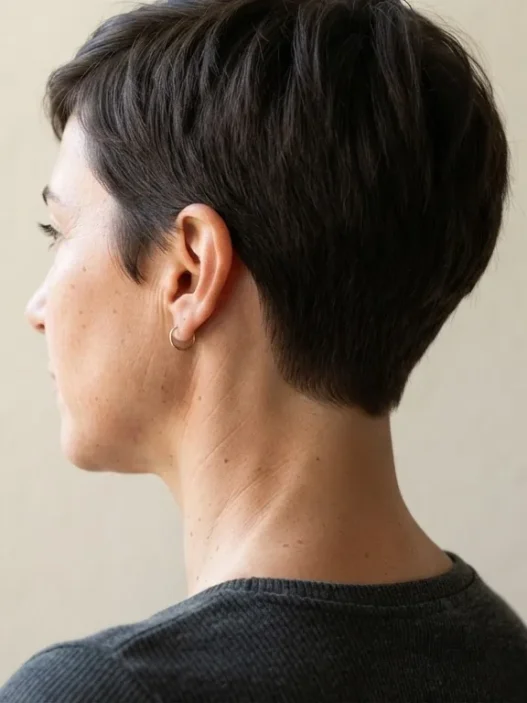
Shorter than chin length? That’s when layering tends to give way to more architectural approaches — blunt cuts that build weight, or very specific techniques like a pixie cut designed for fine hair that uses the shortness itself to create the illusion of density. Both are valid. But they’re a different category of haircut than what we’d call a layered look.

Face-Framing Pieces: The Part Everyone Skips
Okay, this is the bit that changed everything for me practically. Not the overall layer structure — the face-framing pieces. Specifically: the two to four sections of hair that are cut slightly shorter to frame the face, and how precisely they’re placed relative to your cheekbones, jaw, and eye level.
Most people think of face-framing as decorative — a pretty finishing touch. I now think of it as structural. On fine hair especially, face-framing layers that are well-placed do three things at once: they create the impression of fullness around the face (the area where flat fine hair is most obvious and most unflattering), they draw the eye toward your features rather than toward the thinness of the hair, and they give the overall cut a sense of intention that lifts an otherwise simple long layer into something that looks considered and deliberate.
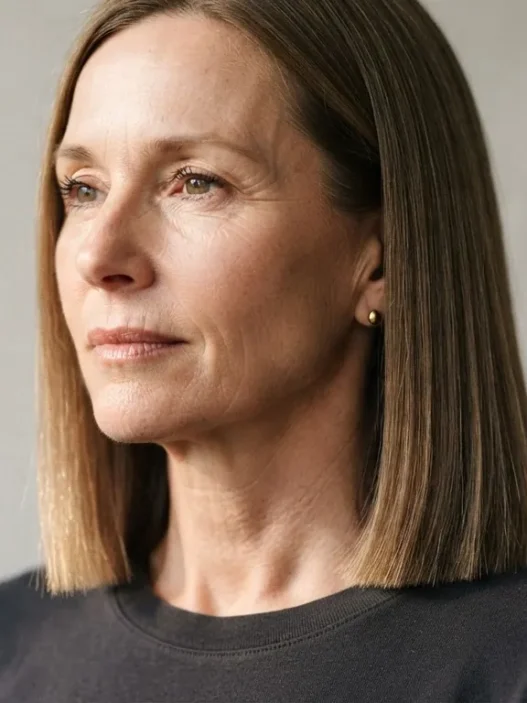
Look at her in this photo — the way those face-framing pieces sit just at cheekbone level, slightly shorter than the rest of the length. That angle is exactly what I mean. They’re not dramatic curtain bangs, they’re not chunky highlights-era layers from 2003. They’re subtle, graduated, and they make the whole cut look alive in a way that the layers alone don’t achieve.
Face shape matters enormously here. For square face shapes, you want those framing pieces to soften the jaw rather than emphasize it — which usually means angling them to hit just below the cheekbone. I wrote separately about how face shape works as a filter, not a rule, and I stand by that completely — but fine hair is one of the cases where a bit more attention to face shape pays off, because you have fewer styling tools to compensate with.
For rounder faces — where the goal is usually to add length visually — face-framing pieces that sit closer to the jaw or just below it work better than pieces cut to cheekbone level, which can visually widen the face. There’s a whole separate conversation there, and if you’re working with both fine hair and a round face, the short haircuts for round faces guide covers the logic even if you’re not going short — the face-shape principles are the same regardless of length.
One last thing about face-framing on fine hair: ask your stylist to cut the framing pieces wet, then check them dry before you leave. On fine hair, the pieces spring up more than you’d expect when they dry, and what looks like a subtle frame at the collarbone when wet might sit at the chin when dry. That’s not a disaster, but it’s worth confirming before you walk out the door.

Quick Answers About Fine Hair Layers
Should fine hair have lots of layers or just a few?
Fewer, longer layers placed low in the hair almost always outperform lots of choppy layers on fine hair. More layers mean more ends, and more ends on fine hair means more visible thinness. A couple of well-placed long layers plus strategic face-framing pieces will do more for fine hair than a heavily layered cut that removes too much weight.
Can fine hair with layers look full without blow-drying?
Yes, but the cut has to be designed with that in mind. If your stylist knows you air-dry, they’ll leave more weight through the perimeter and use lighter internal layering. A cut built for heat styling will often look flat when air-dried on fine hair. It’s worth mentioning your routine explicitly — “I mostly air-dry” is one of the most useful things you can say in the consultation chair.
How often does fine layered hair need a trim?
Every 10–12 weeks for longer layered cuts on fine hair, every 6–8 weeks for shorter or more structured cuts. Fine hair shows split ends and layer collapse faster than thick hair, so waiting too long between trims tends to make the layers look shapeless rather than maintained. Trimming schedule for fine hair is a genuinely useful thing to know before you stretch your appointments.
Do layers make fine hair look thinner?
The wrong kind of layers, yes. Too many layers, too short, or cut with a razor — all of these can make fine hair look sparser than it did before. But long layers placed correctly, especially with weight preserved through the mid-lengths, create movement and the illusion of volume without removing the density that fine hair needs to look full. The technique genuinely matters as much as the idea of layering itself.
If you take one thing away from all of this: the next time you sit in the salon chair, don’t ask for layers — ask for what you actually want. More movement? More volume at the crown? Better framing around your face? Give your stylist the goal, not the technique. They’ll find the right version of layering for your specific hair, your specific face, your specific life. That conversation is what I wish I’d been having for the first eight years instead of the last two.