










Fine hair and bobs have a complicated relationship. The shape can look incredible — all that clean geometry, that strong perimeter — or it can look flat by 10am, and you spend the rest of the day pretending that was intentional. I’ve sat in enough chairs and read enough forums to know the difference between a bob that genuinely works for fine hair and one that only works in the salon photo. The construction matters more than the name. So here are nine cuts, explained by what they actually are and what they actually ask of you.
Jump to the Cut That Fits You
- 1. The One With a Hard Weight Line
- 2. The One That Disappears Into Your Neck
- 3. The One That Air Dries Flat
- 4. The One That Needs a Diffuser
- 5. The One You Trim Twice a Year
- 6. The One With Face-Framing That Does the Work
- 7. The One That Looks Shorter Than It Is
- 8. The One That Fools People Into Thinking You Have More Hair
- 9. The One That Is More Work Than It Looks
1. The One With a Hard Weight Line
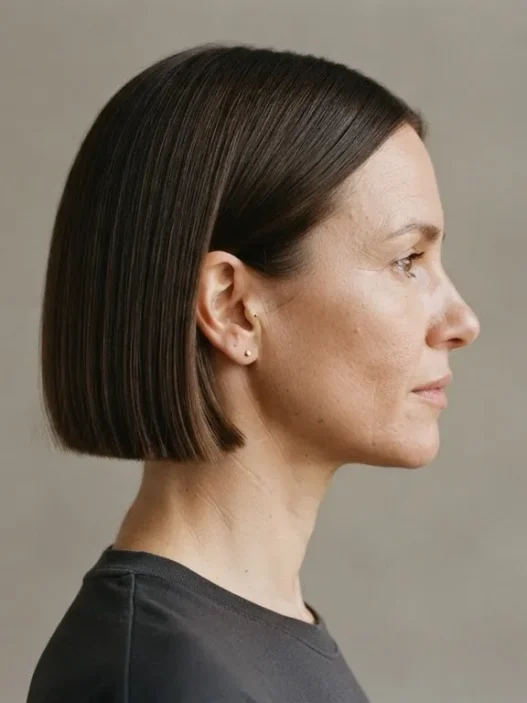
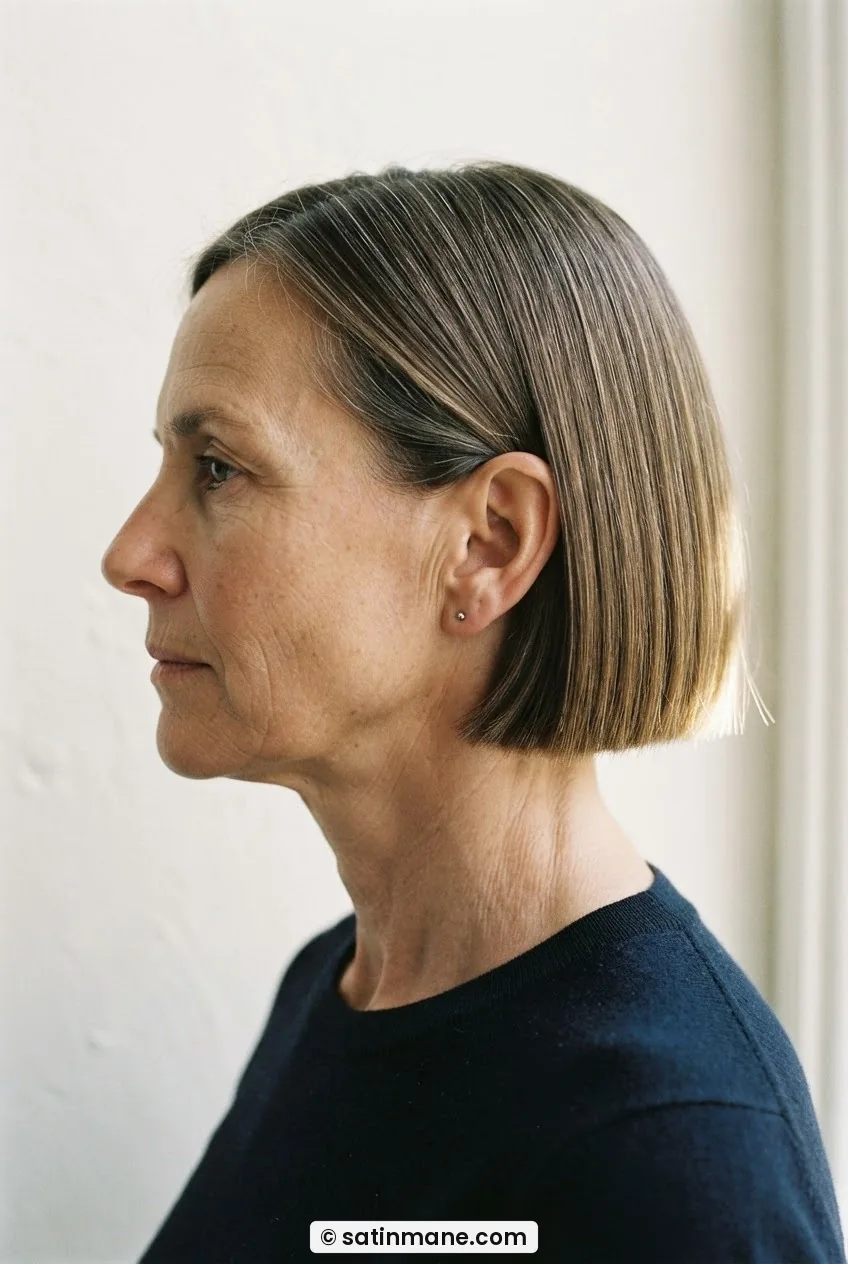
This is the blunt bob. No graduation, no layering, no taper — just a clean horizontal cut, usually sitting somewhere between the jaw and the collarbone. The weight line is everything here. All your hair terminates at the same point, which stacks the strands on top of each other and creates the illusion of density. For fine hair, this is genuinely structural rather than decorative. The perimeter is the volume.
Look at the woman in this photo — notice how her ends read as a single solid line even under side lighting? That’s the whole trick. The weight sits at the tips, not distributed through the mid-lengths. Suits fine, straight hair almost better than any other texture because there’s no frizz to disrupt that edge. What it asks: one blow-dry a week if you use a quality finishing approach, and a trim every eight to ten weeks before the ends start to feather unevenly.
At the chair, say: “Blunt perimeter, no internal layers, no graduation at the nape — I want the weight line to read clearly.”
2. The One That Disappears Into Your Neck
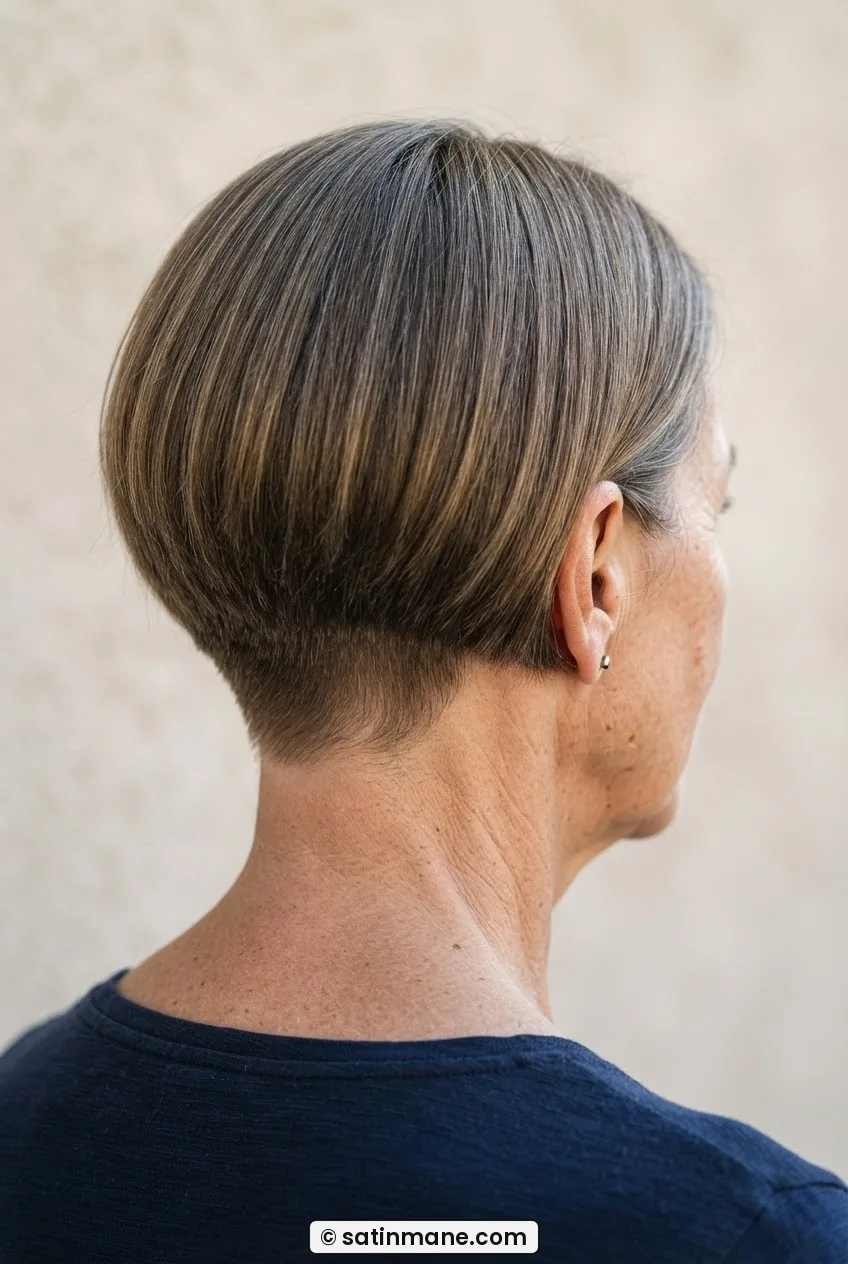
The stacked bob. Graduated at the back so the hair is shortest at the nape and builds outward as it rises, creating a rounded silhouette from behind. This one looks clean and modern without requiring you to do much. The graduation itself creates shape — even towel-dried, it has structure.
For fine hair it works especially well because the stacking compensates for what single-length fine hair can’t do: it creates internal volume in the back without relying on the hair being thick. The tradeoff is maintenance. That nape grows out fast, and when it does the shape softens and starts reading as just a short bob rather than a structured one. You’re looking at six-week trims, not ten. Suits round and oval face shapes particularly well — and if you want more on how short cuts play with face geometry, the short haircuts for round faces breakdown is worth reading alongside this.
At the chair: “Stacked graduation at the nape, shortest at the hairline, building out toward the ears — keep the sides longer to balance.”
3. The One That Air Dries Flat
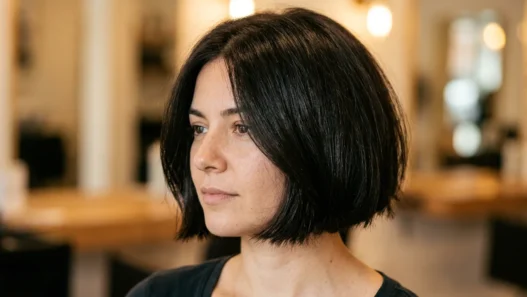
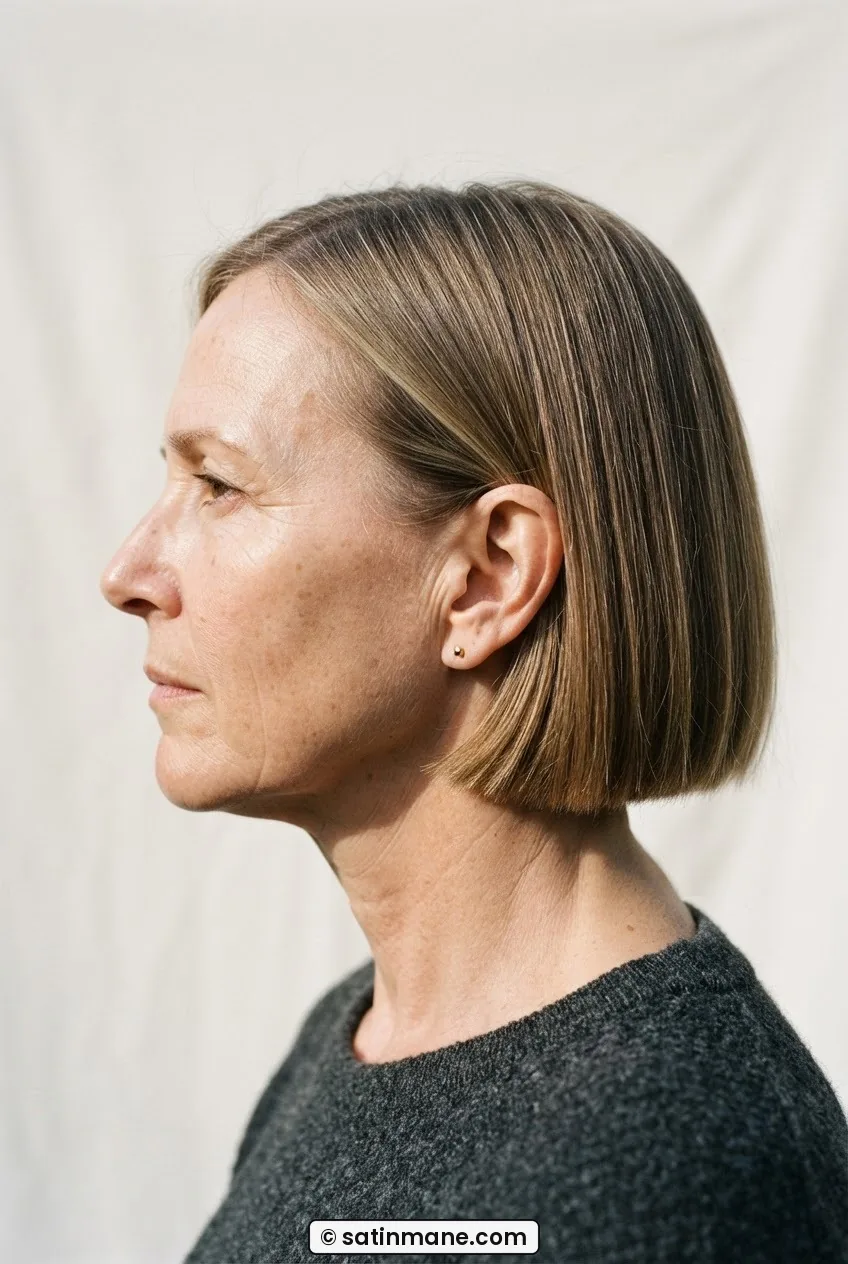
The chin-length bob. I want to be honest about this one: left to air dry on fine, straight hair, it will lie flat. That’s not a flaw in your hair — it’s just physics. But it’s also the most classic version of a bob hairstyle for fine hair, and when it’s styled (even lightly, with a round brush or a single pass of a flat iron on the ends), it looks genuinely polished in a way that longer cuts rarely do.
The length matters here — sitting right at the jaw or just below creates a visual line that lifts the cheekbones and defines the lower face. She’s wearing hers just skimming the chin in this photo; see how it creates that slight flick at the ends? That’s what you’re after. The construction is blunt or very slightly point-cut at the tips. No layers that would cause fine hair to lose the perimeter weight.
Morning cost: five minutes minimum. You cannot fully skip heat on this one if you want it to look intentional. At the chair: “Chin length, blunt cut, minimal point-cutting only at the very tips — I want the weight to sit at the jaw.”
4. The One That Needs a Diffuser
The shaggy bob. Lots of layers — sometimes starting as high as the crown — with a disconnected, deliberately undone perimeter. It’s the cut that looks most effortless in the photo and requires the most information to understand. For fine hair, the shag works when the layers are placed to create movement rather than to remove weight. Done wrong, it makes fine hair look even thinner. Done right, it creates texture that reads as volume.
The thing that makes a shaggy bob work on fine hair specifically is the fringe element — curtain bangs or a wispy fringe that add visual mass at the front. The layers need to be longer toward the perimeter, not stacked short. And yes, this cut needs a diffuser or mousse and scrunch time to activate the texture. Without it you get a flat, stringy result that looks like a bad grow-out. I’d only recommend this for someone genuinely happy to spend eight to twelve minutes on their hair every morning.
At the chair: “Shaggy layers through the top and mid-lengths, longer through the perimeter, curtain fringe — I have fine hair so keep the layers long, not choppy.”

A Stylist Demonstrates the Shaggy Bob on Fine Hair
5. The One You Trim Twice a Year
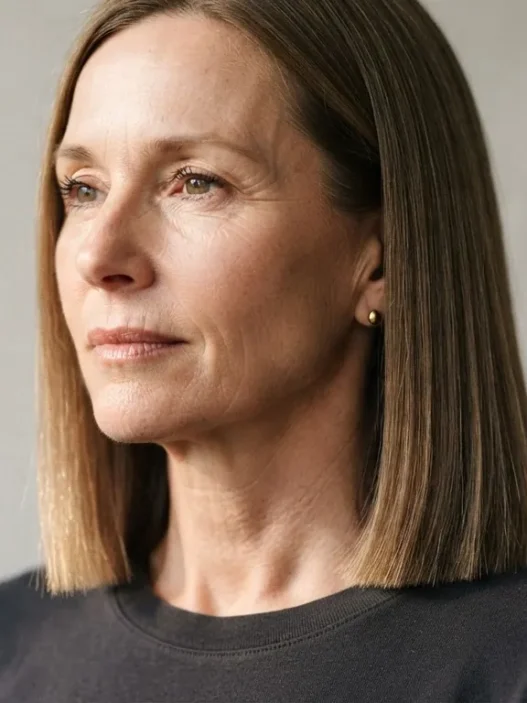
The long bob — or lob. Collarbone length. This is the one that grows out gracefully, which means you can push trims to every four to six months without the shape collapsing. And that’s a genuinely useful quality if you’re the sort of person who books a trim and then cancels it twice.
My personal pick is the lob with a solid perimeter and absolutely no internal layers. Every time I’ve added layers to a fine-hair lob “for movement,” what I actually got was see-through ends and no weight. The blunt lob is boring to describe and stunning to wear.
The construction for fine hair: blunt perimeter at or just above the collarbone, no graduation, no interior layers unless they’re very long and minimal. How long bobs work on fine hair explains the perimeter logic well if you want the technical detail. What it asks of you each morning is very little — a quick brush-through, maybe a pass with a large-barrel iron on the ends. It behaves. Suits almost every face shape, which is why it’s everyone’s safe recommendation. But safe isn’t a bad thing when it genuinely works.
At the chair: “Collarbone length, blunt perimeter, no internal layers — just a clean line.”

6. The One With Face-Framing That Does the Work
The French bob. Shorter than a chin-length bob — usually sitting between the cheekbone and the jawline — often paired with a blunt fringe. It’s the cut that photographs beautifully and requires you to actually commit to a fringe, which is its own conversation.
For fine hair, the French bob is one of the better choices because the shorter length means the hair doesn’t have time to fall flat the way longer fine hair does. The fringe — typically blunt and brow-length — adds density at the front that the rest of the hair doesn’t have to manufacture. This is one case where I’d say the fringe is doing load-bearing work, not just decorative work.
She’s wearing it here with a slight tuck behind one ear, which is a good trick for fine-hair French bobs — it adds asymmetry and stops the cut reading as too severe. Morning cost: three to five minutes if you have the fringe under control, which takes about two weeks to learn. Trims every six to eight weeks or the fringe overtakes your eyebrows and the whole proportion shifts.
At the chair: “French bob — cheekbone to jaw length, blunt perimeter, blunt brow-length fringe. No graduation.”

7. The One That Looks Shorter Than It Is
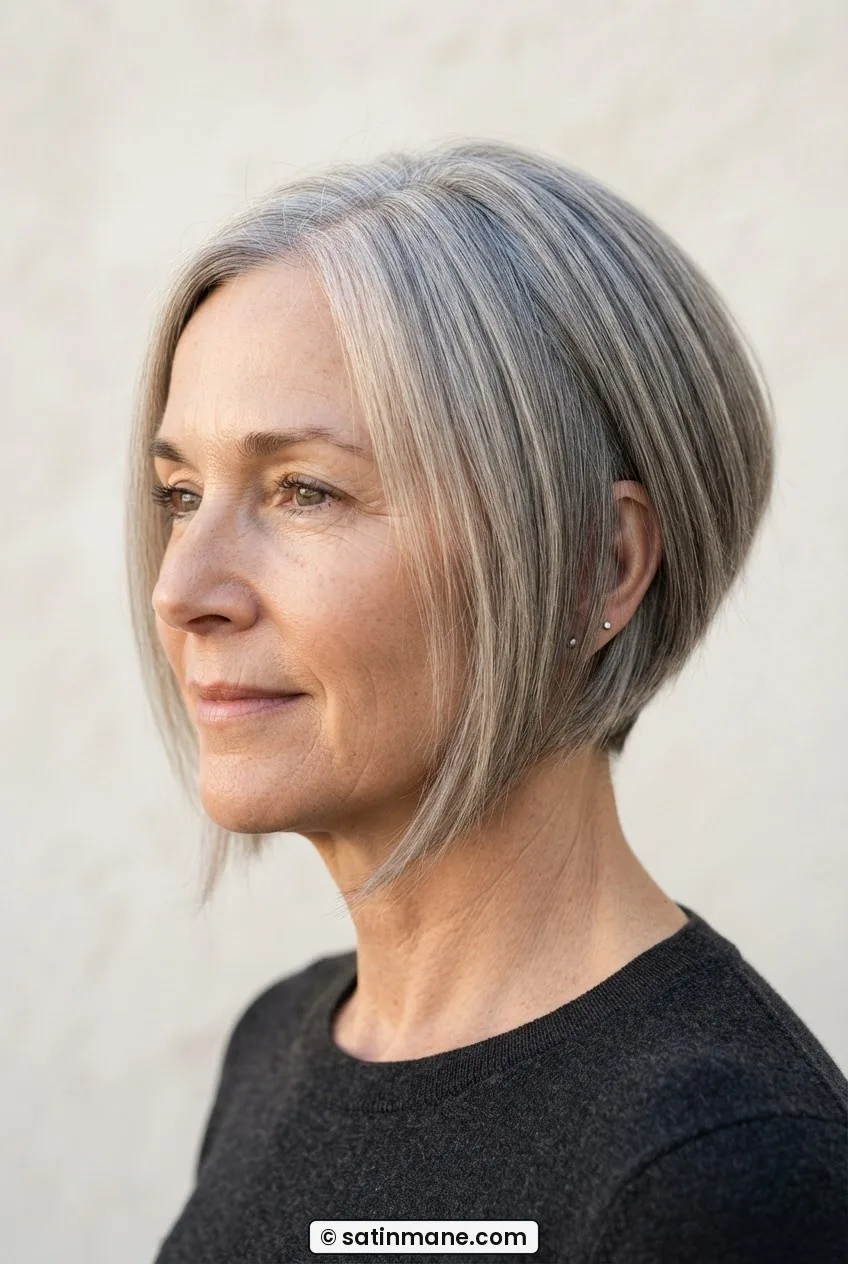
The A-line bob. Shorter at the back, longer at the front — sometimes dramatically so, sometimes subtly. The back might sit at the nape while the front angles down to the jaw or even the collarbone. It reads as shorter from behind, which gives the face-framing length at the front without the weight of a full lob.
For fine hair, the A-line is interesting because you get two things at once: the shorter back creates visual fullness at the crown (the hair is stacked slightly higher there), and the longer front pieces frame the face without needing layers to do it. The angle itself creates the interest. Suits long and oval face shapes particularly well — the diagonal line is naturally elongating. If you’re navigating face shape alongside hair type, the guides under round face haircut considerations are useful context even if your face isn’t round, because understanding what to avoid teaches you what to seek.
Morning effort: similar to the chin-length blunt bob. It needs some direction on the ends — either a slight bend inward or a flip out — or it reads unfinished. At the chair: “A-line bob, shorter at the nape, angling longer toward the front pieces — I want the angle to be clear but not extreme.”
8. The One That Fools People Into Thinking You Have More Hair
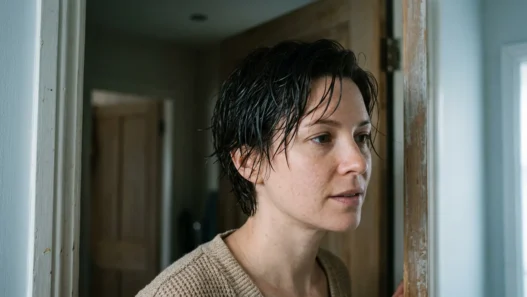
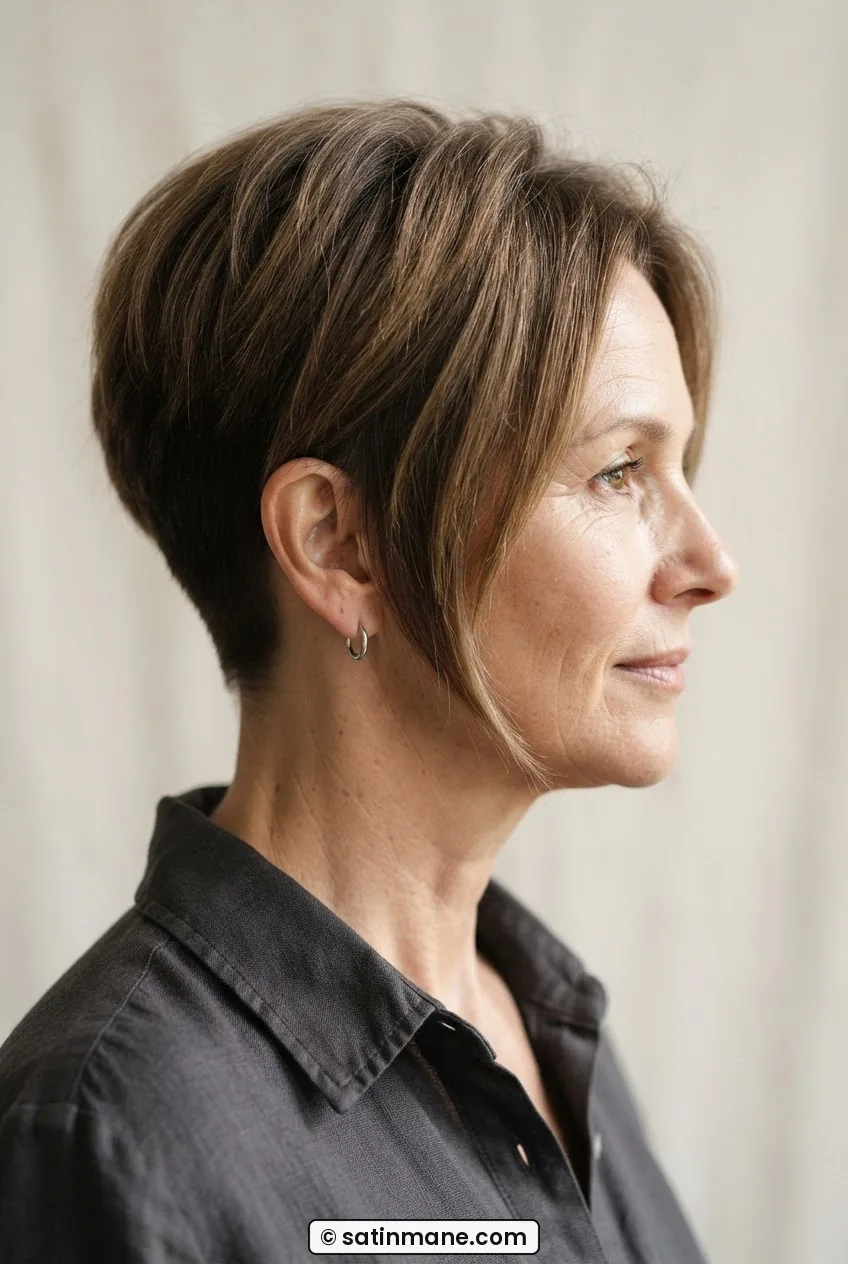
The pixie bob — or pob. It lives somewhere between a long pixie and a short bob, which sounds vague but in practice means: cropped at the back and sides, longer through the top and front, usually hitting somewhere between the ear and the jaw on the front pieces. The construction creates layers that genuinely appear as volume rather than as exposed scalp.
This is the one I get the most questions about for fine hair. The reason it works is that the shorter back and sides eliminate the area where fine hair shows its density problem most obviously — the mid-length and nape, where limp hair hangs and goes see-through. By cutting that area short, you remove the problem. The longer top pieces drape over it and read as full because they’re supported by the cut’s structure underneath.
It asks more of you than a blunt lob. Daily styling — a bit of pomade or texture spray worked through the top — is almost non-negotiable. But the result is hair that looks thicker than it is, which for fine-hair people is often worth the extra four minutes. You can also read through the short cuts category for more variations on this length zone.
At the chair: “Pixie bob — tight at the back and sides, longer through the crown and front, with the front pieces sitting around jaw level.”
9. The One That Is More Work Than It Looks
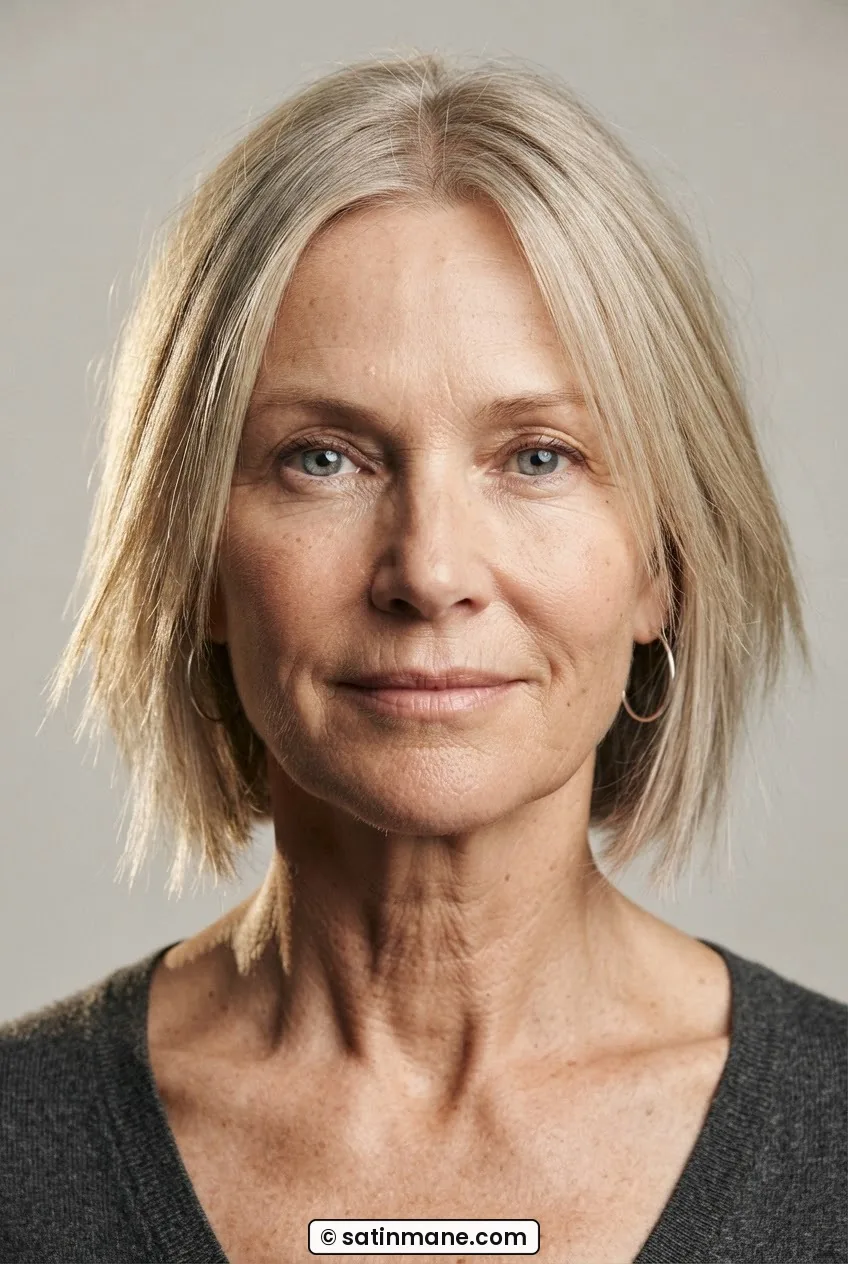
The choppy bob. Heavily point-cut ends, maybe some internal disconnection, pieces that are deliberately uneven in length. In photos it looks textured and lived-in. In person, on fine hair, it requires product and technique every single day or it collapses into something that just looks unfinished rather than intentionally undone.
I’m including it because people ask for it constantly — and it can look brilliant on fine hair. The key is that the choppiness needs to be strategic, not random. The bulk of the hair should still have a perimeter that holds weight, with the choppy texture applied mainly at the tips and through the face-framing pieces, not throughout the entire cut. A stylist who point-cuts heavily through all the mid-lengths of fine hair is removing the very density you need to make the cut work.
What it asks: five to ten minutes minimum every morning. Texture spray or a light wax paste to separate the ends. Some version of heat, or at least a diffuser if there’s any wave. Worth it? Absolutely, if you’re into your hair routine. Not worth it if you’re hoping the cut does the work for you. The construction has to be how a choppy bob is constructed correctly or this becomes the cut you grow out within three months.
At the chair: “Choppy bob — but keep the perimeter weight intact. Point-cut at the tips only, not through the mid-lengths. I have fine hair so I need the bulk to stay.”
Quick Answers Before You Book
Does a bob really make fine hair look thicker?
A blunt-perimeter bob does, yes — the weight line creates the optical illusion of density. Heavily layered or choppy versions can do the opposite by removing bulk from the mid-lengths. The construction matters far more than the name.
How often do I need to trim a bob with fine hair?
Shorter bobs — French bobs, stacked bobs, pixie bobs — need six to eight weeks. Longer bobs with a solid perimeter can go ten to twelve weeks before the shape softens noticeably. Fine hair doesn’t split as dramatically as coarser textures, but the perimeter bluntness is what makes fine-hair bobs work, and that’s what grows out first.
What should I ask my stylist to avoid with fine hair?
Avoid heavy internal layering through the mid-lengths, over-thinning shears used throughout (not just tips), and excessive graduation at the nape unless it’s the stacked bob you’re actually after. Ask them to preserve perimeter weight when removing interior bulk — that phrase alone tells a stylist you know what you’re talking about.
Can I air dry a bob if I have fine hair?
The blunt lob and the A-line bob are the most forgiving air-dry options on fine hair. The chin-length blunt bob air dries flat — not unsalvageable, but visibly undirected. Anything choppy or shaggy genuinely needs some product and technique or it looks more neglected than intentional.
Are bobs high-maintenance for fine hair?
It completely depends on the cut. The blunt lob is low-maintenance. The stacked bob needs frequent trims but minimal daily effort. The shaggy bob and choppy bob are high-maintenance daily but can stretch trims a bit longer. Pick the one that matches where you want to spend your time — at the chair every six weeks or in front of the mirror every morning.
If you’re still unsure which direction to go, the best thing you can do before your appointment is bring a photo that shows the length and perimeter, not just a vibe. Stylists can work with a clear reference point in a way they can’t always work with “something short but not too short.” And if you want to keep exploring, there’s more over on Satinmane — or you can always get in touch if you have a specific question I haven’t answered here. Good luck at the chair.