







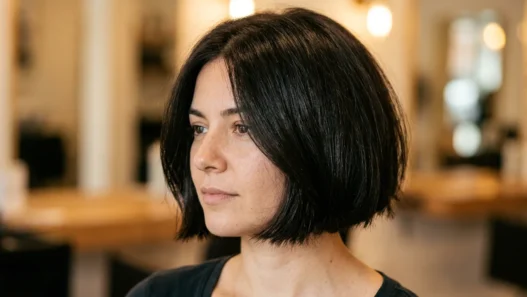




I have a round face. Not a soft oval, not a gentle heart — a round face, with full cheeks and a jawline that curves rather than angles. I spent years asking for the wrong bobs and spending the drive home quietly annoyed. The problem was never the bob itself. It was that nobody explained what a bob actually does to a round face structurally — where the weight sits, where it should end, and why a one-inch difference at the chin can either frame you or flatten you. Once I started thinking about cuts in those terms, everything got easier. These nine are the ones I’d actually recommend, ranked by how much they ask of you every morning.
Nine Bob Cuts for Round Faces — What You’re Looking At
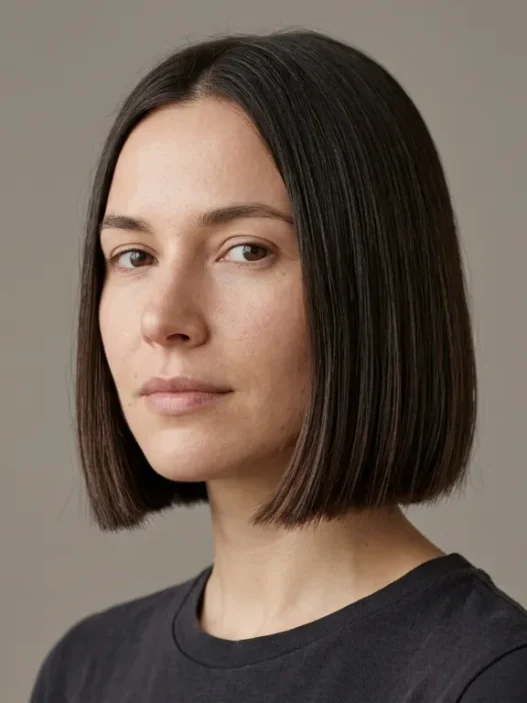
1. The One That Lengthens Without Layers
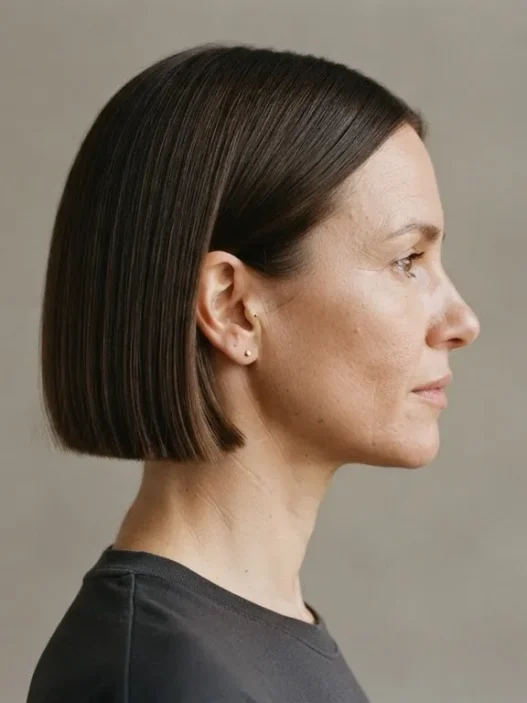
This is a one-length bob — no layers, no graduation — cut so the hemline sits about an inch below the chin. The weight line is entirely at the perimeter, which means all the visual mass pools low, below the widest part of your face. On a round face, that downward pull is exactly what you want. The sides stay close to the head rather than billowing outward, which avoids adding horizontal width at the cheekbones.
It suits women with finer hair particularly well because the blunt hemline creates the illusion of density. Thick hair can work here too, but may need slight interior thinning to stop it from pushing outward. What does it ask of you in the morning? A brush and about four minutes with a round brush or flat iron — because a one-length bob that air-dries straight is rare unless your hair is already very sleek. It falls flat or flips asymmetrically more often than not.
At the chair: “One-length bob, hemline one inch below my chin, no graduation, perimeter weight only. I want it to sit close at the sides.”
2. The French Bob Adjusted for Width
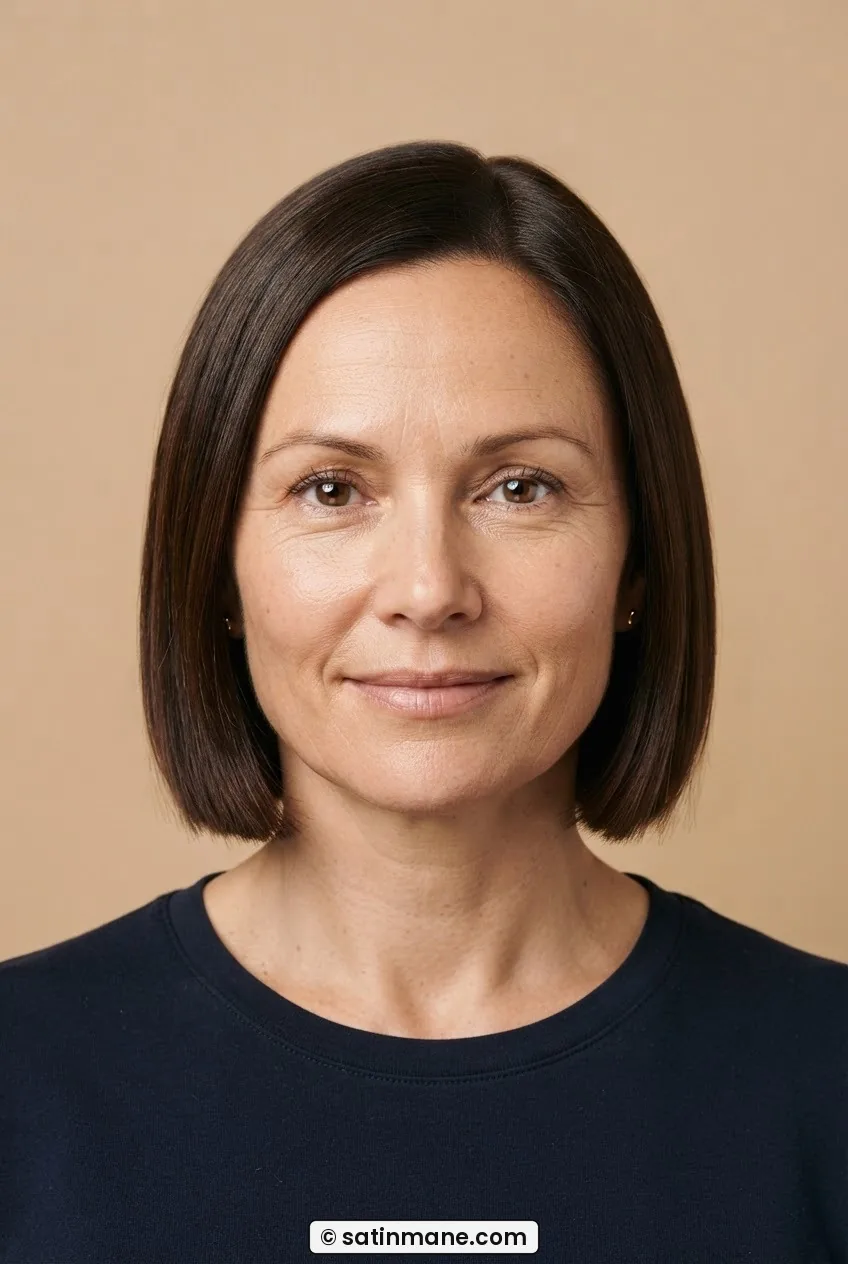
A traditional French bob sits at or above the jaw, which is genuinely tricky on a round face because the hemline lands right at the widest point. But there’s an adjusted version I think works beautifully — and it has everything to do with how the sides are cut.
Instead of a completely even perimeter, the sides are cut slightly longer than the back, with the corners of the hemline softened (rather than blunt). This pulls the visual endpoint just below the jaw rather than across it. The fringe — which is optional but classic — works best when it’s either brow-length or longer. Anything cropped to mid-forehead creates a square of space between brow and jawline that shortens the face further. A longer, curtain-style fringe creates vertical emphasis instead. You can read more about how a French bob is constructed before you commit to the length.
Morning ask: moderate. The fringe needs some attention — a round brush or a flat iron pass — and the bob itself may need a light blowout to keep the sides from flaring. Not a wash-and-go situation for most hair types.
At the chair: “French bob with sides cut slightly longer than the back. Soften the corners of the hemline. If we’re doing a fringe, I want it curtain-length, not cropped.”
3. The One With Graduation at the Back
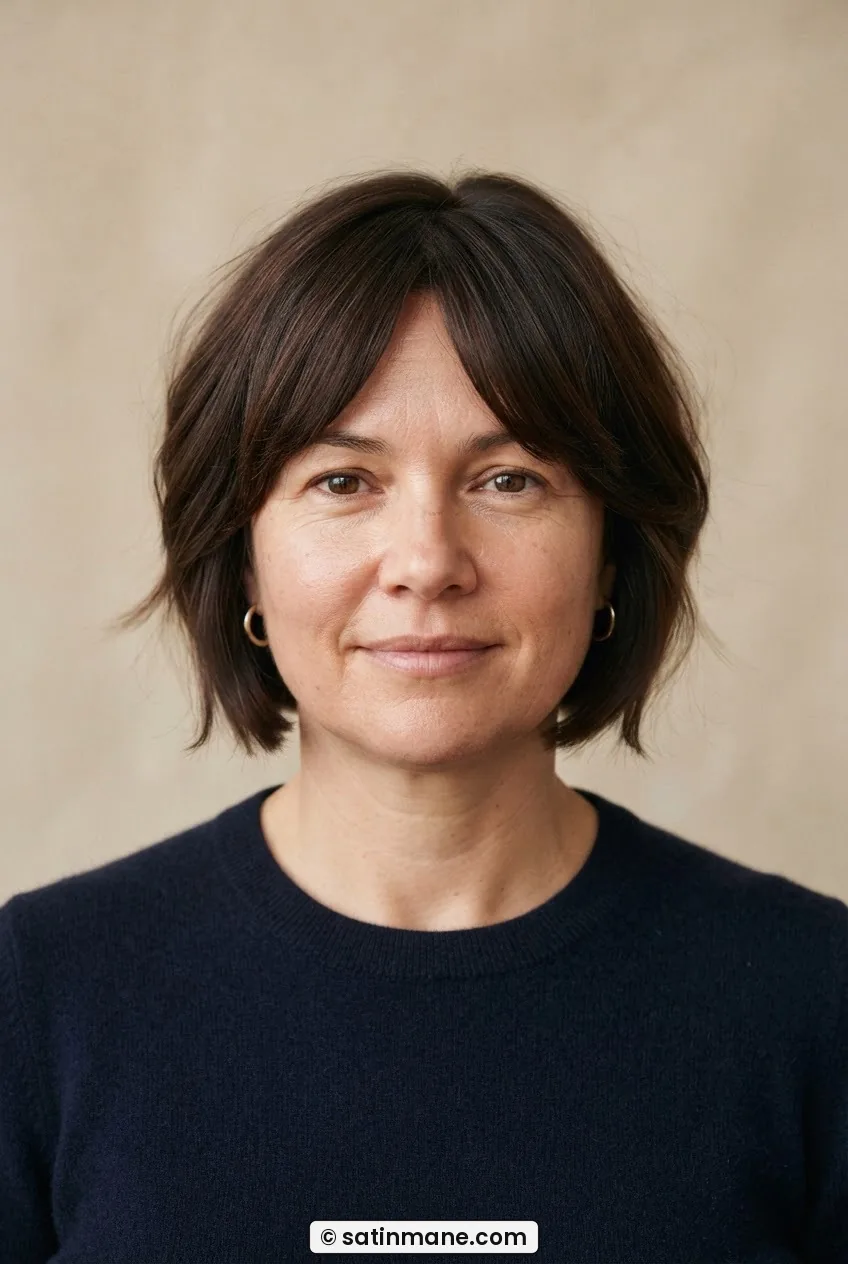
A graduated bob — sometimes called a stacked bob — has shorter layers at the nape that stack up toward the crown, with the front left longer. The effect is a shape that’s close and low at the back of the head, which counterintuitively adds height rather than width. The weight line on the sides sits forward and below the cheekbone, framing the lower face and jaw rather than the cheeks.
This is one of the most consistently flattering structures for round faces because the geometry works on a fundamental level — narrow at the back, length framing the front. Look at how she’s wearing hers in the photo: the stacking at the nape creates that clean, close silhouette while the longer front pieces draw the eye downward along the jawline. That’s the principle in action.
The tradeoff: graduation at the back grows out faster than you’d expect, and as it grows, the shape gets round — which is the opposite of what you want. Plan for a trim every eight weeks. If that frequency doesn’t suit you, this cut will start working against you around week ten.
At the chair: “Graduated bob, stacked at the nape, front pieces to land just below my chin. I want the widest point of the cut to sit below my cheekbone.”
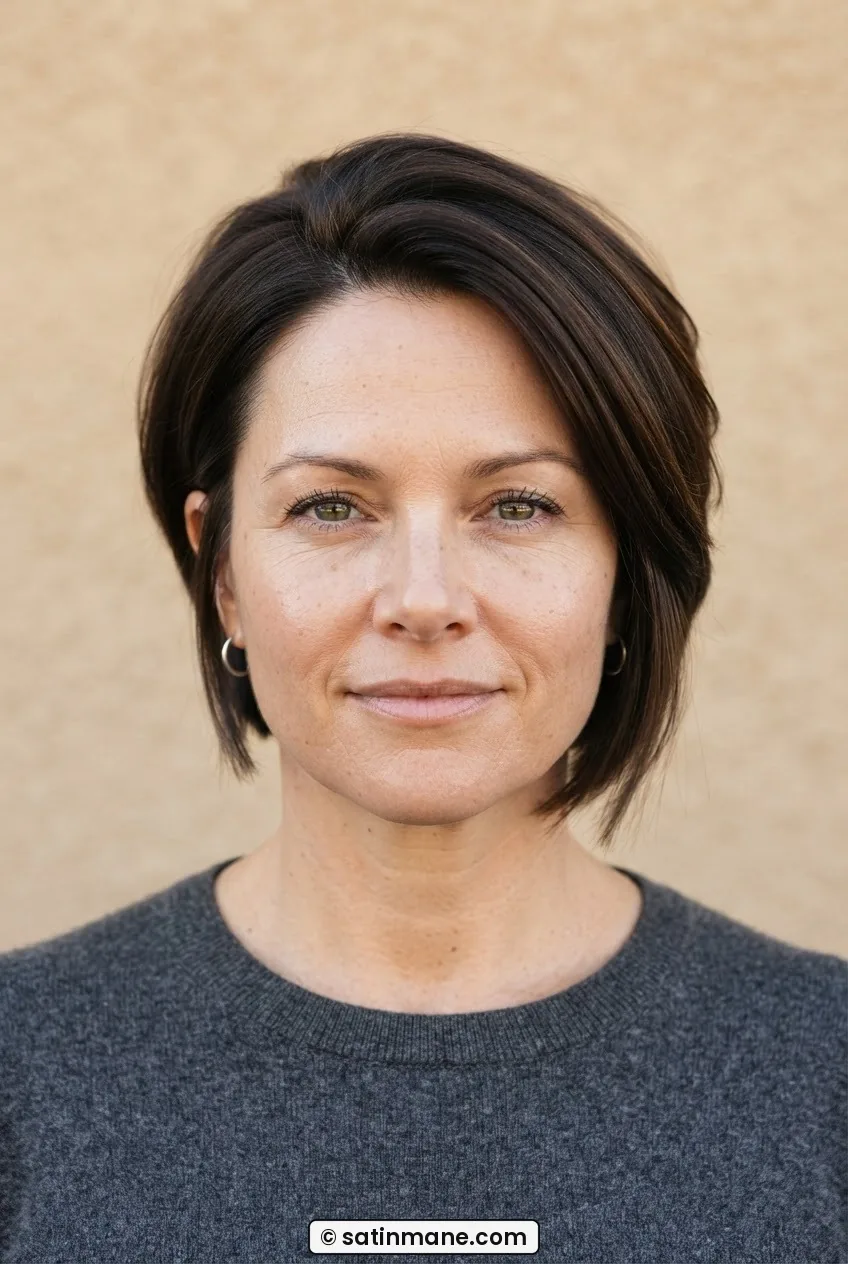
My personal pick is this one. I had a graduated bob for about two years and the only thing I’d change is that I waited six weeks between trims instead of eight. By week seven it had lost its shape and I was pinning the sides back just to leave the house. The construction is excellent — just honor the maintenance it needs.
Seeing a Graduated Bob Built From Scratch
4. The One That Air-Dries Into Shape
This one requires a specific combination: a slightly longer bob (collarbone-grazing or just above), cut with soft internal layers rather than a blunt perimeter, and hair that has at least a little natural wave or texture to it. When those three things align, you get a bob that air-dries into something presentable without any tools.
For a round face, the key is that those internal layers must be placed strategically — not at the cheekbone level, but lower, so the weight doesn’t expand horizontally at the widest part of your face. A stylist who doesn’t think about face shape will layer from the cheekbones down, which adds width exactly where you don’t need it. Ask them to keep length around the face and place movement lower.
If you have naturally straight, fine hair, this version probably won’t air-dry into much — it’ll just dry flat. This is genuinely a wavy or lightly curly hair situation. If that’s you, a small amount of curl cream scrunched in damp and left alone is all it needs. See my other post on bob hairstyles for fine hair if you’re not sure whether your texture will cooperate.
At the chair: “Longer bob to the collarbone, soft internal layers placed below the cheekbone, nothing layered up around my face. I want it to air-dry with texture, not volume at the sides.”

5. The Asymmetric Bob
One side longer than the other. It sounds dramatic but the visual effect is entirely about where your eye goes — and on a round face, asymmetry is genuinely useful because it interrupts the circular outline. The longer side creates a diagonal line rather than a horizontal one, and diagonal lines read as length.
The construction that works best here: a difference of about one to two inches between sides, with the longer piece sitting just past the jaw. The shorter side can sit at or just below the earlobe. The hemline is typically cut on an angle rather than straight across. You can have a slight graduation at the back or keep it one-length — either works, though graduation gives a cleaner silhouette from behind.
One honest note: asymmetric bobs look razor-sharp for about three weeks. After that, the grow-out starts to blur the difference between sides and the cut loses its defining quality. Committing to this one means committing to roughly six-week trims, possibly more frequently if your hair grows fast. It’s also harder to style casually — a messy asymmetric bob tends to just look unintentional.
At the chair: “Asymmetric bob, one-to-two inch difference between sides. Longer side past the jaw, shorter side at the earlobe. Angled hemline, not straight across.”

6. The One With a Deep Side Part
This isn’t a separate cut so much as a structural decision within a bob — but it changes the shape enough that it deserves its own entry. A deep side part, where you’re parting hair roughly 80/20 rather than 50/50, creates an immediate diagonal across the crown. That diagonal is one of the most reliable ways to counteract the roundness of a round face because it shifts the visual weight to one side and creates asymmetry at the top without requiring an actual asymmetric cut.
This pairs well with any bob that sits between the chin and the collarbone. The heavier side sweeps across and creates length; the lighter side stays close to the head. The key is asking your stylist to point-cut the hemline rather than blunt-cut it, so the ends don’t create a hard horizontal line that reinforces the roundness of your face. For more context on what else works at this length, the guide on short haircuts for round faces covers the underlying principles well.
Morning ask: you’ll need to re-establish the part each day and may need a little product to keep the lighter side from flipping outward. Not high-maintenance, but not fully wash-and-ignore either.
At the chair: “Bob to [length], point-cut hemline, and I want the cut designed to wear with a deep side part — so the weight distribution should account for that.”
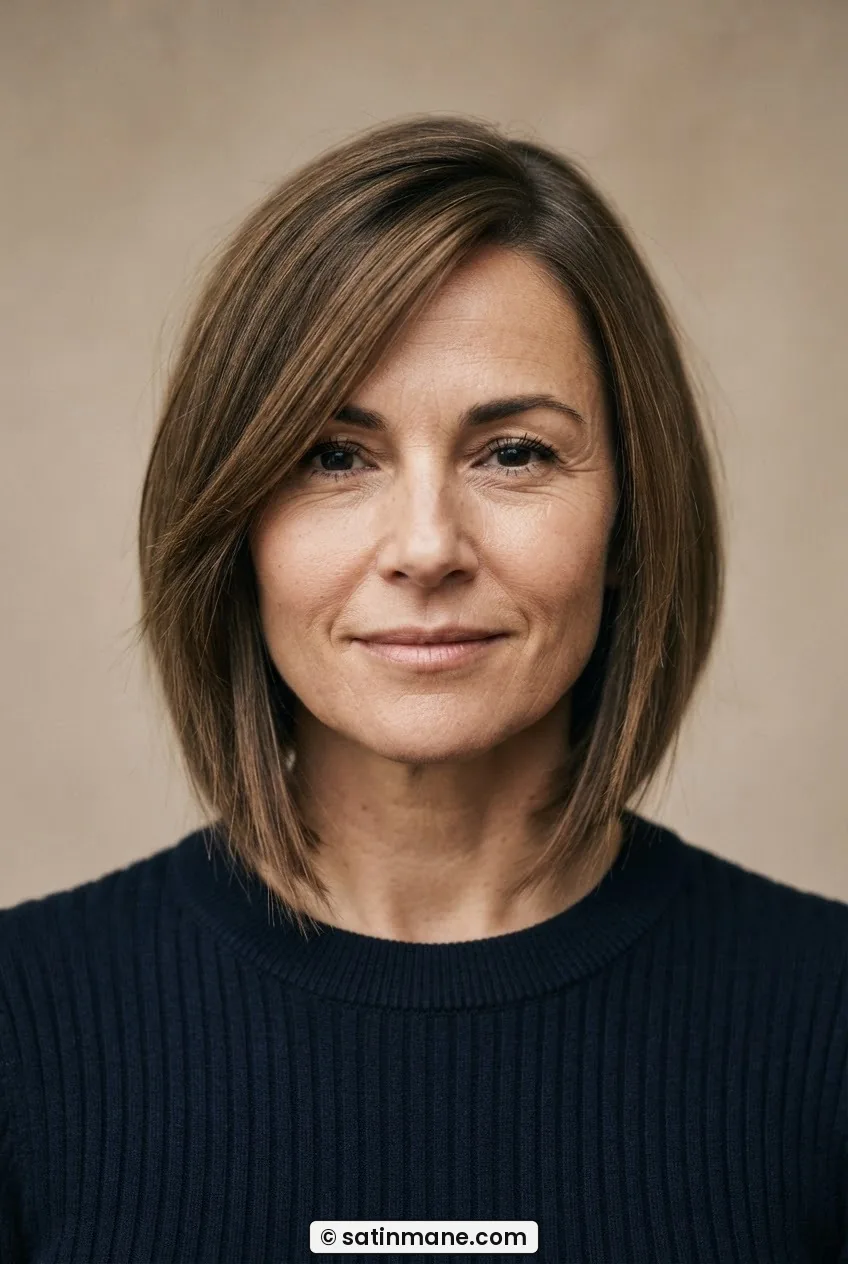
7. The Chin-Length Bob With Texture
A chin-length bob on a round face is the option that gets the most debate — because landing the hemline right at the jaw can emphasize the width of the face if it’s cut straight across. But add texture and the whole dynamic changes.
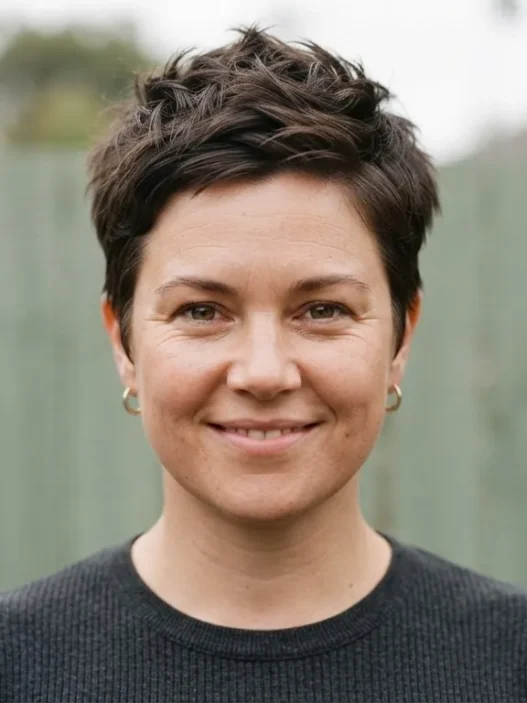
Texture here means razor-cut ends, or heavily point-cut ends, rather than a clean blunt line. The result is a hemline that’s uneven and airy rather than a solid horizontal band. That openness at the ends means the eye doesn’t register a hard line across the widest point of the face — it registers movement instead. She’s showing exactly that in the photo: the ends are feathery rather than blunt, and the chin-length hemline reads as framing rather than cutting across.
This works especially well on medium to thick hair. Fine hair that’s heavily razored can get stringy rather than textured, which defeats the purpose. Ask your stylist whether your hair density suits the razor before committing. Understanding what textured ends actually mean at the salon makes this conversation much easier.
Morning ask: light. A little texturizing spray or sea salt spray, maybe a quick pass with a diffuser if you have waves. This is one of the lower-maintenance options on this list once the cut is right.
At the chair: “Chin-length bob with heavily point-cut or razor-cut ends — I want a textured hemline, not a blunt one. No solid weight line across the jaw.”

8. The One You Trim Twice a Year
This is the longer end of the bob spectrum — a lob (long bob) that sits just at or above the collarbone. It grows out gracefully, it doesn’t lose its shape dramatically between cuts, and the length itself is doing some of the structural work by pulling the eye downward past the face entirely.
For round faces, the construction that matters most is avoiding too much volume around the cheekbones. The layers, if there are any, should be long and soft — not short and face-framing in the cheek area. Face-framing layers that start high up are genuinely problematic on a rounder face because they add visual width exactly where you don’t need it. Long, low layers that start at the chin or below are much more forgiving.
This is also one of the most accessible options if you’re in between lengths or if you’re growing out from something shorter. If you’re dealing with the in-between stage, the category on round face haircut options has a range of lengths to compare. And if you’re over fifty and want cuts that suit a rounder face with less density, the roundup of short haircuts for women over 50 is worth a look too.
Morning ask: low. This length air-dries reasonably well on most hair types. A blowout once a week if you want polish; otherwise a scrunch and go.
At the chair: “Long bob to the collarbone, soft layers starting below the chin only — nothing layered around the face above that point. I want it to grow out without losing shape.”

9. The One That Looks Effortless but Isn’t
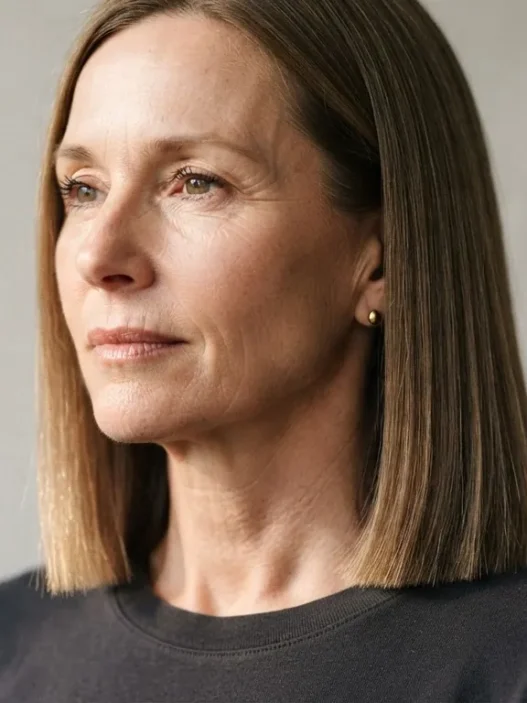
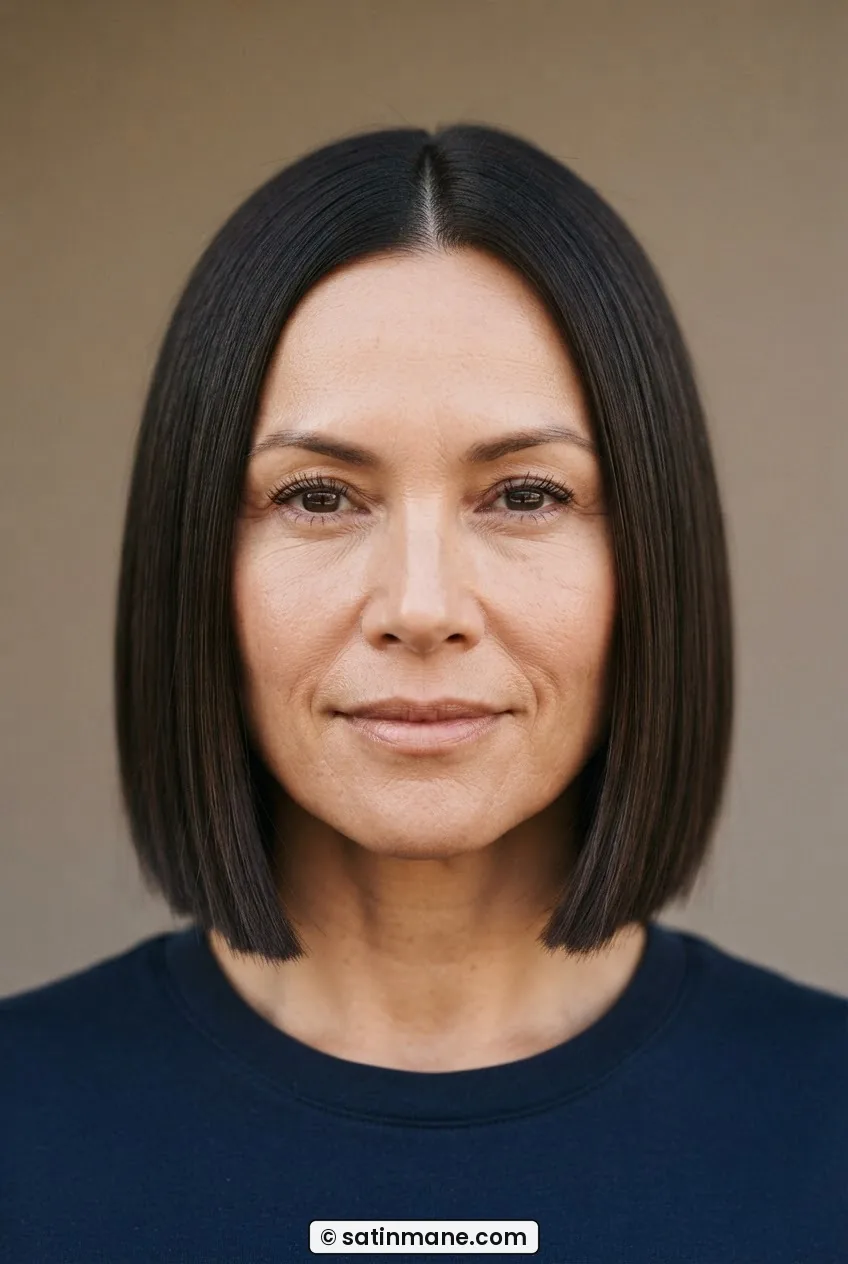
The sleek blunt bob. You’ve seen it everywhere — the kind that looks like someone ironed it and then stood very still. It is, without question, one of the most striking cuts you can get on a round face when done correctly, because the blunt line at the hemline and the close, smooth silhouette create clean geometric contrast against the curves of the face.
But I’m not going to tell you it’s low-maintenance. It isn’t. The sleekness is the whole point, and maintaining sleekness requires a flat iron, a good smoothing serum, and daily attention. Frizz, kinks, and any natural wave will disrupt the line. In humid weather, this cut either becomes a constant battle or a different cut entirely. Understanding how to achieve a sleek blowout before you ask for this cut is genuinely useful — it’ll tell you pretty quickly whether you want to do this every morning.
The length that works best for round faces in this version is anywhere from one inch below the chin to the collarbone — long enough that the hemline clears the jaw and the weight sits below the cheekbone. Anything at or above the chin in a sleek blunt bob will frame the widest part of your face with a hard horizontal line.
At the chair: “Sleek blunt bob, hemline below the chin — at least an inch. No layers, no texture, no graduation. I want it one-length and close to the head.”
What People Usually Ask
Is a bob cut actually flattering on a round face?
Yes — but it depends entirely on where the widest point of the cut sits. A bob that ends at the chin can emphasize width; a bob where the weight sits below the cheekbone creates length. The cut itself isn’t the problem; the construction is what matters.
What length bob is most flattering for round faces?
Generally, anything that lands between one inch below the chin and the collarbone tends to work well. That range keeps the visual weight below the cheekbones. Very short bobs that end at or above the jaw are trickier — not impossible, but they require more deliberate construction to avoid widening the face.
Should I get layers in my bob if I have a round face?
Layers can help or hurt depending on placement. Long, low layers starting at the chin or below add movement without width. Short face-framing layers that start at the cheekbone add horizontal volume exactly where you don’t want it. If your stylist suggests layers, ask specifically where they plan to start them.
Does a French bob work on a round face?
It can, with adjustments. The classic French bob landing right at the jaw is the version to avoid — that hemline emphasizes width. An adjusted version with sides cut slightly longer and a hemline that clears the jaw changes the geometry enough to work. A longer curtain fringe rather than a cropped one also helps by adding vertical emphasis.
How often do I need to trim a bob if I have a round face?
It depends on the specific cut. A graduated or stacked bob needs a trim every six to eight weeks because the shape deteriorates quickly as the layers grow out. A one-length bob or a longer lob can go twelve weeks or more. The sharper and more structured the cut, the more frequently it needs maintenance to keep doing its job.
If I had to narrow all of this down to one piece of advice, it’s this: the bob cut for a round face isn’t about finding a magic shape — it’s about understanding where the weight of the cut lands. Get that right and most of these nine options will work beautifully. If you’re still weighing whether to go shorter than a bob, the post on short haircuts for round faces covers what happens when you go above the chin, and it’s worth reading before you sit in the chair. Good luck — and bring photos. Your stylist will thank you.